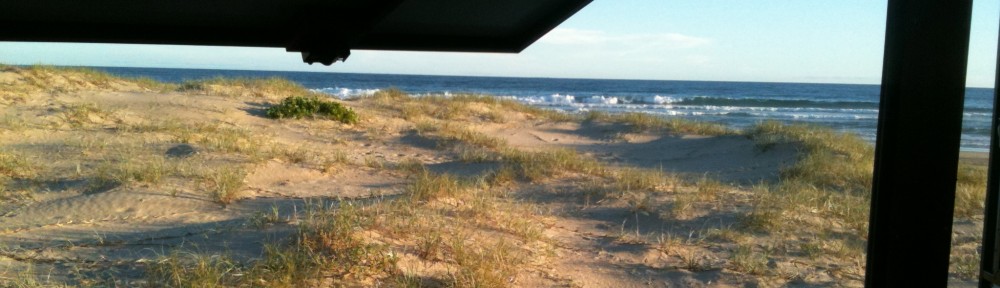
ANZAC day dawns with an aching clarity and it makes me think. In this world of nuanced meaning, confused subtext and clouded intent, when the world is finally still, when the planes stop for a brief moment and birdsong is the only tinkling sound, the veil lifts and allows us perspective, a shifting recognition of what came before in sharp contrast to today.
On this day the silence is a fragile thing that helps me to remember:

ANZAC dawn
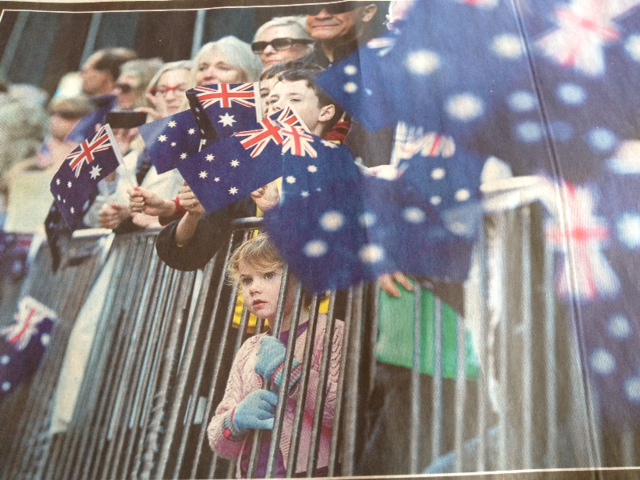
Suffused with pride, nostalgia and quiet remembrance, ANZAC Day is my favourite day of the year and I realised (late in the piece) that it is the ultimate symbol of Australiana. Heroic, courageous and steeped in dignity this is a day that celebrates not only the lives lost in every terrible conflict and the legacy of bravery, but the stalwart social mores of Australia: mateship, the love of a legend, larrikinism, proud irreverence and sharing a beer with a mate to remember the diggers.
I didn’t make the dawn service. And I didn’t march down streets, though I would have. Instead I made my way to the pub for a game of two-up, the very best way to share the moment once the ceremony is over. With bouncers guarding the doors the mob seeths through the guts of the place. A sea of plastic cups crackle angrily underfoot and jostled chants to fallen heroes promise a slick yeasty film on everything.
The scent of crushed rosemary is delicious, spiky sprigs wedged into lapels and inevitably drowned in drinks.
The cowboy queues patiently at the bar while I watch the crowd spill its secrets.
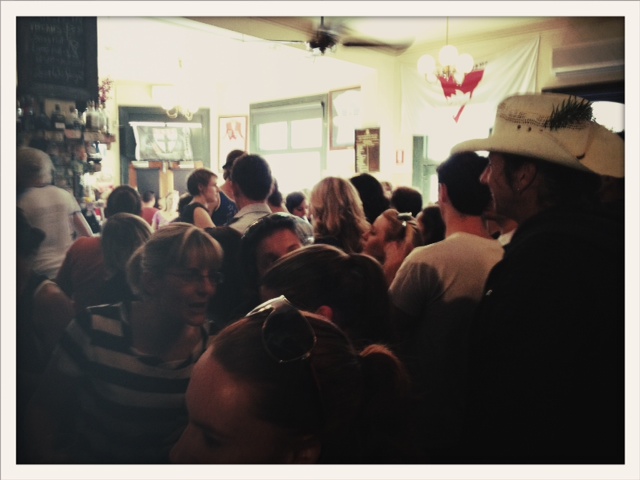
A patient cowboy
It is an eclectic mix. A couple of wizened old boys prop up the bar, gazing rheumy-eyed at the mob; a vet studded with anti-war badges has a faraway look, the taint of horror barely concealed. Towering above the crowd a serviceman waits patiently for a break in the sea of bodies, his face betraying both his amusement and his pride, his chest heavy with medals.
A table of squeaky-clean teens gawp as the more seasoned two-uppers hurl themselves into the crush for another plastic jug of Coopers and the cry “Come in Spinner!” grows louder, the energy building for another swoop of noise as the coins are hurled into the air. Strangely it then goes completely silent, a gasped hush as fate takes over… before the raucous yowling begins again.
The throng is ten-deep around the spinner;
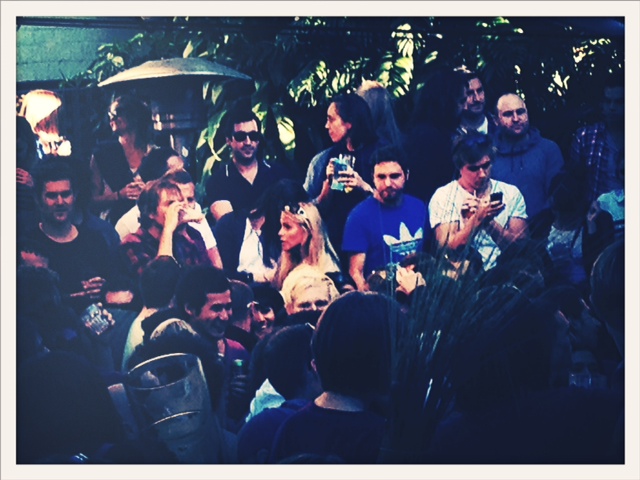
the boxer holds court and the crowd is a frenzy of head-tapping, cash-hollering exuberance. Fair go spinner! Up and do ’em! Heads are right! I got ten on tails! – this is a language almost lost to warfare, a language quickly mastered when you are hemmed in by the crowd, butterfly-coloured currency fluttering between the outstretched hands of strangers all around you.
The crush surges as players call out for an opponent and the sound reaches a crescendo, then a lull, then a soaring cheer. There is no authority here, no banker, no rules. You hand your money to a line of people you have never met and they hand it back, bright smiles on their faces. A nod, a wink, a shrug of the shoulders, the shared experience rakes through us all.
Two-up speaks a language we all understand. It is the language of mateship. The language of a shared experience, the language of memory. It speaks of adversity and the strength of those who overcame it, made the best of it.
Many decry ANZAC day as brash jingoism, condemning swarms of backpackers shrouded in sleeping bags who sleep, sprawled on the ground at Gallipoli until The Last Post wakes them, and claiming the true purpose of the day is lost to gambling and alcohol.
But ANZAC day is about remembering the fallen. It is the memory of the trenches and the spirit of young men lost to a callous war. It is the shared understanding of an old game that bonds people together and helps them to remember.
We will remember.
| Term | Meaning |
|---|---|
| Spinner | The person who throws the coins up in the air. Each person in the group takes turns at being the spinner. |
| Boxer | Person who manages the game and the betting, and doesn’t participate in betting. |
| Ringkeeper (Ringy) | Person who looks after the coins after each toss (to avoid loss or interference). |
| Kip | A small piece of wood on which the coins are placed before being tossed. One coin is placed heads up, the other tails up. |
| Heads | Both coins land with the ‘head’ side facing up. (Probability 25%) |
| Tails | Both coins land with the ‘tails’ side facing up. (Probability 25%) |
| Odding Out | To spin five “One Head – One Tail” in a row. |
| Odds or “One Them” | One coin lands with the ‘head’ side up, and the other lands with the ‘tails’ side up. (Probability 50%) |
| Come in Spinner | The call given by the boxer when all bets are placed and the coins are now ready to be tossed. |
| Cockatoo | Only used in the 1800s to late 1930s (Due to legalisation of Two-Up on ANZAC Day) it was the nickname of the look-out who warned players of incoming police raids. |









 From the Sports Desk