Auburn’s got my back

In an effort-soaked quest to stick curious fingers in Sydney’s darkest recesses I find myself rifling through her secrets, tiny sparkling gems of Australiana my prize.

Equipped with an obliging stub of pencil, a crumpled notepad scoured with unintelligible marks, the tin lid (on occasion) and my trusty secretary, her aura of advice billowing gently, I am armed with inspiration and a tousled map from 1974.

As the crow flies, Auburn’s got my back, standing firm at the ever-shifting front between east and west. Just a dead-man’s hand from Rookwood, calm in the lee of the snarled western city arteries, Auburn is named after Oliver Goldsmith’s poem The Deserted Village, which describes the English version as the “loveliest village of the plain”. 

First impressions are less kind. No plains. No villages. But the threads of humanity have woven an exquisite pattern here, a tapestry of colour, creed and custom that sparks life into the air around me. I know that feeling. It’s the feeling of being able to breathe life, taste life and touch life in a single sensory moment.

The scent of sharp, earthy coffee snaps around my nose, fresh mint, cigarettes and scorched meats smear together in a smoky pall and the streets thrum with noise. Old men cluster around tables laden with thimble-full glasses stained with grounds, their prayer beads jostled in time with the conversation; a giggle of head-scarved girls peeps out from a milk-bar intent on attracting the boys’ attention; and statuesque African women, the bodies and hair swathed in peacock-bright tribal print, are silently, strikingly, beautiful. Joining the throng we eat and drink:
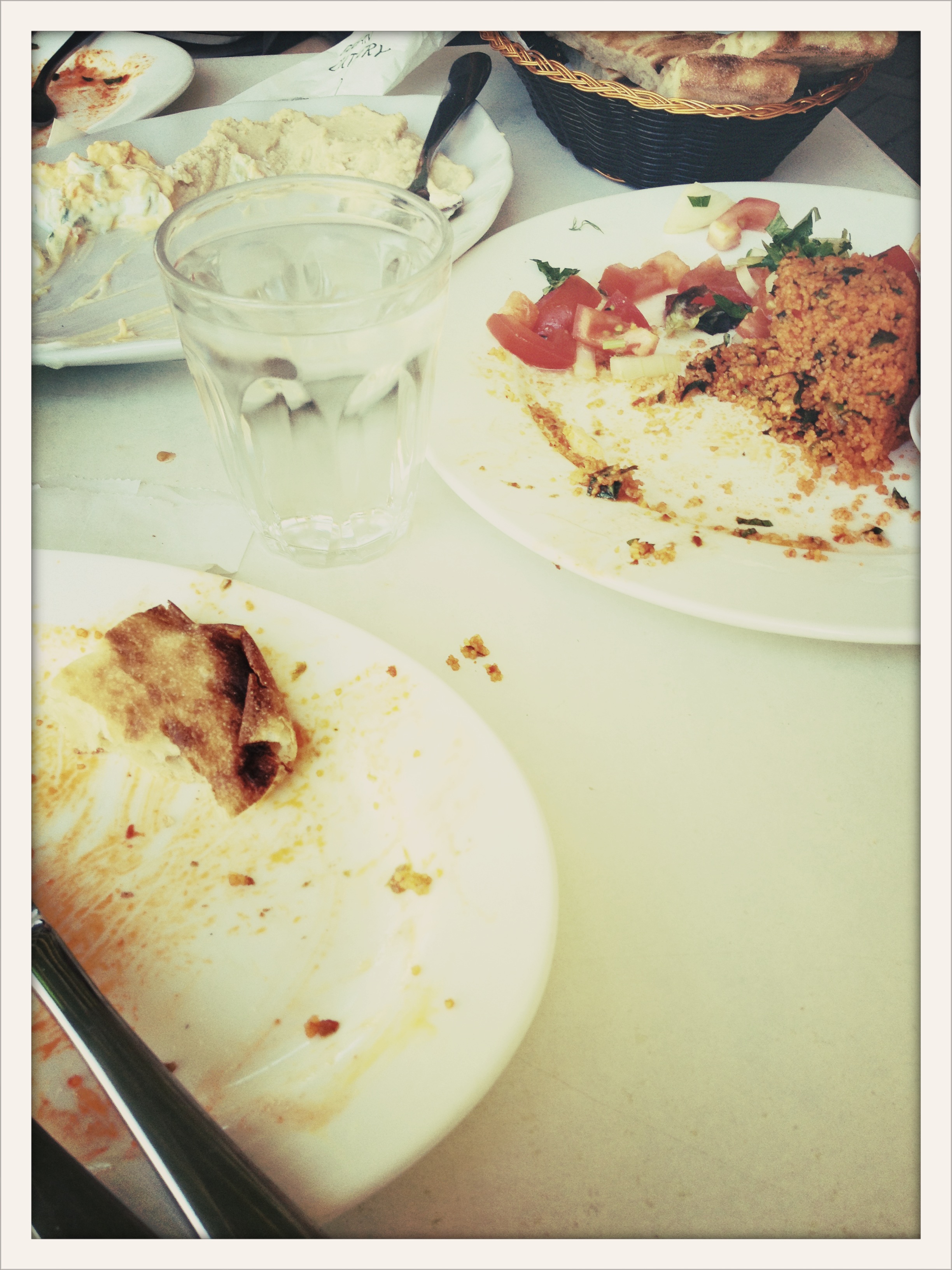
and jolted with caffeine spin out further into the streets. Our search is over before it has begun: the secretary, exhibiting a distinctly un-secretary-like intent, has barrelled into the Hot Sale furniture warehouse and is enthroned upon a glam-rock bed ensemble from the late 1970s. A quick flick of the peripherals and it is clear that we are in the heart of Australiana. Plasticky covers crackle with promise, shiny pvc glimmers in the dust and the air is stained with nostalgia:

Hot Sale furniture

Glam rock bed throne
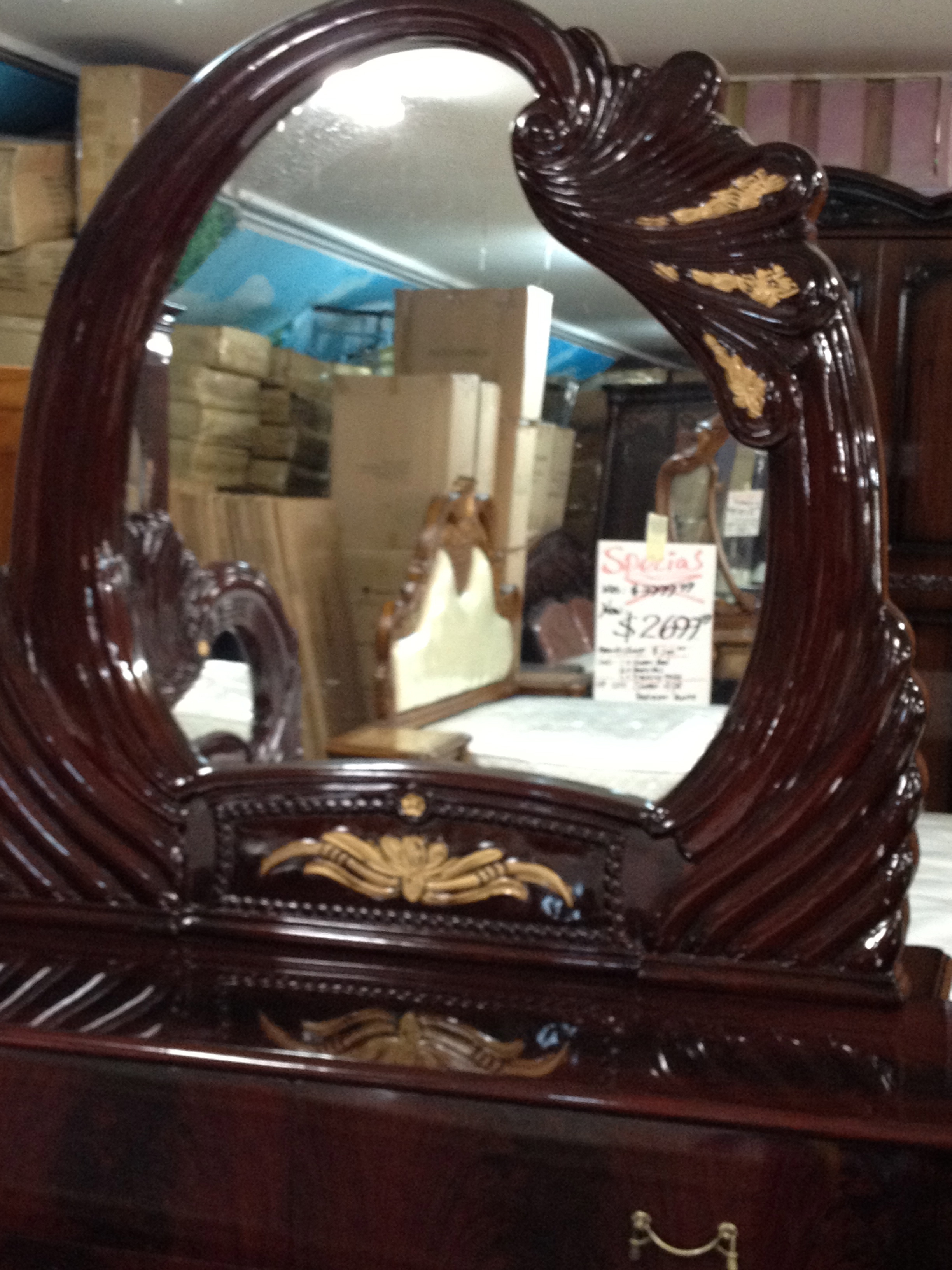
Nostalgia mirror

Nearby a jewellery shop is gilded in light, the bright glint of yellow gold visible from a distance. Invited to “look, try” this is as close as I get:

All that glitters...

Though closer inspection was required for this message, a homily I am sad I cannot understand:

Cursive beauty

Turkish, Syrian, Lebanese, Vietnamese, Chinese, Somali, Bosnian, Iraqi, Iranian, Afghani, Pakistani and Sudanese communities call Auburn home and the taste of these cultures is rich and diverse. Cardamom, clove and cinnamon marries with the crisp sourness of cherries and delicate rosewater. Rank meat sweats in the open, unidentified greens are an array of shades from Persian to pistachio and the aromatic elegance of earl grey tea swirls in the mix. In a deliciously retro supermarket shelves of products line up for inspection and include these such childhood stalwarts:
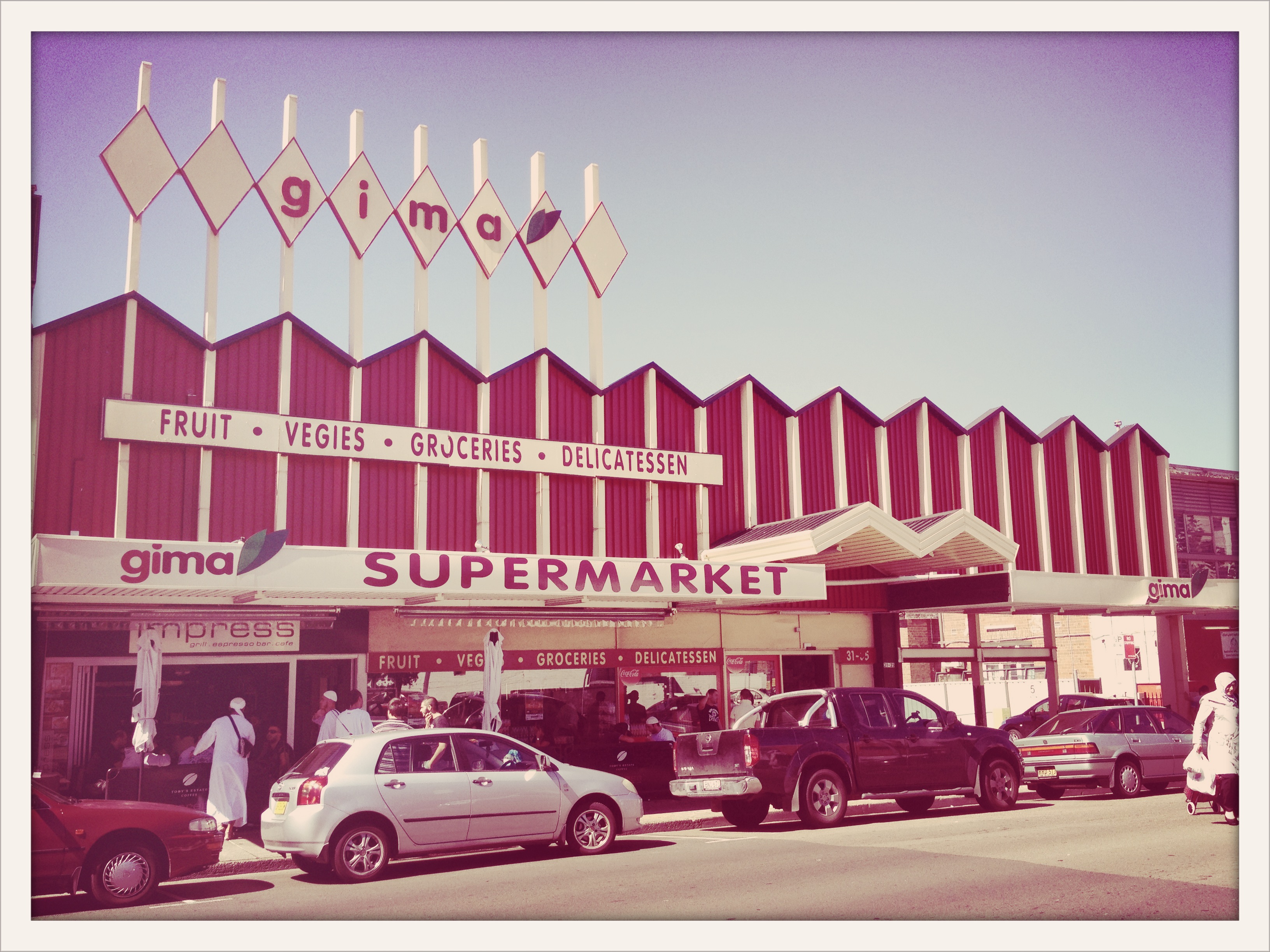
Gima supermarket

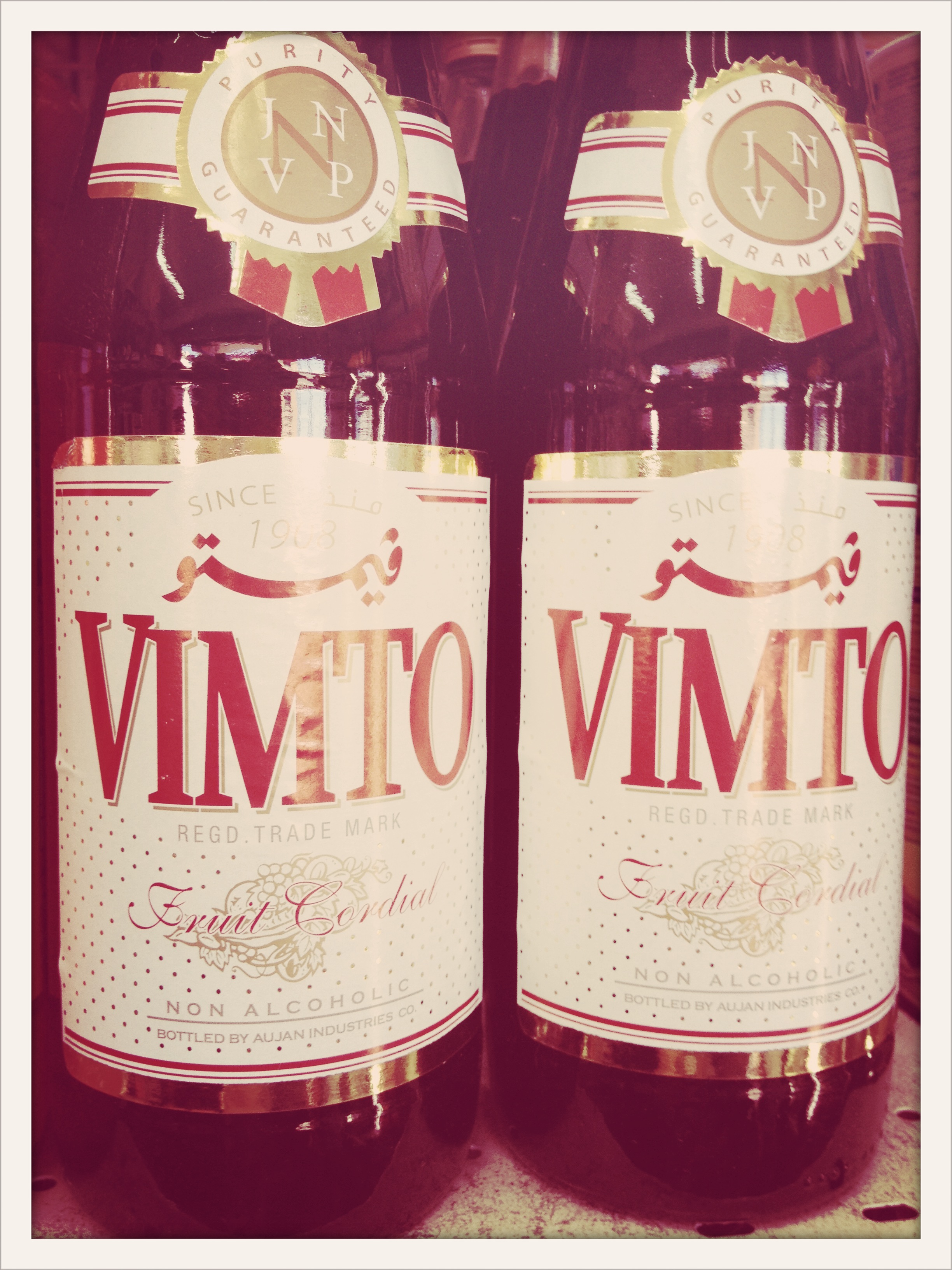
While the Wing Fat Meat Market spruiked lesser known fare:

In this Persian inspired wonderland complete with accents of Middle-Eastern devotion, Asian diligence and African pride, the backstreets tell a different story. A lost space between the comforting human chaos of the strip and the genuine peace of the burbs, the roads we found all lead to the highway and were teeming with lost 4WDs.  Here there are jargon-juggled “medium-density housing solutions”, tired facades and stereotypes. Sheets stretched taught across windows are poor substitutes for curtains:

This is another Australiana, borne of necessity. It is a suburban paradise choked in skeins of diesel and tangled in expectation. A world of tacky stereotypes and wary glances, the rumble of our fast-paced world is just metres away, belching, farting and stinking. Residential backstreets should be peaceful, full of the sound of children laughing, their indulgent parents watching from the step – this a modern suburbia that challenges its very self, encroached by storming six-lane highways, shopping malls and strip lights.

Yet I left Auburn with a bright smile courtesy of this,
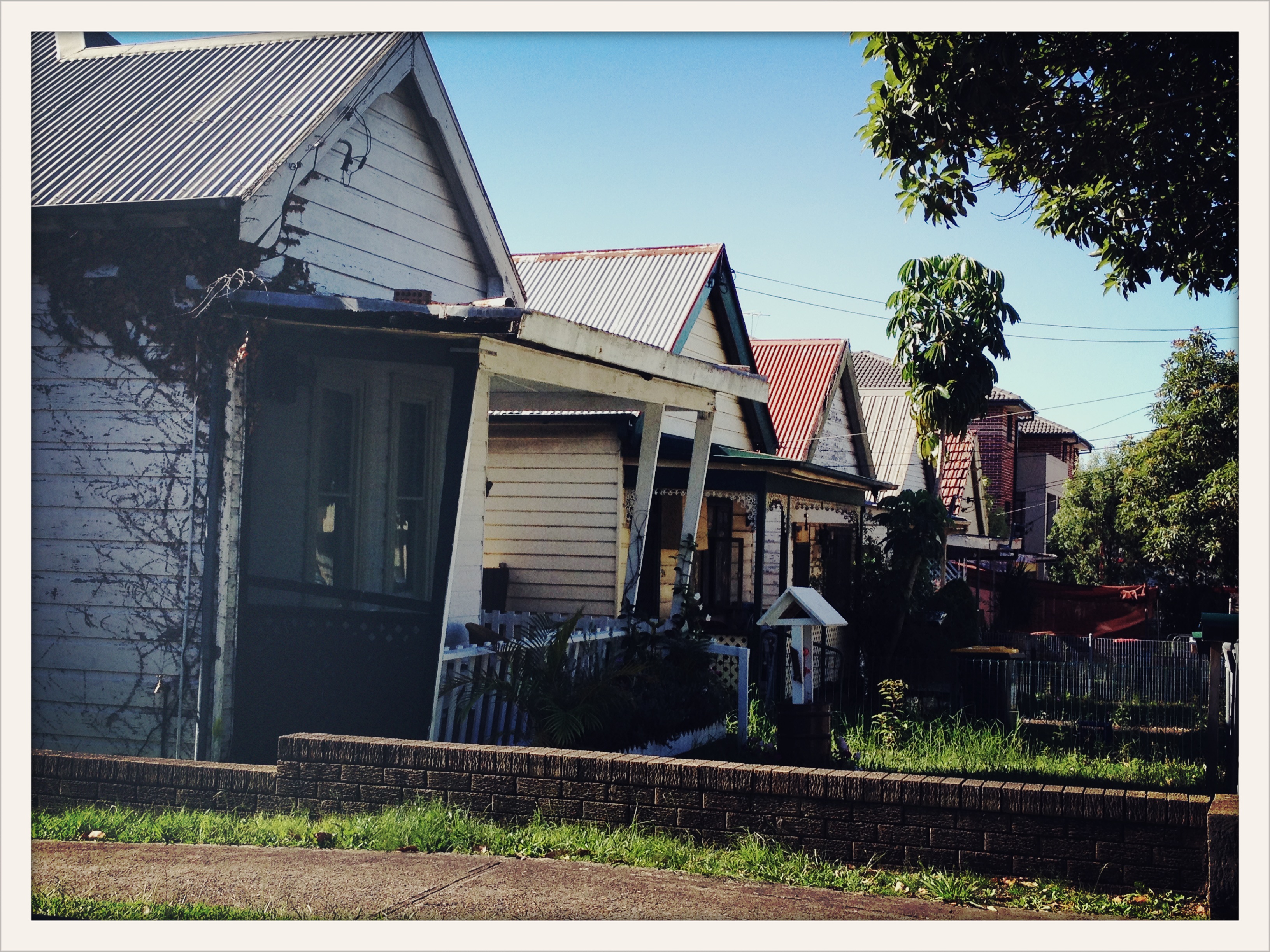
a monument to the weatherboard revolution of the 1920s, wishing well front and centre; and this:

a poor-man’s mansion with a shroud of shade.

Auburn is a surprise. Abayas abound and I sense my alienation from a culture I am yet to understand in full, yet I am made so welcome and the language of the streets is hypnotic, the soft cadence of sofra, burke, baba fuat, birfazla enveloping me in another world.

I will be pursuing my secretary for the following expenses:

Mountain tea: $2.70
Earl grey tea (in tin): $2.40
Cool op-shop shoes: $2
Sour cherry juice:  $1.50
An almost excessive yet utterly delicious lunch: $12

A tour of the heart – Redfern

I got a call from my secretary.

Come in, sit down, let’s talk

she said. Uh oh. This looks bad. It can only mean one thing. Delete. Delete. Delete.

Seems my draft posting of our journey to the heart of Redfern was a little bleak, the darkened reaches of my imagination flicking the mud too far. Kinda like a small kid ‘playing’ with a skink… right up to the point the skink stops playing due to a lack of legs.

So I have revisited the draft with glee in my heart and I reckon another journey to peer closer beneath the carpet at the fluff is in order.

Here it is:

Redfern is a scabby-kneed old tart, her wise eyes brimming with a raw, indisputable  knowledge. At her heart is a community that stands strong and true, descendants of the earliest mobs on Gadigal land, and a tangle of characters who breathe life into the endless asphalt of the inner city.

Her’s was always the party to crash, a raucous orgy of social consolidation, an urban wonder dome  trimmed with every cut and colour. Obed West, who hunted with the Aboriginal community in the early 1800s wrote the following description in the Sydney Morning Herald in 1882:

Nearly all over the present Redfern grew luxuriant crops of geebungs and five-corners… Boxley’s Clear was a great rendezvous… [for the Aboriginal community] one of their great feasting grounds as well as the scene of many hard-fought battle… the Governor gave instruction that no waddies or spears were to be brought within a mile of the boundaries of the town [so] the clearing at Redfern, being nicely adjacent, was chosen [by the tribe] as the place of meeting for the settlement of disputes, in lieu of the Racecourse [Hyde Park]… The portion of Redfern, known as Albert Ground and Victoria Town, as well as the vacant paddocks opposite Elizabeth Street [Redfern Park] was known as Boxley’s Lagoon… Round the edges of the clear were the camping grounds…

Today her patina is a little speckled and worn thin. Her crepey skin stretches and sags to envelop a loyal crowd still seeking her warmth and her once booming heartbeat stutters a little with the more prosaic sounds of life on the streets, the grind of the rubbish trucks, the groan of last orders and the clack-clack of high heels as they commute to work.

But the old girl is getting a facelift, a splash of vermillion lipstick to accentuate her laughter lines, a sparkle of gilt to brighten up dank alleys  fetid with piss and sorrow.

Facelift

Coloured facades for the face of the towers

Like male dogs marking their territories the developers have swooped, buying up swathes of land to rebuild the inner city dream. This is the new face of Redfern:

New kid on the block

Shaded by giant gums, set back in wide-lined streets, it really is the face of sophisticated, centralised living. It is described as:

“A sustainable social housing development [that] has provided a greater mix of social housing in Redfern-Waterloo and has been awarded a 5-star Green Star rating”.

But the old girl will always have deep secrets that writhe uncomfortably in her bowels. Directly opposite these new buildings squats a square of land, home to derelict houso blocks that are crumbling into the dirt scratched up around them. There is an air of neglect, of dark regret and untold tragedy.

I have no idea what happened here but fear drips down my neck as I glance through the hurricane fencing. These pictures can’t convey this but the air is uneasy and the space seems constricted, trapped.

The terrace that was destroyed in 1959 to make way for the housing commission block

How it looks today

The reality is that some of the urban renewal that forges ahead throughout the inner city pays little heed to the past. While there is a perceived desire to update and improve these old neighbourhoods, sometimes the stains are indelible. And here the ghosts swirl close to the surface.

Dead Christmas

And just when the gloom deepens I stumble on a memory that does justice to the bright light of Redfern’s people:

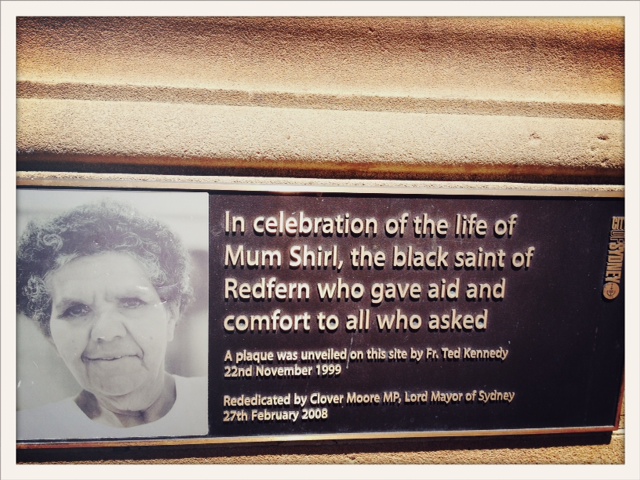
Mum Shirl

Mum Shirl was the founding member of the Aboriginal Legal Service, Medical Service, the Tent Embassy, Aboriginal Children’s Service and the Aboriginal Housing Company. She was a prominent Aboriginal activist committed to the justice and welfare of the Aboriginal community. She was also widely considered to be everybody’s mum…

Murals abound here, a living memory of the activism and cultural pride that thrives,

Smiling face

and Poet’s Corner can’t help but make you smile, its strange beauty the result of its incongruity and the presence of a thriving community garden at its feet, coiling and tangling with green hope in this chattering urban grid.

Poet's Corner

The politics of urban space are virulent and Redfern exists in an uneasy alliance of deprivation and accumulating excess. These pockets of memory, slithers of a long-forgotten soul are part of the patchwork, woven in and tied tight. Long may they remain so.

Adventures in Sydney-Panania

Back home in Sydney, a long way from those sighing sands and the halcyon days of my summer holiday. My attorney has been busy and I am wearing her advice like a jewel.

Buy the ticket, take the ride

she said.

Freedom is something that dies unless it’s used

she said.

So here goes. Here’s to freedom. Here’s to scratching the surface and sniffing what’s beneath, delving deep into the decay of urban life and filling my fingernails with tiny sparkled glimpses of Australiana.

First up: Panania with my secretary, the most organised creature I have ever met, an apparition of systematic accuracy to keep me on the straight and narrow, sharpen my pencil and remind me not to forget the baby.

I looked up Panania before we left. I discovered little. It has a Digger’s Association (renowned for its expansive and family orientated alfresco entertaining, dining and function area), a number of churches, a vet, a hotel and a school.

Venturing no further than the Panania cafe for a restorative cuppa we were delivered buttered toast and the story of the day Tony Abbott came to Panania. This set the tone well for the fibro gran-land that unleashed itself just metres from the scurry of tired shops that marked the centre.

The party wasn’t here

In a place where Gloria Jean’s is considered exotic, where the political spectrum narrows to a pinpoint – “You don’t name a park after yourself till yer dead, right? Bunch of monrgels that lot. That Tony, he was lovely” –  and where the cafe owner suggested we should have had our drinks at the amusement arcade because the baby would have liked the flashing lights, it was a relief to escape to the wide, tree-lined residential streets behind.

Home to the archetypal quarter-acre block, each a patch of personal glory, these streets are a chorus of contentment, the ultimate expression of residential suburbia. Picture perfect, shaded by hundred-year-old gums, the houses are complacently normal with shorn concrete paths, sugar-soaped walls and neatly potted geraniums.

The quarter-acre block

The sun beats down on our backs,  the birds squawk and carol from every tree and the thrum of a lawn mower adds a bass line. It is an 80s idyll, complete with legions of cortinas, toranas and geminis, lined up, freshly polished and ready to race. It is a nostalgic utopia.

The Panania Hotel is a behemoth, slunk low beneath the railway lines. It too adds to the bygone scent that lingers in the air, with loud billboards spruiking the Mental as Anything gig in late February. The Mental’s salad years capture the lost paradigm that is Panania, heady days hanging on sunbaked streets, billycarts at dawn, longnecks at dusk, batwing jumpers and cruising the streets with souped-up-gemini-driving boys. Heaven.

I can picture the late-night park-ups

Those torana kids are kids no more. The few people we see stand proud and true, but there is a sense of tired resignation. The young have moved on, the older generation left to mow the lawns and adjust the tarp on the kids’ cars. The place is kept perfect of course, for when the family visits. Not a contemporary square concrete plant pot footing a spiky succulent in sight. Begonias, azaleas and agapanthas rule the borders here.

Heading home caught up in our memories,  we slipped through Revesby. Sliding inelegantly in an abrupt summer rain storm, this filled my vision from the fugged-up window of the Holden:

Blue Light Disco

Yesteryear is alive and well.

Australiana Day

The sands at Birrubi are mottled and damp, victim of La Nina’s vicious temper, her squalling, spitting distaste at life. The coast is drowning, sodden and shivering pathetically, as downed power lines and surging floods cost lives and livelihoods without a moment’s consideration.

But the show must go on. A riot of flags rippling in a strong wind, and people relaxing under a storm-crushed sky, the roaring sea a bruised angry purple, foaming with tormented necessity.

With feet up on the fender, a local hoon proudly extols the virtue of his testosterone-fuelled 4WD, muscly with sand-eating intent, his tattoos stamps of approval in a mulleted, stubby-cooled VB world.

This is Australia. On her day. And this ancient Aboriginal land is flocked with the Union Jack, not a rising sun warming the dark earth red in sight. This is Worimi land, stretching white and wild into the distance, keeper of secrets and lore. Today there is not enough recognition of that.

It’s a beautiful day nevertheless. Plenty of successful bogan-hunting undertaken and a greater appreciation of the bogan family at play: the Laydeez are relaxing beneath a bright blue tarp slung between scarred tropes. They clutch plastic glasses brimming with booze and chatter like birds, squawking and shouting with delight. The males of the species wield long rods and cold beers, knee-deep in the ocean chewing the fat with the fish and discussing the relative value of locking diff locks while the small fry scud along the sands whooping, coated in fine grains of gravelly delight.

Australia Day

Birrubi Dreaming

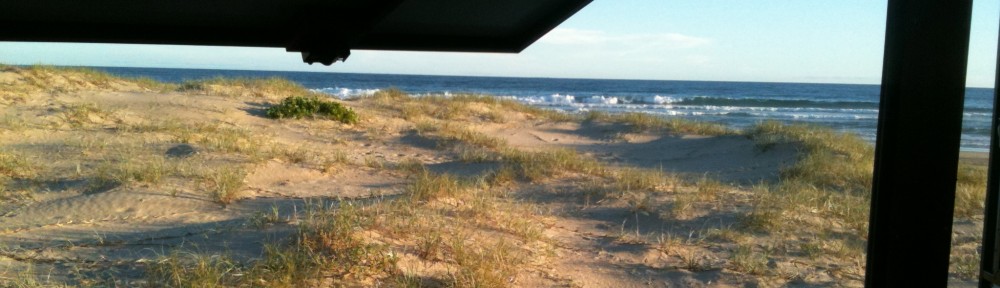
In this briefing from the sports desk, Gonzo spirit well lubricated, my fingers sticky with cheap wine and promise, I bring you news of my new office, perched high above Black Betty’s slick flanks, with panoramic views of the ocean. Somnolent dunes reach high above the water line, strangling vegetation sends out tendrils to choke and maim just metres from my feet and there is silence.

Black Betty in the dunes

The baby is asleep. So is the husband. All is good in the world.

Birrubi Point is at the northern tip of Stockton Bight, the infamous shifting sands that claims sailors and their ships, a skeletal coast that shivers and sighs, a lost world inhabited by monster trucks and lary drivers, rangy dogs, surfers and their chicko-roll-munching molls, wary dingos and pairs of pied oyster catchers, who mate for life, tottering in tandem along the edge of the sands searching for unwary bivalves.

I am caught in time, the gilded nostalgia of the late 70s and early 80s my camp looking-glass. The air tastes simple, a heady scent of hot chips, surf, sand, Hawaiian Tropic and the hairy breath of excited dogs as they skitter and pound at the water’s edge. The relentless crashing of the waves on the shore is nature’s lullaby, while young magpies warble and trill in the hope of a feed and seagulls hunt for chips.

As I type on the laptop, tethered to the internet on my iPhone, with a solar panel providing back-up power, an inverter at my feet, a trusty technician snoring close by, the irony of this idyllically simple life bristling with technology is not lost on me. But when I flick the switch the peace is golden.

Birrubi is Worimi land, 4200 hectares of conservation park. The land and waters have been used for many thousands of years for living, gathering food, as a meeting place and corroboree site.  Middens line the high tide mark, stretching for miles beneath the surface creating an ancient time lock. The sands hold the secrets and stories of the Worimi’s relationship and special connection with the earth.

Beyond the beach front, the swamp-like swales are dotted with wetland areas where fresh water and the tide suck and glut in a race for supremacy, leaving a brackish film of water on the surface. Dig down a little and pools of fresh water slake your thirst, while the emerald fringe of Swamp Mahogany and Paperbark trees lure you into their dank coolness.

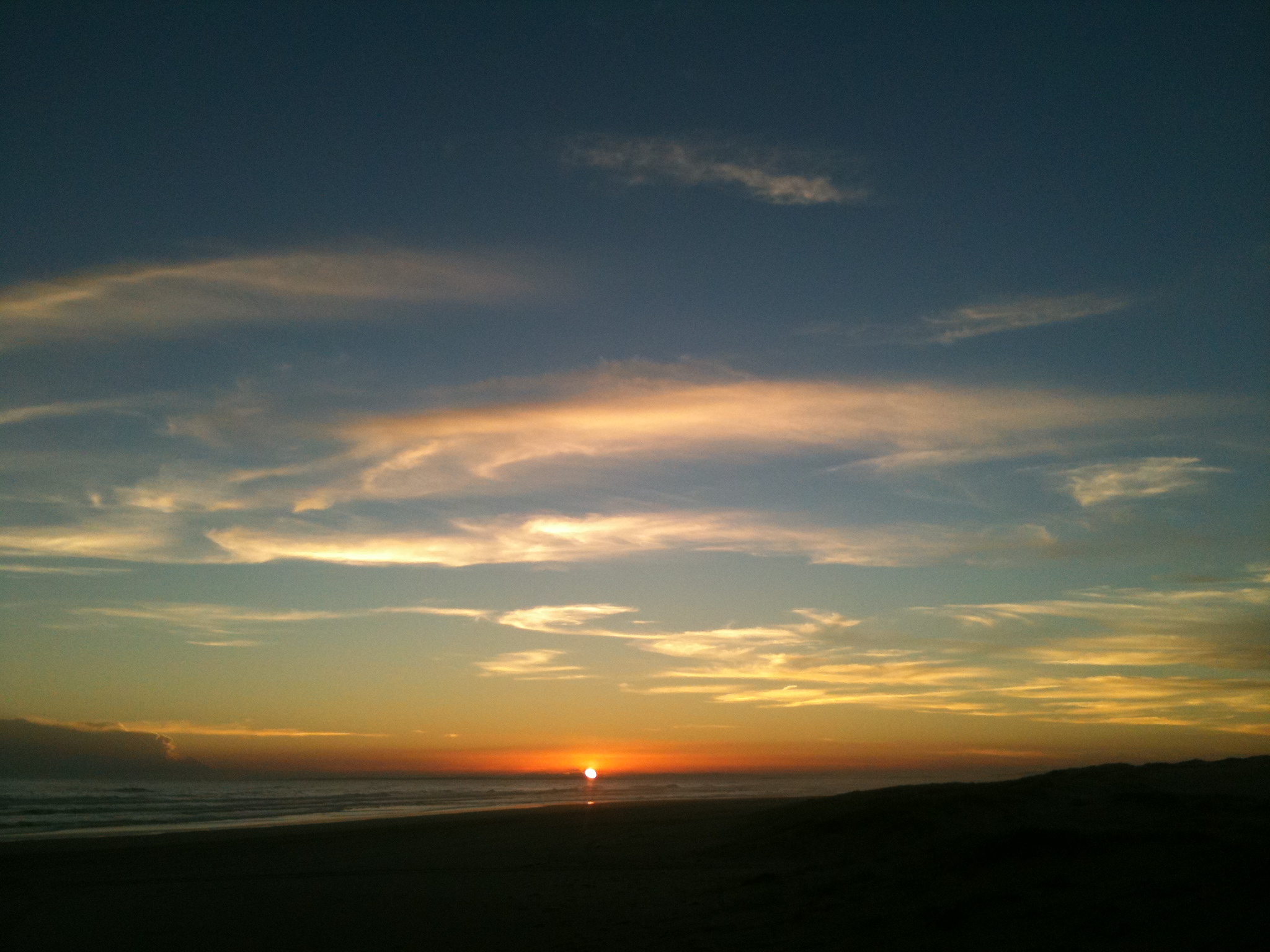
As the sun sets, bleeding out across the sky, I am lost in the dreaming.

Sunset over Birrubi Point

Seal Rocks

At the furthest end of the beach shadows slink in front of the chatty human-ness of the caravan park far in the distance. Beneath the craggy faces of monolithic rocks, old men glaring down at me, time shunts to a standstill, an ancient story whispering huskily. The strawberry-blonde sands run out, scared off by military formation cracks, the fissures through the rock lattice-like in their uniformity.

The slick rocks are carpeted in acid green algae, a mossy frond beneath the sharp, short frothing waves, and rock pools hold archaic ecosystems – in their indigo corners lurk ancient creatures that talk of evolution.

There is a brooding silence, into which the hissing erosion of water on land dissolves. I can’t hear myself think and as I question why, the tug of the surf reminds me of the primordial force of the land and ocean and their age-old battle for supremacy.

There is no Australiana here. Rather there is a divine sense of peace, snuggled tight into the heady roar of elemental battle. Ancient spirits whorl and swoop, humanity a distant afterthought.

Sigh. Back to the road…

Wasting away again in Margaritaville

Wasting away again in Margaritaville, there’s a woman to blame… the immortal words of Jimmy Buffett who also wrote Why don’t we get drunk and screw? and Cheeseburgers in Paradise. Legend.

And that woman to blame? She is probably me. I am the one that bitched and screamed about “going on a family holiday” and now we are here it is incandescent. If I could bottle it I could sell it. With a shaker of salt. And lemons that bite.

The weather on the Sports Desk today is balmy, with potential for balm. The truck is arse-up to the beach again, the growl of the surf replaced by painfully typical gentle lapping. Perched on the edge of the rocks at Seal Rocks, the tide sucks and gluts, a living, pulsing beat that marks nature at her finest. From the grommet-filled rock pools, epicenter of teenage bravado and slick with lust and sun-scorched skin, to the rocks, reminiscent of Piggy’s last stand in Lord of the Flies, a blighted, bleached lost space, home to a tribe of vicious kids with a strange hierarchical law – the teenagers are hunting.

The beach is small, at the end of a dirt track, but it is a busy stretch of real estate. The endless parade of the caravanning masses squeal and burn down the hill, acrid smoke marking their arrival at the caravan park. Zippered into conformity, a blue esky for a blue esky, these mobs are families making their yearly pilgrimage to the coast, like Margate. In the bush. And no roads. And fewer Chavs. OK. So it’s not like Margate at all, but you get the drift. It is the destination for a pilgrimage. Some of the craggier tribes, adrift in a storm of hot pink boogie boards, souped-up clackey clackey toys, cheap Chardonnay and snags, have been coming here for over 40 years – with a passion and dedication that bears witness to another life in another place.

This is nostalgia at her hazy best, a prism on the lost years of youth, when the crackle of overcooked skin and a salty tideline around the neck were worn as badges of pride, and when you knew you were living as the park lights dimmed and the cheap wine came out. They flirt, flit and fondle. a license to play extended into the witching hour as parents slumber in holiday mode and the air reeks of fumbled misadventure.

Hello holiday romance!

Seal Rocks


The search for Australiana Pt II – Bogan-arama

Things are looking up.

The moneyed sprawl of the North Shore-on-Sea gives way to scrubby-fronted Bundy-towel adorned fibros, interspersed with empty lots, like a decaying mouth, its teeth gone south. Run down, tired of the uphill crawl, The Entrance is bereft and our search for decent coffee runs aground. A lonesome jar of International Roast sits plaintively in a milk bar window, jostling for space with a jaded copy of Women’s Day and a dust monster. Oh. Wait. That’s the owner.

Catherine Hill Bay is a scrabble of gentrified and still aging weatherboards, overlooking a sulky, grey ocean. An idyllic haven, blighted by a one-time coal mine, its rusty limbs ghost-like on the horizon, the town is fighting a mass development threat. Catho is garlanded in protest banners, but the fear lingers in the air. One more victim of our gross excess?

http://www.catherinehillbay.org.au/save_the_bay_campaign/save_the_bay_campaign.htm

The road threads north past crumpled wrecks, former livelihoods swallowed whole by the present, while carnie trucks swagger and boast, bivouacs of latent distrust and glorious abandon. Theirs is a rural retreat from the flashing lights and the easy sell.

Passing one drive-thru-life after another, Newcastle hoves into view, its outer suburbs greasy with failed promise yet clutching tightly to the Australian dream. It’s memory tarnished with the gritty inevitability of the rich seam of coal beneath its lands, Newcastle is slowly re-emerging, its chrysalis sparkling with well-crafted tourism slogans and the promise of a newer, less grimy future. It is, apparently, my Brand Newcastle…

The seaside town of Stockton, known for its untamed sands, shipwrecks and aircraft crashes, squats to the north, an empty shell of a former existence clinging to its vapid association with its big sister. Separated by a thread of dieselly water, Stockton can be reached by an arching bridge that sets you down next to a coal mine. Literally. Next. To. A. Coal. Mine. Well, that sets the scene.

Just past the military installation, complete with edgy looking concrete bunkers, the slipway, the bowlo and the cemetery, the streets of the town all lead to the water. The beach flashes meaningful looks at us, while the harbour is choked with lumbering coal tankers, their horns the symphony of a briny life. Three pubs mark the boundaries of social interaction, the local with outside tables bristling with insider knowledge, the old man’s pub, rheumy and sad, and the new kid, tarted up, all gloss and chrome and rules.

All eyes are on Betty as she rumbles in.

An intriguing mix of gentrified weekenders and scarred, wafer-thin weatherboard the two halves of life are sadly evident. The haves have the polished pebble, spiky succulent in a beige pot plant by the front door and an alarm set-up, while the rest have a scrabble of boards, rusting 4WDs, dog leads, wellies and scuffed sand shoes filling the yard, the paint is peeling and life spills messily onto the road.

The chick at the bottlo filled us in. She reckoned that Stockton was chockers full of drug addicts, alcos and thieves and we should get the hell out like she did, you know, over the bridge?

Parked up next to a mob with a gaggle of kids, an old fella who called himself Jumbo and drank mids with a dedication rarely seen and the flotsam of a holiday caravan park.

And caravan parks are a whole other story.

Sygna shipwreck, Stockton Beach

In search of Australiana…

My attorney advised me to take a break. Forget about some stuff. Cut loose. Take the baby.

So I did. Packed up, shipped out, left town trailing an 18-month old tin lid, the cowboy and a litany of broken promises, the most significant of which was to return (with the baby).

I taste freedom on the breeze, a salty breath of release, and the smell of unleaded brings on a headache to mark the moment.

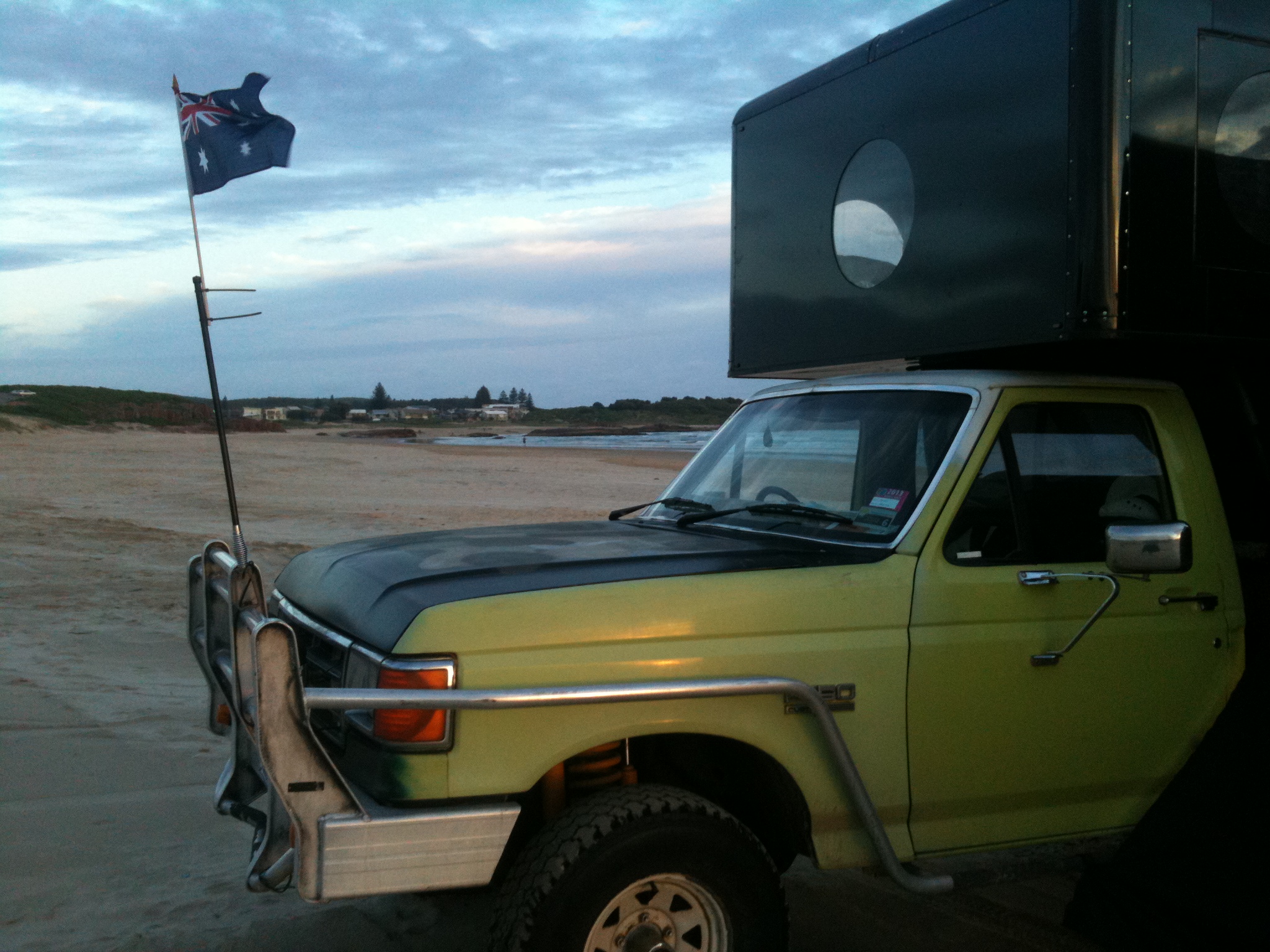
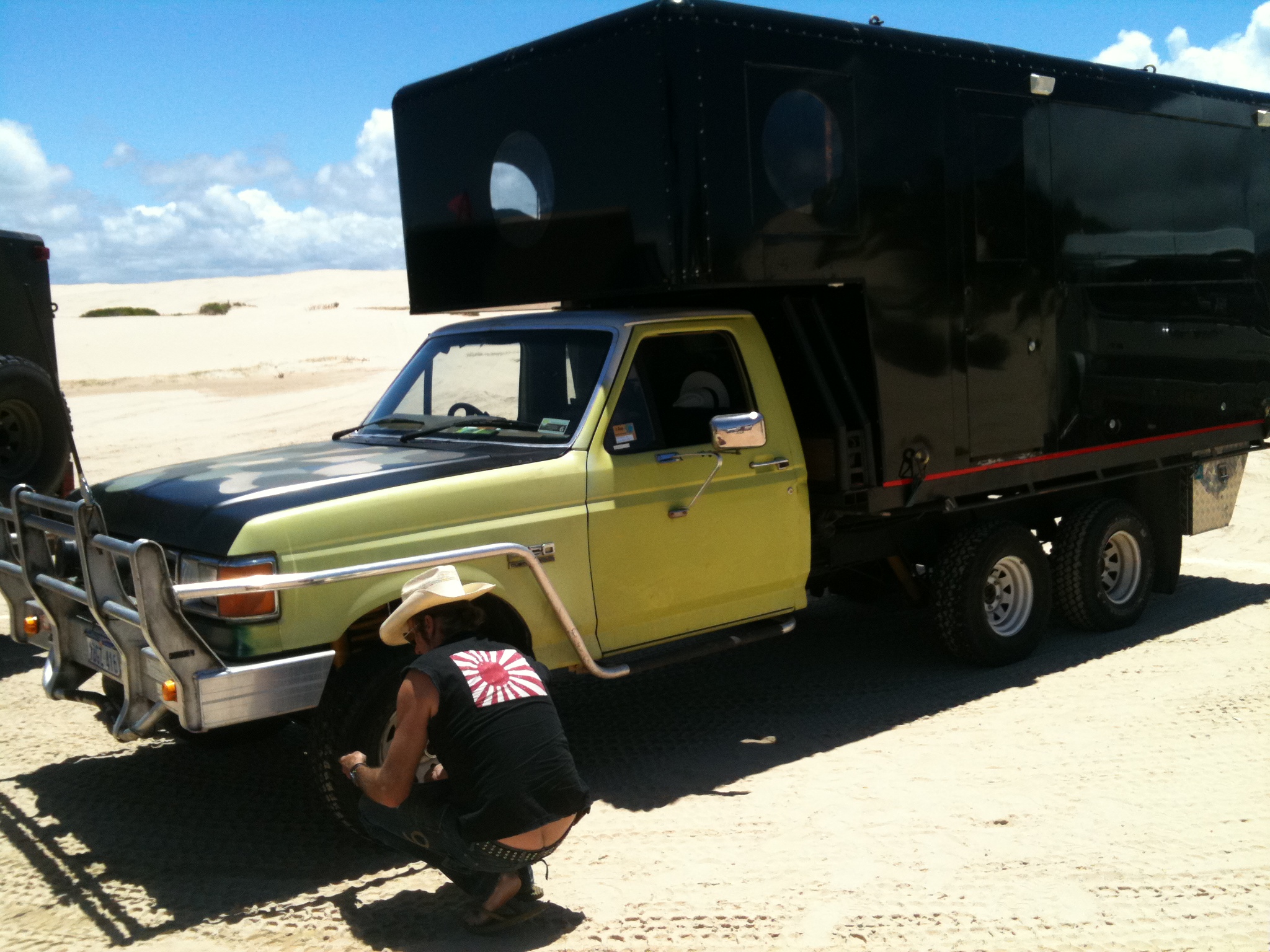
Our steed is a 6WD ex-Hammersley Iron fire truck called Black Betty; once rusting disconsolately in Kalgoorlie, she is now 4.8 tonnes of rolling stock, a flatbed loaded high with our travelling home, a growling bitch yip-yipping with the call of the road.

Our journey into the hinterland to prove a point about good coffee only existing in the metropolis starts here. It is the search for Australiana, the hunt for all things bogan and the heart and soul of this wide brown land.

(Note to self. When planning far-reaching escapes in search of bodgy Australiana consider options well. Avoca Beach, it turns out, is not a promising start.)

 Over and out.

Black Betty