Home of the brave

In an effort to maintain my frenetic search for Australiana, and in a fit of wild-eyed idealism, I packed the Tin Lid and the Cowboy into the Holden and pointed her nose to Soviet wastes of Homebush and the Royal Easter Show.

50

What better environment to bear witness to the deranged mania of our cultural psyche than an oversized paddock swarming with small humans high on sugar and roaring with adrenalin, mobs of cattle lowing with good health, outlaw clowns, balls of fluff that careen into ankles with squeaking abandon, roustabouts clutching half-crushed cans of brew and harried parents with fairy floss smeared across their peripheral vision?

6

This raging maelstrom is the crucible of Australiana: a small child coos lovingly at a helium-filled bunny snared to her wrist; an old bushie adjusts his hat to better see the young stags riding stallions in the rodeo; working dogs yip and holler, tucking sheep into corners as neatly as cobwebs. A stock whip cracks the air like a rifle, quivering knees or hearts depending on your view, and a sheep-handler sings a Kylie song out of key.

Here Chiko rolls and Dagwood dogs parry for supremacy, the doughnut stand puffs cinnamon into the air to attract its prey and pizza comes in cones. Here apples are juiced in front of you, offering a tart taste of the highlands, slabs of meat roast in the open and you get to have a beer with Duncan…

428

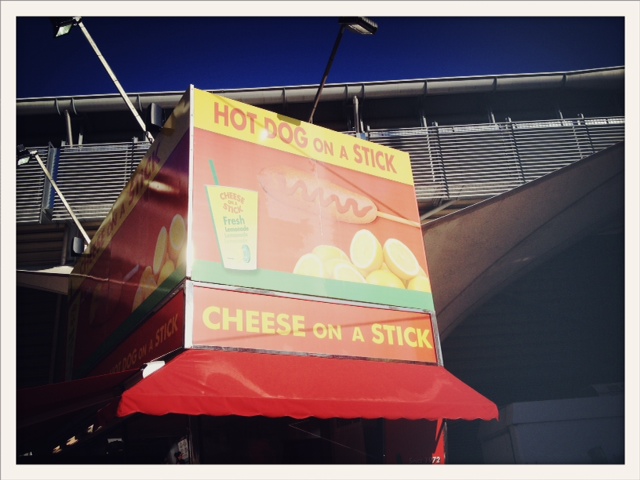
The stark truth though is it is the cheese-on-a-stick stall that they queue for, lines snaking with sinuous indecency. A small sign in each booth reads; Hold on to Hope, a gentle message for those struggling with life. It’s a curious marriage, cheese-on-a-stick and hope. Perhaps the message is reassurance that if you can get cheese to stick on a stick anything is possible.
2221

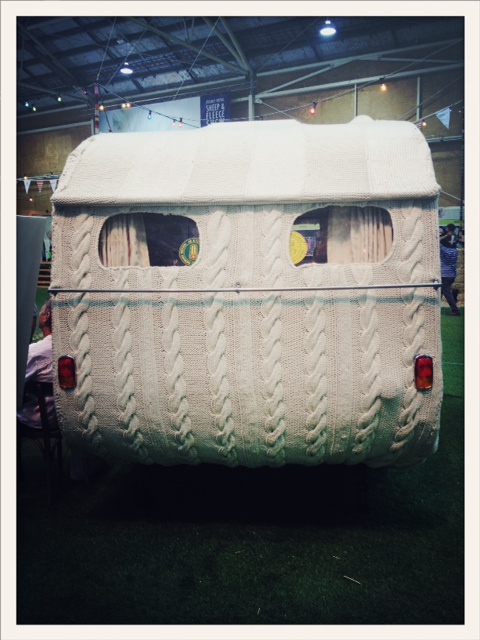
Here ugg boots mate with flannelette in broad daylight and merry-go-rounds have heritage orders. Sensible shoes carry middle-aged knitters to the wool display passing Kermit and Miss Piggy, who hang suspended from their feet and, though clearly indisposed and eager to clamber down, are impossible to win.
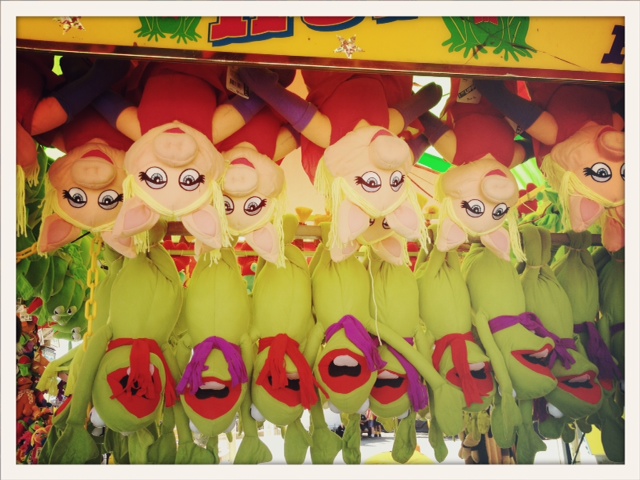
384543

The wooden monkey racetrack tests the Cowboy’s prowess and his dismal failure does not go unnoticed, however a rapid retreat into the arms of a horse named Stan lessens the blow:

16

Beneath a big-wheel shadow too small for its owner we find what we have come for, a barn that smells of the crush of fresh straw and the acrid smell of urine. It is fat with infants – human, poultry, bovine, ovine and swine – and life burgeons from the seams like jam from a well-held sandwich.

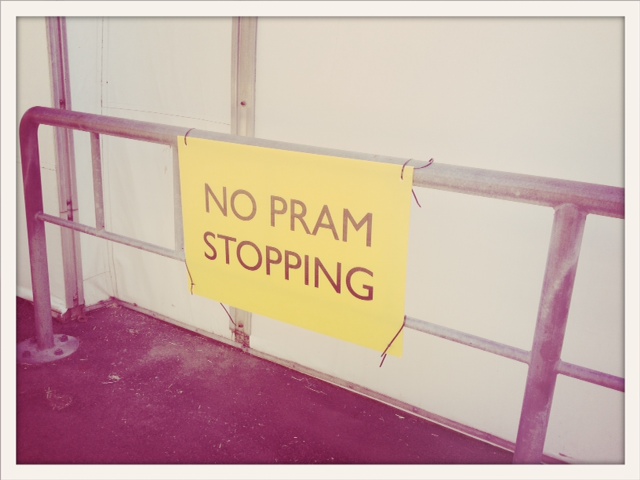
Obeying strict stroller parking instructions we duck to enter, and the Tin Lid hurls himself  in the teeming melee – he has found his mob…

3332

31

The public order riot squad lingers outside twiddling its thumbs, anxious to quell expected carnage. The bawking, squawking, bleating oink of the animal sheds does little to rearrange stultified expressions of derision, though a lone oik attracts attention, low-slung dacks and a tattoo of a Chinese symbol on his upper arm (which may or may not read #66 chicken chow mein) a dead giveaway of his criminal intent.

In the dairy shed a bored ringer cruises Facebook, a beer at his feet, his stock oblivious to his distraction;
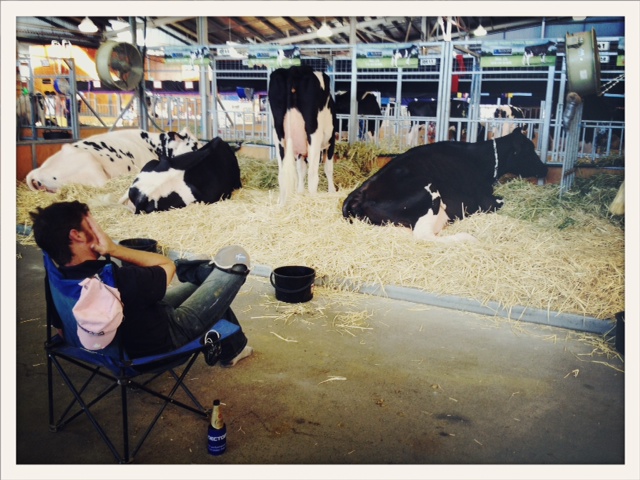
30

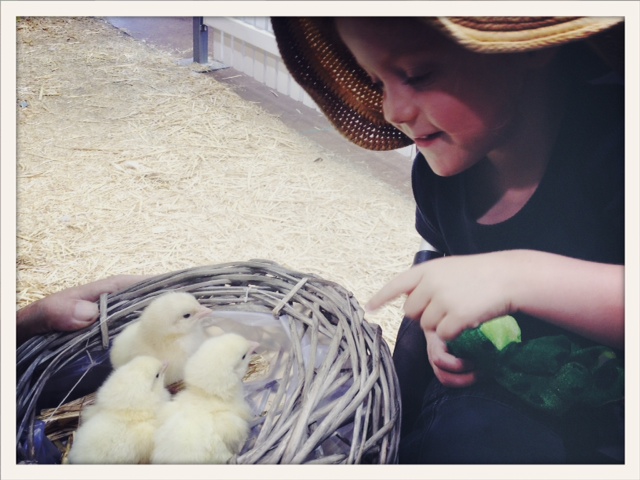
While in the poultry shed the art section cuddles up close to the Pigeon Fanciers Association. This little gem says it all really:
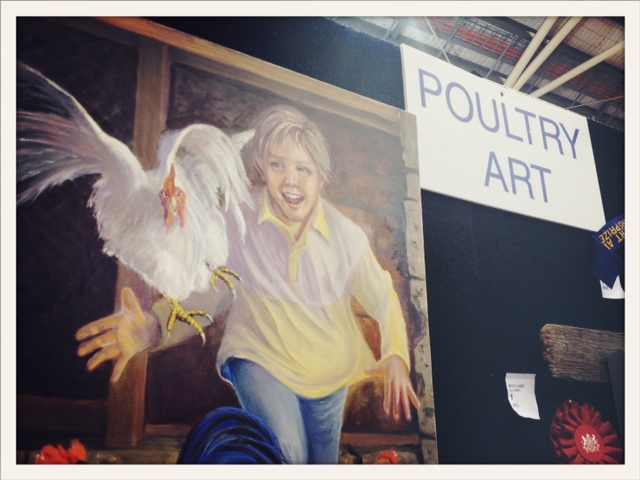
34

In a quiet corner there is evidence of fowl play – a paper plate despoiled by sauce and sticky fingerprints, tiny bones littering the straw bale next to it, serve to remind of the tenuous nature of this show and tell…
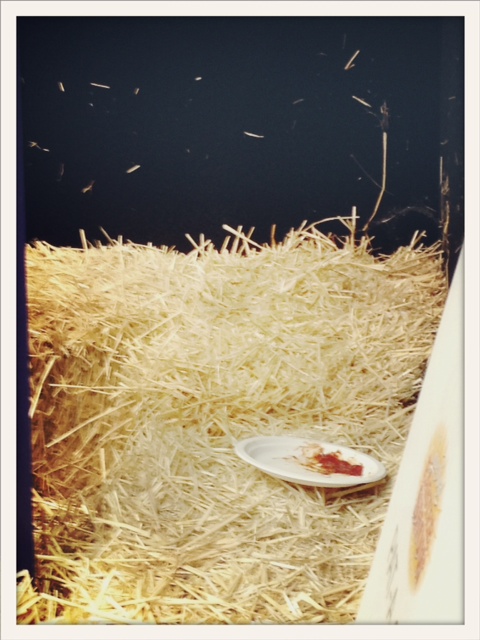
3635

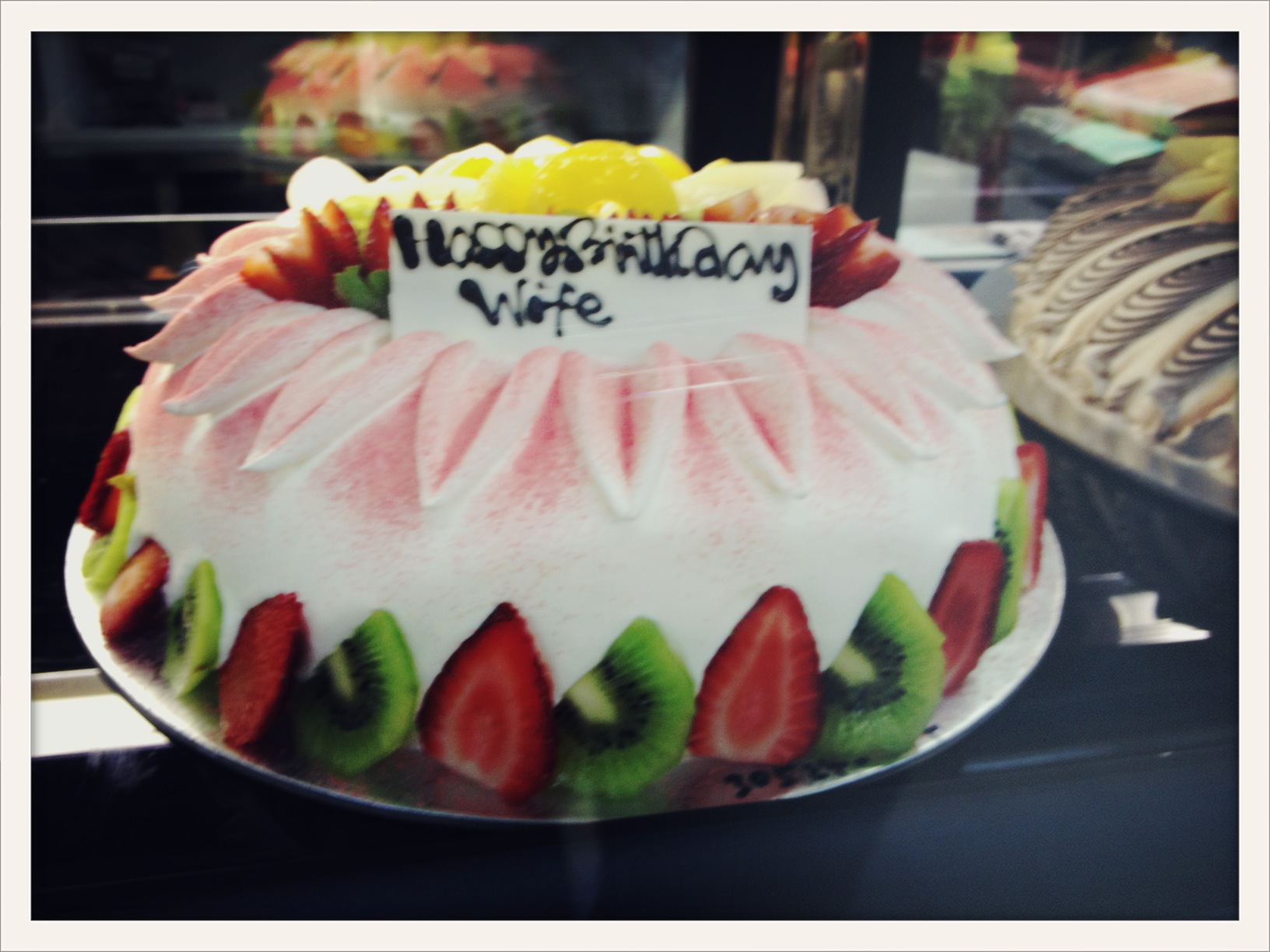
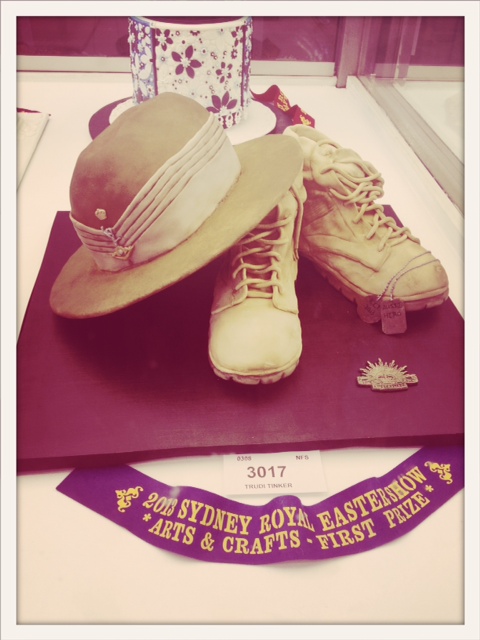
The Country Women’s Association beckons. A nice sit down and a cuppa is the ticket, before a stroll through the cake decorating pavilion, a shrine to iced invention and the dark arts.
1918

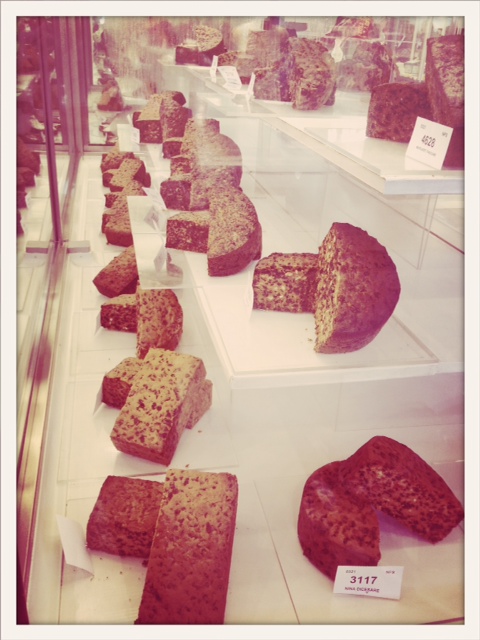
Closely followed by the fruit cake display…
17

The necessary deliverance from this atavistic alchemy comes in the form of cold beer and a leather-carcassed biker slouched against a temporary bar discussing the drought out west with a mob of weathered stockmen, weary after a week in the city.

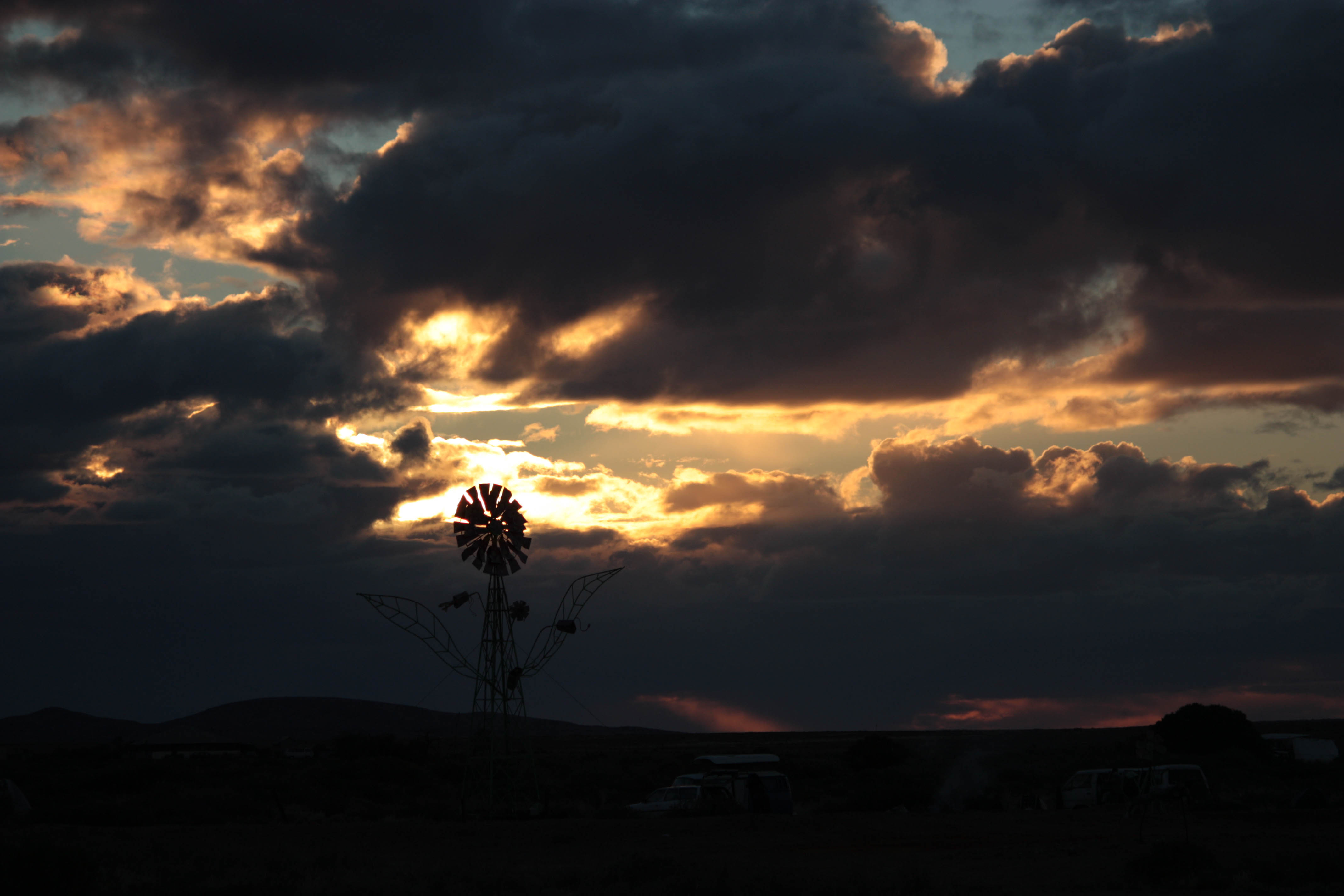
And as the sun melts from the sky smearing gold and crimson across the horizon the show comes into its own. The fading light sparks a flurry of fluorescence, neon flares stab and fizz and a cast of carnies loom from the darkened reaches of churning machines.

11129

Rides emit a shrill pitch, lights flash and sparkle and the tension mounts, an amplified unease that heralds the birth of night.

1514

Sideshow alley is the Apocalypse Now in this twisted grimace of entertainment, where life bellows in angry rebellion, strobe-lit in hot pink and lurid green. It is a giant step from fluffy bunnies to this greased oblivion, but the Tin Lid takes the steep learning curve in his stride, howling back his appreciation, slicing the air with a whirling blur of light that shrieks the opening chords to Waltzing Matilda.

31

It is the revelry of fools, a poisoned spurt of excess gilded by feel-good fantasy, yet I cannot wipe the grin from my face and the boys know no limits, cramming hot chips slathered in chicken salt into mouths sluiced with saliva.

This is the home of the brave, an unmanned crossroads deep in the heart of Australiana.

Eat, drink and leave

It’s the most easterly point on the Australian mainland, yet Byron Bay has a certain West-side vibe, a gangsta authority over all things karmic and crown-chakra related.

f

Daily ocean dips and deep Ashram-inspired devotion, spirulina smoothies and tantric touching all deliver the vibe in spades, with astral travelling, the Crystal Castle, mediums, infrared saunas and dandelion tea ensuring a good all-round blanketing of spiritual bliss.

The Bay speaks to people. It is a place etched in lore, a rite of passage and initiation chiselled into the backpacker tracks that span the coastline of Australia, paths worn shiny with overuse and the drag and splatter of banged-up vans.

6

For this little travelling tribe, Byron was a Mecca – a refuge for the alternative and a haven for the strange. Smoky trails of nag champa and pot streamed from the emerald hills that ring the bay, the Echo ran ads for tofu welders and yoghurt-weaving workshops while straggly dogs tied to trees howled into the night. Fire twirlers lit up the sky with shafts of light and the acrid burn of kero, pubs thronged with bushies, bikers and birds, and bare feet padded hot sand into cooled milk bars.

Byron-01_2-625x390

Radical, alternative, flecked with tie-dye and crowned with raggedy dreads stiff with salt, the Bay was a form of scruffy redemption with its off-beat counter-cultured charm, colonics and sticky chai.

a

Located in the slumped gut of a long-dead volcano, this lush sea-fringed hinterland is a meeting place, a one-time corroboree site and hunting ground and the magnet that attracts the filings of life. You come, you heal, you leave. Or so they say.

But today we skirt the edge of a new scene, a brander, newer world, glossy with money and power. Muscled 4WDs leaking ice-cold aircon stalk car-parking spaces on the sea front, while the clip clip of spiked heels from those cooled interiors mark a trail to generic shops brandishing tat and tap-and-go convenience.

3432

Black Mary causes a stir with her rattly growl, hurling her bulk onto the pavement, prime position on the beach. With the evening wrapping its soft shroud around us we head to the pub for a cold beer. Thumping FM beats throb to a crowd of well-dressed dollies clutching lolly-bright Breezers, who natter of plush rooms in exclusive retreats and the health benefits of kale. We watch from the shadows as shards of laser light clatter through the sweating dark. Glittering eyes follow our movements, curious as to the luggage in the trolley. Emanating from them is patent PC displeasure at the Tin Lid’s presence outside of daylight hours, though he is unperturbed.

Silent censure seems to filter through this once culturally promiscuous town – where once ideals and dreams fucked in the open, now mere suggestion of a life outside the box is best sheathed, while alternative has become a brand.

Like the bloodied aftermath of a bad prom, torn and regurgitated, inappropriate, something to be ashamed of in the morning, Byron struggles with its image. The phalanxes of bashed-up HiAces littering two-minute noodle flavouring and financial despair are easily shunted to the edge of the dream, and increasingly the salacious soul of this one time hipster is sidling west in sympathy, replaced by a plastic fantastic futility.

Market forces have driven out the quirky character of the town, which has long been its drawcard. Salons still offer colonic irrigation as casually as a manicure, but on the main street the offbeat is nowhere to be seen… Byron Bay may have resisted McDonald’s but now you can buy a Subway sandwich, a Domino’s pizza and a Baskin-Robbins ice-cream. “Drunks’ tucker”, as the local police call it, has replaced alfalfa salad.

Sydney Morning Herald

31

A one-time working-man’s town, with a legacy that includes sand-mining, whaling and a stinking meatworks with a bloodline that spewed offal straight into the bay, Byron has become a playground that resounds with pitched battles, superiority complexes and the squall of entitlement:

There can be few towns in Australia with a more contradictory identity than Byron Bay. On one hand it has, historically, been associated with the alternative lifestyle movement of the 1970s and seen as a kind of interesting hippie retreat in northern NSW. On another level it has been seen as a very upmarket get-away-from-it-all retreat for wealthy southerners not wanting to mix with the hoi polloi who inhabit more vulgar coastal townships like Coolangatta and Tweed Heads. And over the past thirty years it has acquired a reputation as the residence of the rich and famous…

Traveller, Sydney Morning Herald, 2009

12

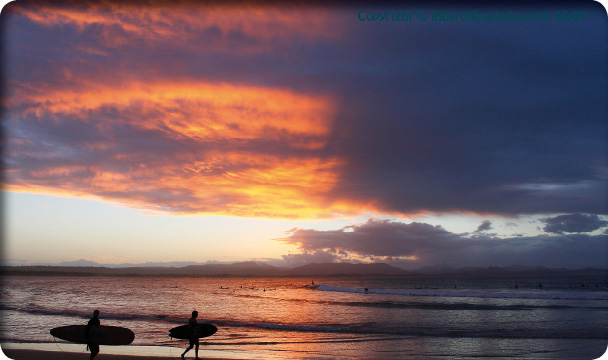
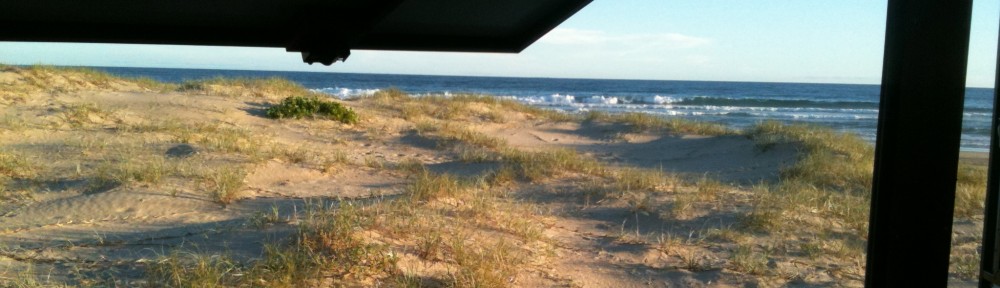
But the early morning beach brings some respite and ripples with life. Surfers share waves with pods of dolphins, backpackers slump, passed out on the sand, and families tag-team in the shallows. Byron is a holiday place and the wafts of Hawaiian Tropic and hot chips that sidle by on a gentle easterly temper misgivings of luxury resorts with million-dollar price tags, street brawls and a shadowy underground that reeks of the old school.

d

Needless to say, the Tin Lid takes to the idea of a summer holiday with toddler-streaked verve:

photo2

And we embrace a week in situ, with Mr Whippys that slip slide down hot skin, 22

fish tacos that promise peace,

14

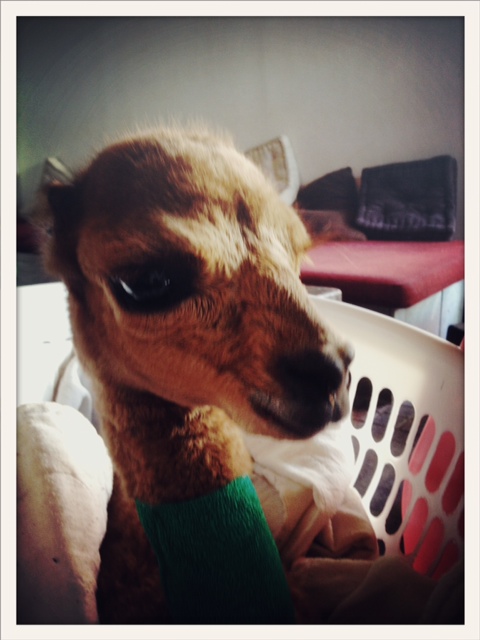
and the company of a baby alpaca, who peruses the Japanese fusion menu from the comfort of her washing basket.

17

And in this eccentric, eclectic and, these days, exclusive place, we find a peace from the long haul of the open road. The exquisite beauty of the bay is undeniable, a torrid affair of verdant tropical green and violent turquoise, and the sense of the metaphysical is novel. The emphasis on fresh food, alternative therapy and health is a diversion from the Australiana road show, where green veg is hoarded, stashed and eked out until replenished, and salad sandwiches from the servo must suffice.

A hotbed for creativity, the wider area beams with a wholesome originality, a unique vibrancy that allows you to shut out the sense of malignant decay that feeds on itself. Beyond the bay, the cool depths of the interior hold a deep fascination, not least because of the things you overhear:

With thanks to Overheard in Byron Bay

“It’s her housewarming. I’ve already given her an eagle feather but I feel like i should get her something else, too.”


Facilitated Thematic Soirees: covering inner voice dialogue to the tantra. Only if your single and over 40, please email a photo. Namaste…                                Personal ad, The Echo

“Hey, you look familiar. Were you in court the other day?”

“I need to get some beef bones for Ganesh”

“I’m very sensitive to the socks I wear – I tend to absorb the spirit of the animal they’ve come from quite strongly.”

“Do I need to bring anything?”
“No… oh – actually, just your favourite cushion. And some cacao.”

“I’m a private person. I don’t put my smoothies on Instagram.”

“Got much work on at the moment?”
“No, I’m really just focusing on getting yarn-bombing up and running in Lismore.”

“What do you do?”
“I’m a mystic. I also work in construction. Everyone needs a disguise.”

“Do you mind if I keep these aioli containers?”
“Sure, why?”
“I’m sleeping in a cave tomorrow night with seven men and I’ll use them for candles.”

“Why aren’t you seeing India any more?”
“She’s still eating sugar.”

“Look, I’ve got a boat and a bong, what else do I need?”

“I only use organic moisturiser – it seals your aura better.”

“I’m feeling very scattered. I need to eat some root vegetables.”

“Well you could go and work in Brisbane, but you’d have to wear shoes.”

“It’s very damp in here – have you been tribal belly dancing?”

“I’m not answering to ‘Avocado’ since I started eating meat again…”
“How did you put your back out?
I fell asleep on my crystal…”
35

Any port in a storm

Evacuated from Fraser Island, the storm pressing down on us, bedraggled and rattled we flee south, covering barely 80 clicks before Mary hauls her dripping tailgate into Maryborough and skids to an ungainly halt.

photorain

And. So. It. Starts.

Howling Valkyries vent squalling funnels of rain at the truck. The KD (our knock-down shelter) buckles and sinks to its knees, a watery death with sodden mourners. As Mary slews to the left, rocking on her axles like a troubled child, the streets slide away, coursing, surging downstream in a flood of despair. Tangled limbs skewer deep drains that choke and overflow and the maelstrom spins into a whorl of hate, lashing all in its path with malevolent fury.

This is the prelude to the devastation wrought by ex-tropical cyclone Oswald, a storm cell of unprecedented force that slammed into the southern Queensland coast in January 2013.

The morning is a slate grey shroud, bruised-bellied clouds skud across an invisible horizon and water pelts from the sky, caught in a vortex of angry air.  Towns submerge before our eyes, all roads to the coast are closed and the highway is our final retreat.

In full flight and surfing a latent frill of fear, we let Mary off her leash…

It feels like this www.examiner.com

It feels like this.
http://www.examiner.com

Russell Island is the largest of the Southern Moreton Bay Islands, a mob of curly coasted land snippets that wallow just off the coast of Brisbane. Funny place to take shelter you might think, but Russell lies in the lee of North Stradbroke Island, which promises protection from the elements. That and an open-hearted saltie, the indomitable Captain Dave, catcher of crays, who offers a port in the storm.

The car ferry rolls like a bitch; while the Tin Lid and I pitch queasily from side to side the Cowboy spends the hour at sea boning up on local info. According to the storyteller Karragarra is the gay island, a mere four kilometres of rainbow-hued hubris and a Ferrari owner who drives his pride and joy along the 300m of tarmac twice a day in a squeal of glory. Macleay is the site of a recent murder, an elderly woman robbed of not only her hidden fortune but her life. When we were there no-one was talking, a wall of silence that buffeted the police barge moored stubbornly in the ferry lane. The culprit, a ‘junk-mail deliverer’ has since been arrested. On Lamb Island there is much discussion as to how the mainlanders cope with ‘Australia’, that distant country just 20 minutes to the west.

Russell Island does not rate a mention.

As we wait out the storm at Captain Dave’s all hell breaks loose, a bellicose virago that scolds the landscape with her hysteria.

photo-256photo-227

The power fails on the first day, the pier is inoperable and the ferries stymied; there are food and water shortages, produce rots in the darkened island store and the threat of structural collapse keeps people shuttered inside. Isolation takes on new meaning here, as visibility drops to a few feet and the long life milk the Tin Lid has stashed dwindles to a trickle.
For five days we are stranded. It’s all very Robinson Crusoe – with mango moonshine and board games for ten.

A quick game of mango bowls

A quick game of mango bowls

In the aftermath the IGA is the place to be. It is eerily empty, shelves bare, save for a few hollow-eyed souls stocking up on Black and Gold.

A grey lady sporting grey mullet, teeth and skin, plus a dim outlook on life, is bereft in the biscuit section:

“We’ve ‘ad no power for four fucken days, no food, no help. No bugger came to see if we was alright or nuffink. We moved from bloody Gympie to get away from the water but me, I’d rahver be flooded there – at least there people come and check on yers. Drive through flooded roads and everythink. And some fuckers had power! So I didn’t have to throw all me bloody food away after all. Fuck ’em. No-one even offered to help.”

Distraught and dejected she slides out into the rain carrying her yellow-and-black-hued treasure: cat litter, chicken soup, dunny roll and a ratty pack of Milk Arrowroots.

A disaster management plan is in place and flashing lights illuminate the damage. Finally we escape the confines of our isolation into an island that thrives on, well, isolation.

photo-225photo-223

photo-215photo-216

Kibbinkibbinwa Point and Ooncooncoo Bay, Turtle Swamp, Whistling Kite Wetlands and Wet Mouse, the island trails intrigue in its wake. With all the inherent issues of island life, Russell is a weathered soul, lines of frustration worn deep on a sunburnt face.

Once an Aboriginal hunting ground for shellfish, fish and turtles, the island was only settled recently. The local mob believe that the eerie searching sob of the curlews that stalk the corners are the souls of children who have died, “the call of the young ones”.

They left well alone, save for a crossing point from the northeast tip across across the passage to Stradbroke Island.

curlew

The whitefellas have no such quandaries, spreading out, kit homes in tow, like an unexplained rash. According to the Brisbane Times,

“The population is small, the views are priceless and the facilities are reasonably good  considering most things have to be shipped in. But the wide-spread land scam that dogs Russell’s reputation has likely kept many away from this spot in the past. During the early 1970s, large parcels of farmland were divided and heavily promoted by investors. Many unwary buyers found the blocks of land they had bought were not where they thought, and media reports at the time documented how some were even underwater at high tide.”

Moving house, island-style

Moving house, island-style

photo-258

A house with no stairs

photo-249

True blue hidehole

This place has a healthy seam of blood-red Australiana running richly through it, a sticky viscosity of retro dagginess. A sulky teen butt-scoots along on a skateboard down a dirt track. A heavily mustached, tattooed and muscle-bound bloke leers from a Commodore, his vowels exorcised into an ocker drawl. His moll is a picture of suburban necessity, unscrunching her Aussie emblazoned boxers with an expert finger, uggs schlepping on wet concrete despite the tropical heat.

photo-233photo-246photo-222

Island necessity breeds innovation in the sweetest style:

photo-237photo-232photo-231

And a Sandman lolls insolently on a pebbledash drive:

photo-238

The whisper of a dope-dealing mafia outpost that is protected “by a pit bull with aids” meets a tangle of rusted metal that marks the final resting place for a burnt-out ute, eaten alive by the sand. A man arrives home carrying an esky and a car battery, his stubbies rumpled from the ferry.

photo-259

A scrabble of discarded fridges, rusted car bodies, old shoes and plasterboard stamp a heavy urban footprint. It is testament to Russell’s status as a human hideaway, a bolthole for artists, retirees and thieves. Million-dollar properties with waterfront views are lapped by a stain of underprivilege, a greasy scum that floats on the surface of paradise.

photo-240photo-241

photo-247photo-230

But despite the palpable pall of inequity that scents a wary breeze, there is a rich weave of society on Russell island and social debris and the clutter of commonality aside, nature has a way of burgeoning before your eyes, rampant, verdant and wealthy.

photo-236photo-252photo-251photo-239

Precious wetlands, an abundance of woodlands, mangroves and tall trees, Russell is a conservation locus. It is here, among the whispering grasses, or knee-deep in a rock pool where liquid life churns between cool-skinned bones that this inscrutable curl of isolation truly exists.

Dirt tracks straight and true peter out with a sigh as the bush reclaims its own. Vacant lots have an air of resignation, plots with no plot. While humans challenge and develop and clutter, Russell Island strikes the sound of perfect silence all on it’s own.

And Captain Dave took the Tin Lid crabbing. Which made his little life…

photo-253photo-218

Nerves of steel and dirt

Inland roads scrawl across the bush, a slashed stanza, a curled thought, a trickle of pitted asphalt set against an empty horizon that dies in a dead end constructed entirely of dirt.

10

The blacktop melts in sweaty anxiety and as temperatures soar into the high 40s, Mary struggles to breath, her fuel lines wheezing and sighing with effort.

Deep into the never-never land of the interior, just left of Chinchilla, a long-distance call to my attorney dispenses cool sun-lounger-savvy advice: “Head east out of Dodge and dip your toes in the drink, my friend, the water’s just fine…”

While our destination is a coastal Arcadia, our precise location has taken to shimmering like a mirage, a false visual economy that pays out in sweat.

Sliding onwards, Mary lumbering slick, the air crackles with static, baked gusts seer and choke, while skin sizzles pink. The thermostat knocks like a hooker on overtime; the fan belt squeals, mortally wounded…

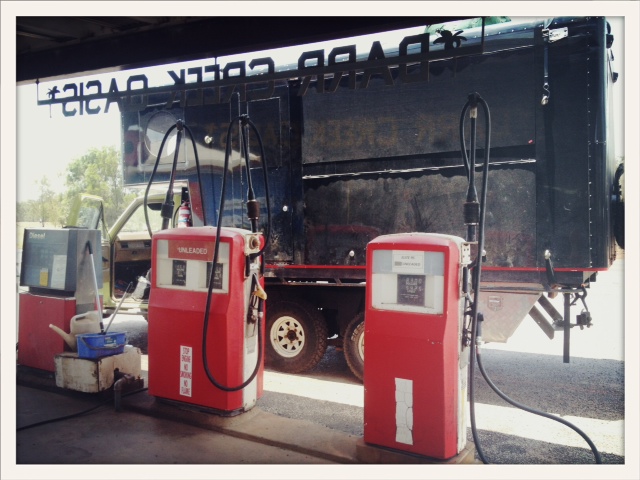
Never has a servo been more aptly named than the Darr Creek Oasis, a sanctuary of unleaded, fresh papers and icy refreshment. And possums that pant like cartoons.

2

A well-earned drink

A well-earned drink

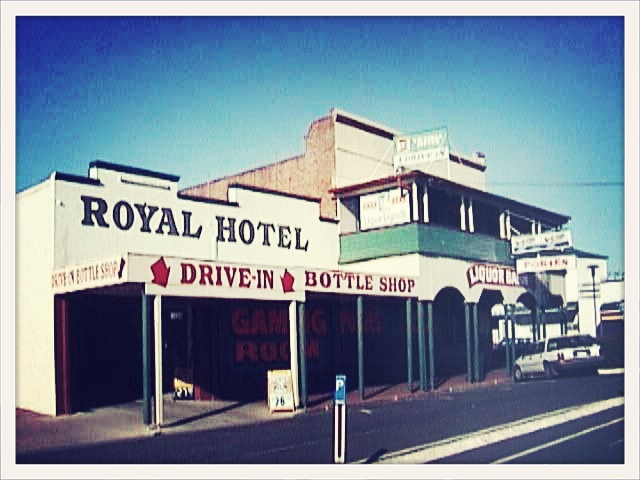
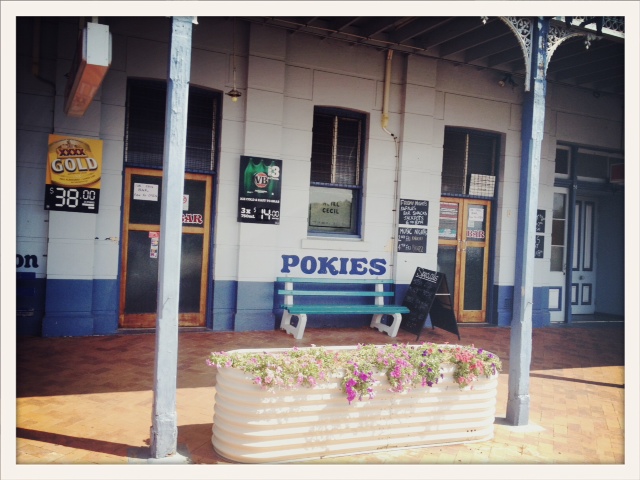
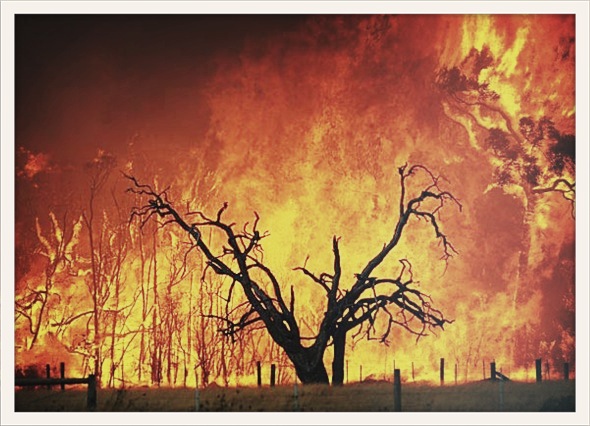
To the east of Murgon, a stunted apology for a town on the Bunya Highway that seethes with disillusion and angry recrimination, a bush fire scours the sky. Angry flames in the distance and a thick pall of smoke drives us to ask if the road ahead is safe. “What fire?” is the response from the pub, where a mob have had their faces eaten by the pokies they are in thrall to. Bleeps, clicks and the clink of change make conversation impossible and as the main street fills with smoke we roll on.

The cavernous confines of this one-time pub now hold litre upon litre of cask wine

The cavernous confines of this one-time pub now hold litre upon litre of cask wine

Named after the local Aboriginal word for dingo, nearby Wondai was once a timber town and home to the legendary pacer Wondai’s Mate whose four-legged legacy spills brashly from the door of the pub as the punters howl at nags in the 3.30 at Flemington.

11

8

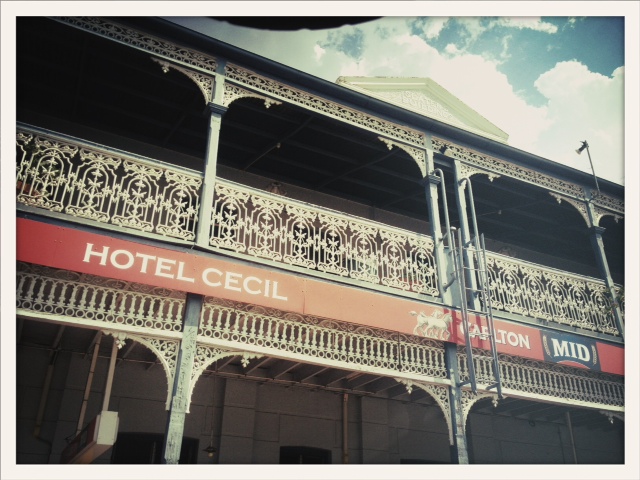
The publican is sitting outside the Cecil as well roll up in a V8 roar. We ask him about the fire and he responds by telling us he’s the fire chief and he knows nothing about it. Reckons we should “head inside for a coldie. Get fires like this every other day.”

3

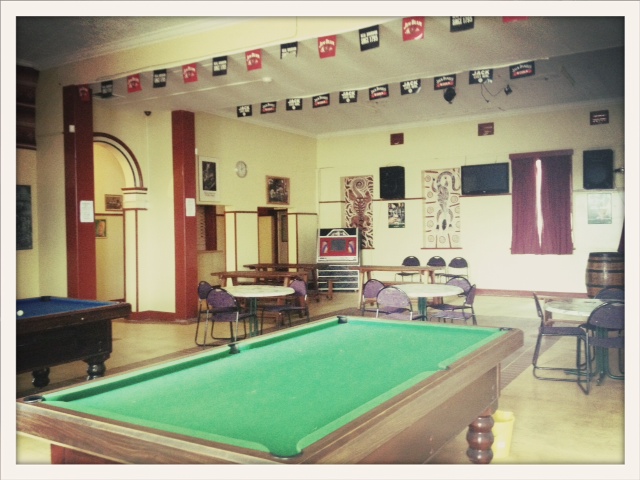
Tin Lid in tow, we venture into the cool depths of a grand old dame to a bar clung to by characters. The Cecil’s skin might be lined and peeling, her veneer a patina of age and neglect, but her bones are strong and bear the weight of time well, albeit in a sickening shade of puke. And the characters? There’s a book in that story…

The fire chief's seat

The fire chief’s seat

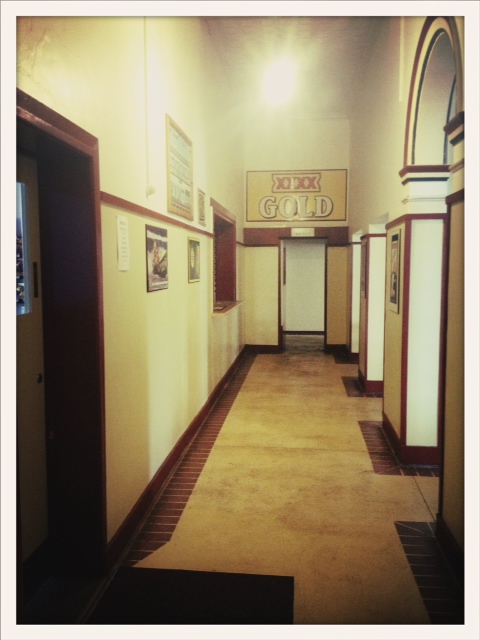
Cold beer and lemonade help us forget the raging inferno that fueled our bat-out-of-hell entrance. Sneaking away from the race-caller’s holler, I find hallways to nowhere and stairs to infinity, the echoes of the past whispering seductively in my ear.

6

But it is the Tin Lid who discovers this gem – a gaming room for giants with carpeted walls, decked out in musty hope and trailing the promise of a party like lard on a string uncurling beneath the nose of a dog.

5

A bloke in the beer garden starts to yarn. He’s keen to get out of Wondai and back to Moreton Island so his kid can swim and fish and he can knock the booze on the head.

“That’s the problem with the bush; it’s a small town mate and the only thing to bloody to do is go to the pub or fight the fires. There’s nothing else mate. At least on the Island you can get out and do stuff and not have a beer. I mean, don’t get me wrong, I love a beer. But I don’t want my little fella just thinking that’s all there is to do.”

Under a hazy sky in a sun-dappled garden with the smell of hops and timber on the air it seems hard to believe anyone would want to leave this tidy country town with its close-knit beery crew and neatly mown edges.

Hazy shade of bushfire

Hazy shade of bushfire

Like he said, there’s work and fires and booze. Keeps you busy.

We leave after one, aware that Arcadia awaits and that the smell of smoke is stronger still. As the Cecil fades from view and we head north, away from the smoke, I wonder at their certainty, at the sheer will of a country community to know, “She’ll be right mate, ‘av another beer will yas!”.

Two days later, from a cyclone-drenched Arcadia, I find a story about the bush fire that roars through the interior at Murgon. Started by dry lightening, it is the start of an inferno that eviscerates vast swathes of bone-dry land.

fire2

fire

No lives were lost but the land is now raw and scarred.

Reckon the locals coped well though, what with their cool bar to cling to.

It’s all fracked

In breaking news I can report that there are no giant tomatoes in the small Queensland town of Roma.

photo-198

And despite widespread confusion in the Italian community, neither does it brings to mind the soaring antiquity, Renaissance glory, post-Byzantine significance and mythological lore of its namesake in northern Italy. Where The Eternal City proudly shuffles upon a shag pile carpet of culture, Roma has to be reminded to scrape its boots on the mat.

What Roma does have is the demonstrable pride of being the birthplace of Ray Meagher, the actor who plays fictional soap opera legend Alf Stewart from Home and Away, whose exquisite lexicon includes, Strike me pink! You flamin’ galah, you let the mongrels escape!

That and a lot of coal seam gas…

photo-174

Which is why this well-heeled agricultural centre, the food bowl of the Darling Downs, has suddenly come over all sleek-sneakered gym bunny in the midst of a ‘roid rage incident.

Tired utes bearing rangy mutts, bailer twine belts and empty streets full of remember whens  have been supplanted by a vicious swarm of activity that buzzes frenetically, a fluoro orange aura beating from within it.

This is a boom town, heavy with expectation and the cloying smell of lucre.  High-vis tradies crowd the coffee lounges, pie in hand, while rigs bristle with antenna and reflective striping, an alien colony intent on domination.

photo-176photo-166

photo-160

The tired determination of country Australia has been browbeaten by a high octane optimism that is infective. The Santos shop, front and centre on the main drag, reflects gangs of people in its eerily empty glass; utes with flags, stickered tags and flashing lights dance in formation, the numbers on their doors like ball-room dancers’ ID tags, their flags reminiscent of a marauding Korean tourist group hustling to see the sights first.

photo-182

Foxtrot specialist

New sites bloom at the edge of town, crammed with drilling equipment, schmick trucks and air-conditioned dongas:

photo-162

Halliburton’s heroes

photo-161

Carved from dirt

photo-184

An army on the move

photo-167

and unmanned servos have appeared like a rash over night.

photo-164

Unmanned but ruthless

Crammed motels spew guests into the arms of seedy pubs, while concrete bins and shipping containers (complete with matching sheet sets) double as home. Buildings breed before our eyes as motels and caravan parks are carved out of the dirt, row upon row of low-slung shelter crouching close to the ground.

One of five motels under construction

Out of thin air

Out the back of the pub on the way out of town a greying woman sits silently in the dark, smoking a fag and sipping on a can of rum and coke. Her eyes are a lifetime away, lost in a better place, and she makes no attempt to talk but is friendly when we meet in the shower block, a rudely utilitarian place full of clogged drains and virus-like linoleum.

For a moment I consider the possibility her life among the containers is to welcome the workers home, a happy ending to a day streaked with sweat and dirt. The truth is far sadder: her husband, slumped on the bar, spills his fate, “Lost the farm to the bank mate. Had to slaughter all me stock. Bloody mongrels, even took the Mrs’ hair straighteners…”

Half a click out of town and gas flares light the way to the wells, stains of sharp light on a fading horizon:

photo-172photo-200

While the traffic continues its haul to the east past endless supply stations:

photo-170photo-169

The burble on the CB is constant, a barrage of instruction, though the chatter is careful not to name names. A couple of crumpled Hitachi mechanics (slaves to the machines) fill in the gaps over a beer at the end of the day:

“There’s no locals mate, none. No-one knows whats going on – they got a policy of not employing anyone with an attachment to the land, so it’s all mob from somewhere else yeah? They got a three-week-on, one-week-off schedule and get this mate, when the boys knock off for the week the whole plant shuts down! They reckon it’s so they only got one crew working on it. It’s scary mate. No-one knows what’ll happen here, ya know?”

According to the ABC’s CSG site, ABC: Coal Seam Gas: By The Numbers, coal seam gas means exports, jobs, revenue, greenhouse gases and land clearing. And while there is undoubted economic benefit, the exploration, extraction and export of coal seam gas comes at a searing environmental and social cost.

The few locals that would talk about the Santos GLNG gas field project spoke of bustling streets and swollen end-of-year figures, of libraries with readers and pools that splash. But many also admitted they didn’t understand the specifics, of facts and figures that sift through fingers like sand.

Perhaps Josh Fox’s film Gasland should be compulsory viewing.

photo-171

Another Roadside Attraction

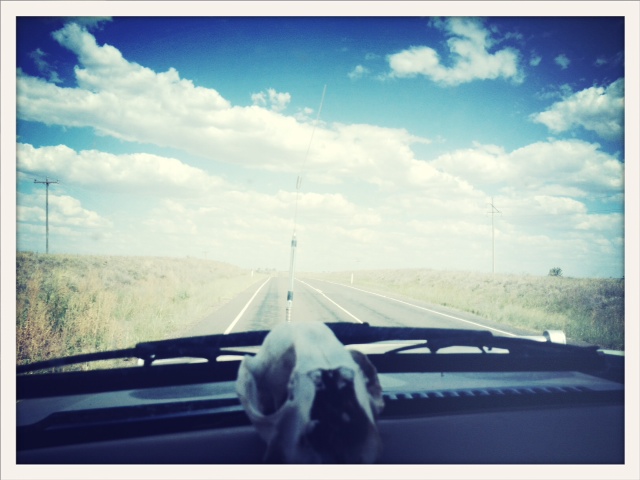
Pounding along a blood-dirt-lined blacktop, swaying to an anonymous beat, the horizon bleeds into the desolate expanse of the interior, a void that inhales your thoughts. I find a well-placed sheep’s skull can help focus the mind, at least on the white lines…

photo-180

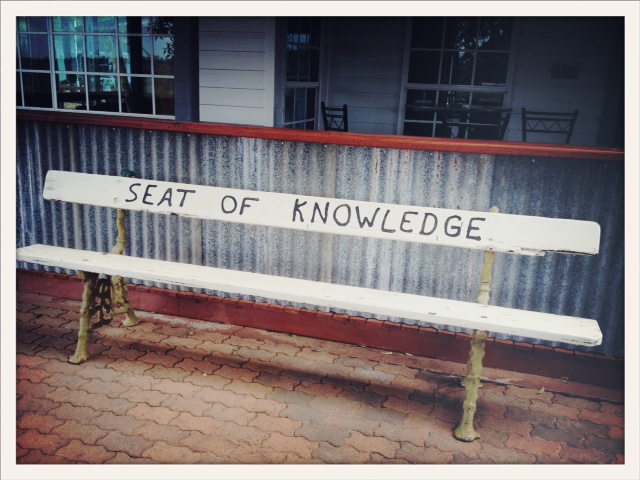
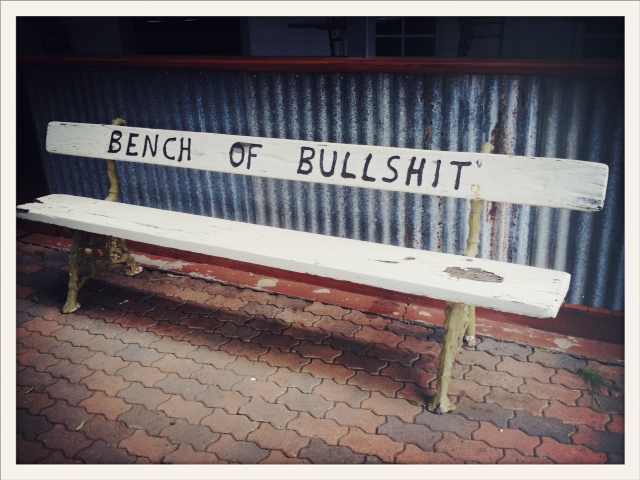
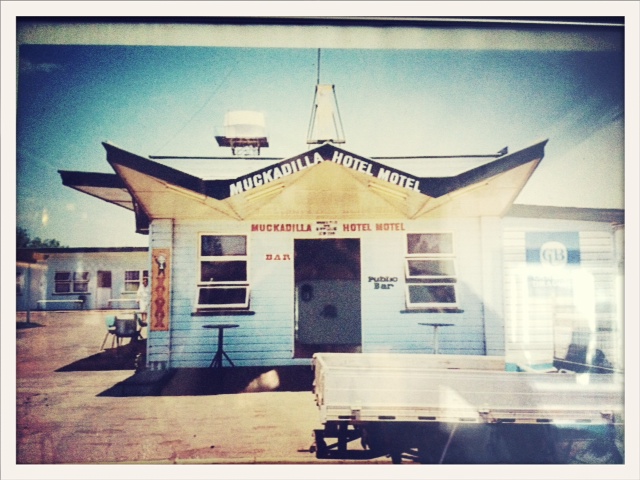
In the midst of this tattered landscape is Muckadilla, a scabby outpost offering cold beer and a story or two. The name comes from the mud (naturally), said to have healing properties and used to treat burns victims during the war. Where once battalions of starch-fronted nurses cared for the injured, today visitors are treated to a crash-course in ocka drawl and this little gem:

photo-187

photo-185

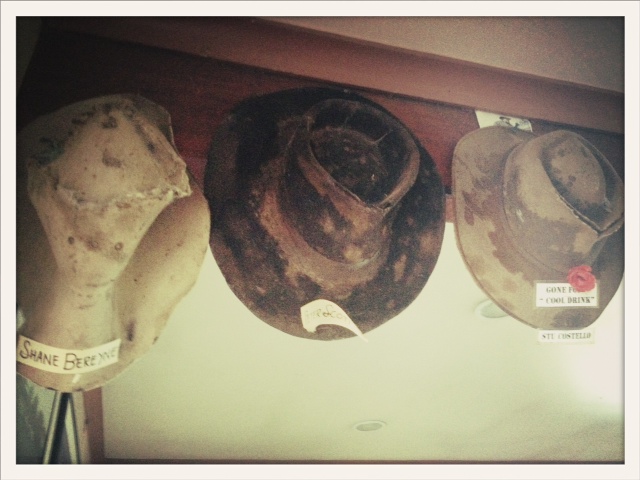
Utilised to its full extent, the bench is a precursor to a glorious display of newsworthy stories papering the cracks of the hotel walls, including a grainy shot of a croc eating a shark as it is snatched from the water by a burly fisherman in Karratha; Gordon Ramsey’s ‘fucking omelette’ recipe, a cow-eating wild boar and a sign above the bar that reads: “wanna rage doll?”

Well, yes I do. Thanks for asking.

photo-192photo-195

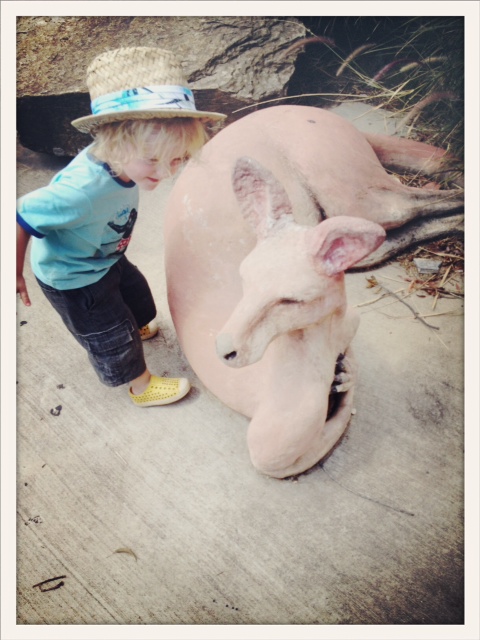
With Mary parked up beside a demountable behind the pub, the Tin Lid entertained by a concrete kangaroo and the Cowboy lounging against the bar, we get the lowdown.

Described as ‘land you could fatten a crowbar on’ Muckadilla is thriving. The population of this skidmark strip has soared from three to 14 in just four years, courtesy, the publican is sure, of the high standard of the counter meals.

Well, that and mining.

40 odd clicks to the west is Mitchell, deep in the belly of western Queensland’s cattle and sheep farming district. Here the mammoth stock trains pile up, the end of the road for the triples.

photo-197

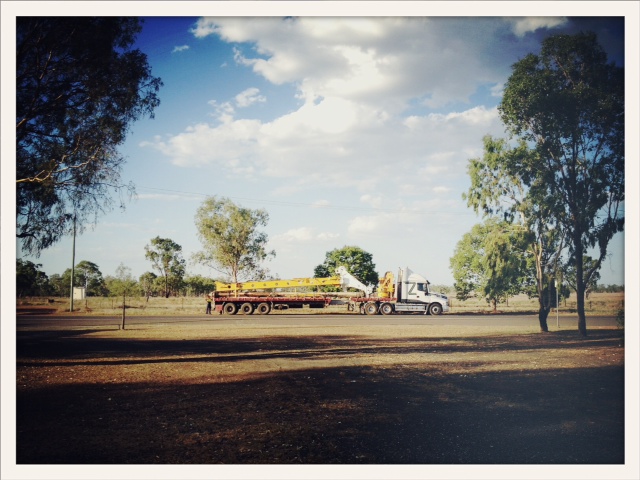
The tail bogies are sidelined, lowing sadly as they are unhooked in the dust and shackled individually for the rest of the drive. Heading east the bitumen flakes and boils, traffic snarling into formation, and at Muckadilla the whump of B doubles invades your bones: the sign says 80 but the locals reckon most slow to 120, eyes pinned. Those that stop – and plenty do – are grizzled and oil-stained. They smell of heavy metal haulage and to a fault are carrying mining equipment…

photo-193

40 odd clicks to the east, Roma is the freshly squeezed heart of the Central Queensland coal seam gas industry, a ‘hotspot’ that threatens to explode, leaking noxious tendrils of sinister tension.

Muckadilla, propped on the roadside between the two, rides the rip that sucks and gluts between agriculture and mining. It is an inveterate battle of will: farmers vs miners, environmentalists vs resource boomers, the sane vs the fanatic, a modern-day land grab, widely considered unsanctioned yet financially condoned.

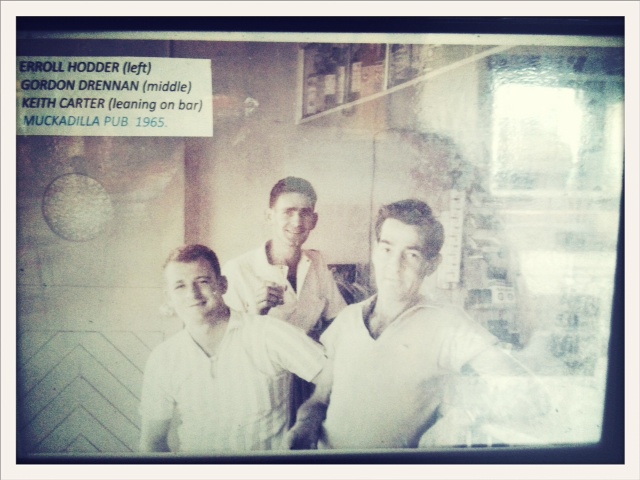
This staunch little place capitalises on the war. The pub has always been the stations’ watering hole, there is cheap rent in sawn-up containers parked in the dirt for the mine workers, and let’s not forget the counter meals, which encourage a steady stream of greased truckers and their loads. The pub was once an exotic thing. It’s now functional, practical, air conditioned and well lubricated.

Before the fire

Before the fire

60s barflies

60s barflies

photo-188

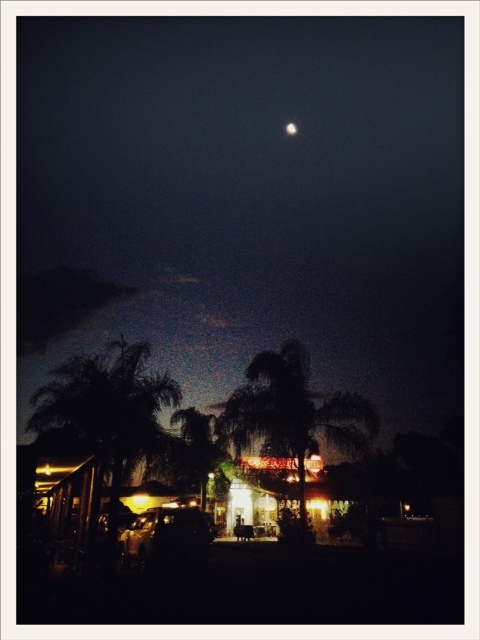
After a night of bellicose ribaldry, stories puddling on a sticky bar beneath exhausted elbows, we weave back to our sleeping hulk which is bathed in the glow of floodlights and well-placed palm trees, just another roadside attraction.

photo-194

Eat your heart out Kerouac…

On the road again, loaded up on future dreams slick with nostalgia: this sunburned life, grimy with dirt, never looked so good.

The suburbs recede into no-man’s land, a grey sand between urban and bush, the threat of a mall around every corner. Once past the sprawl of fading wealth, the outer rim of the coastal conurbation, its lush green polo-pony-stud-farm badge proudly polished, the land rises sharply, tipping us deep into the interior… which is a vastly different world.

There is a point of no return. It is the point at which you glance up to see an endless sky divested of clouds and soul-searchingly empty. It is stretched taught to the horizon, no room for benign fluffy whites here. This is a place of blistering starkness, with light so sharp it looks as if it could shatter into a thousand shards, where a harsh and unforgiving reality takes no prisoners.

This is bat country…

The Tin Lid is living his little life to the full – it’s one long day of bumping F150-riding laughter, cold pools, hot chips and treasure hunts after another. His first case of pink sun-kissed skin brings on much back-slapping and calls of “You’re a true blue Aussie beaut now mate!” from his proud father and lamenting from his mother. Doesn’t bother him.

Black Mary's a great babysitter

Black Mary’s a great babysitter

Life on the road

Life on the road

He is the reason we dawdle and skitter, his attention span about as good as Mary’s fuel economy (the Cowboy has taken to treating her like a boat and calculating money spent in “hours on the water”), but he is also the reason we stop and look, chase, laugh, tumble and shout. He is the reason we are doing this.

After a day of breakdowns (the great solar story at Muswellbrook: the fuel filter fiasco on the steepest of hills, which caused Mary to hiccup and stall inducing fear in those of us not snoring: and the messy starter motor slaughter in Gunnedah) we find ourselves marooned…

image_4image_5

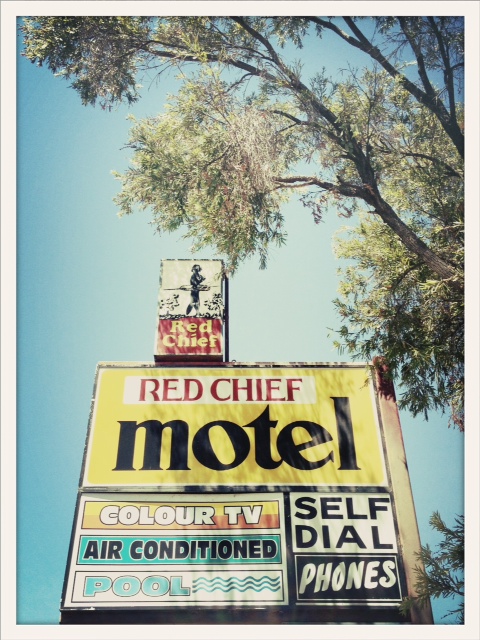
at the Red Chief Motel, Gunnedah, the epitome of 70s kitsch and dubious signage:

image_8image_7

Yes, the phones are self-dial, the TV is colour and the air-con is welcome respite from lazy gusts of 39 degree heat that wrap around your like an ermine shroud. What is not clear is the connection between the Red Chief and the Indigenous man depicted on the side of the pebbledash clutching a woomera. And our thin-lipped Aussie proprietor can elucidate no further. She just points out the pool and offers the Tin Lid free Coco Pops. Beaut.

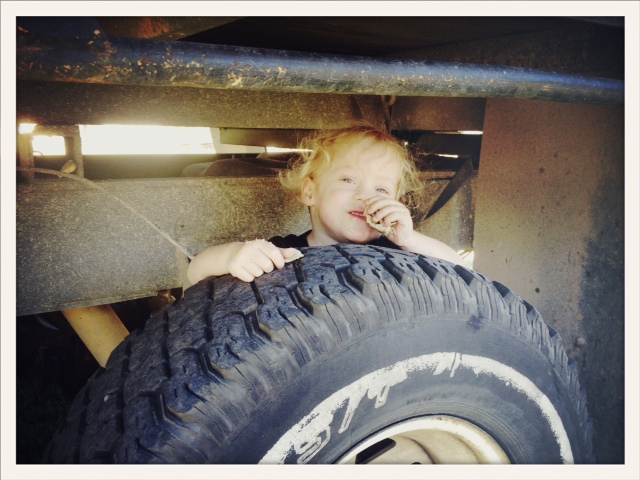
The forecourt is steeped in late afternoon light by the time our impromptu exile begins. As the Cowboy mutters and curses deep in the bowels of Mary’s engine, the Tin Lid and I play with bits of tar and the splayed offshoots of frayed truck tyres.

All thoughts of a cold beer in the local pub have been summarily placed on hold and the evening descends into a parody of a bad road movie, a dust-streaked family holed up in a tinny motel, lolling in an air-conditioned stupor and faced with ten-to-ten takeaway from the local Chinese, an ill-fated marriage of gristle and monosodiumglutomate.

image_9

Gunnedah is streaked with lush green avenues, stately wide-brimmed homes and a healthy looking cricket pitch in the centre of the town. It smacks of a different era, a time of wagons hauled into town, of crinoline-wrapped womenfolk, roustabout-crammed pubs and the Sisters of Mercy.

Grand old pubs stake out the corners of the main street, vying for alpha status, while bush staples – the civic mall, Best and Less, Crazy Charlie’s, the gentlemen’s outfitters and a tired milk bar flogging spiders and day-old sushi – make up the bits in between.

image_13

image_11

A desiccated once-bloaty toad lays sprawled on the pavement, much to the Tin Lid’s delight, and the butcher takes us on a verbal tour of the agricultural delights of the region as vast rumbling stock trucks surge through the streets, bleating and screeching in protest.

image_12

Sporting the moniker Koala Capital there is plenty of emphasis on re-greening prime agricultural land in Gunnedah and the importance of sustaining old growth gums to support the koala population. We went searching but found no ‘walas’, not even in the tallest gums. Instead, we found an eccentric old fella with a model railway in his front yard, intent on teaching us the rules of rugby union. And a giant tomato…

image_17

While real estate windows are flocked with For Sale signs, it is clear that there is plenty of business going on here. What is less transparent is the nature of it. A high street window reads:

image_10

Further inspection yields little information, other than the expensive tag line Unlocking Resources to Fuel the Future. And then there is this, conveniently located in the middle of town:

image_16

Which looks suspiciously like a coal seam gas fracking plant cunningly concealed in two 40ft. containers.

A quick chat with a bloke in a hat at the pub confirms our suspicions. Gunnedah is home to a coal seam gas program, as well as a number of newly sited coal mines. This leafy old lady, long in the tooth but beautiful still, is frantically redefining herself, a stately maid tarted up in tight clothes and towering heels, a grimace of red on tired lips to draw the crowds.

We pass dusty sale yards and stock pens on the way out of town, Akubra-wearing farmers in tidy rigs roar in and out, and the pubs are filled with ag workers, from roustabouts to cockies to the slaughter man. But it makes you wonder where the other mob are, the mining mob, and how long it will take to change the face of this place irreparably.

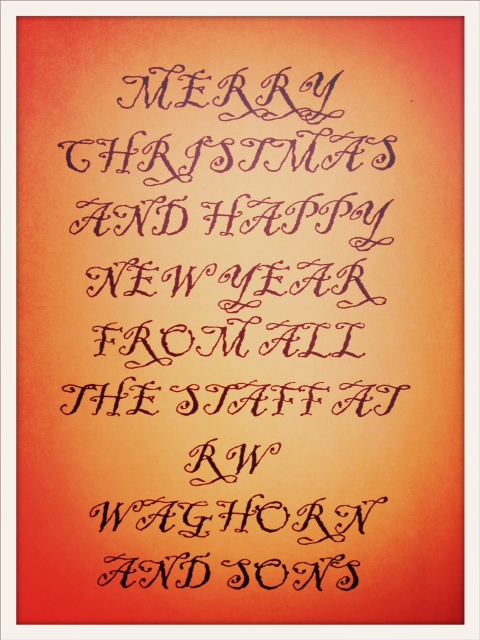
On a lighter note this is what happens when the staid world of chartered accountancy steps outside of its box – a Christmas greeting taped in the window that defies the methodical earnestness of counting numbers. Other people’s numbers…

Sobre, dignified and professional

Sobre, dignified and professional

A cursive explosion of happiness

A cursive explosion of happiness

TOP TIP

To avoid heat exhaustion during the heatwave, repair to your local bush pub where the atomised water is free…

image_18

K-O’d

The soft cadence of the names that spill from the buildings in Punchbowl are lulling, Alafrah, Mervat, Baalbeck, Dounya, Sallam and Safadi, Akkaaoui, Kheir, Al-Nour, Alsati, Hamze, Khassoum & Moujalli.

This lilting vernacular weaves a cocoon of exoticism, evoking far-flung lands rich in  Byzantine and Assyrian glory, an other-worldly intrigue, of a people swathed in fabric, the scent of wooded spice, jasmine, cedar and pine on their skin.

In reality this weary suburb lacks the ornate promise of this rich ancestry. The roads spill with snarling traffic yet the shops are empty. The surge of noise that catapults around the corners is the grinding screech of movement, trucks, buses, low-slung WRXs and souped-up trolleys trailing angst and piloted by surly teens. The swarm of sound is only tamed by suburban streets that swallow it whole, choking it down into bellies aching with interference.

The air is soupy, a mix of bitter coffee, tar, rose water, cement and heavy pollution. It is a sickening mix and we retreat into the backstreets for a different perspective.

Here, life takes a laid-back approach. A bare-metal car snoozes peacefully beneath a tarp, heavy sun shutters droop contentedly and paint pots line up excitedly at the prospect of a little home improvement:

Beneath a stately power pylon, all gangly limbs and proud purpose, Arabic inscribed Christmas decorations either linger a little too long or are a touch presumptuous, and the beautiful face of the local independent stares confidently out of a green-hued placard calling for True Blue representation. The streets are tired but wide, threadbare lawns are kept shorn and windows sparkle, eyes peeping out at the world from behind every twitching lace curtain. This is the partially covered face of the proud Lebanese community that calls Punchbowl its own.

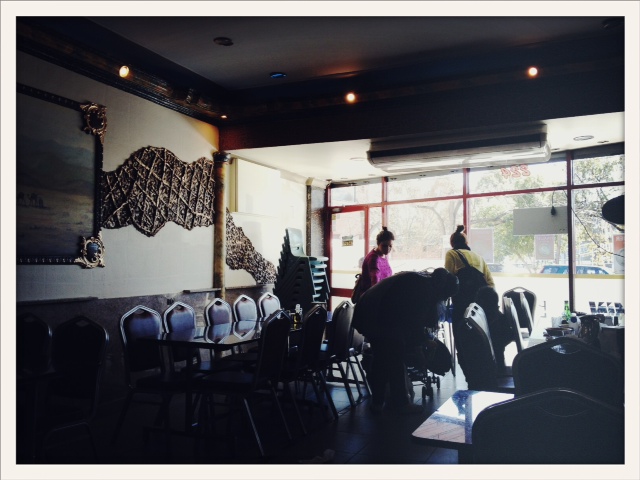
Soon though, the cool, garlicky calm of Jasmin 1 hauls us in from the sticky asphalt. The walls are alive with frenetic frescoes and gilt-edged back-lit inverted domes, a psychedelic renovation in honour of a Mediterranean homeland thick with Cedar trees, crumbling antiquity and camels, though everything else has a clean simplicity.

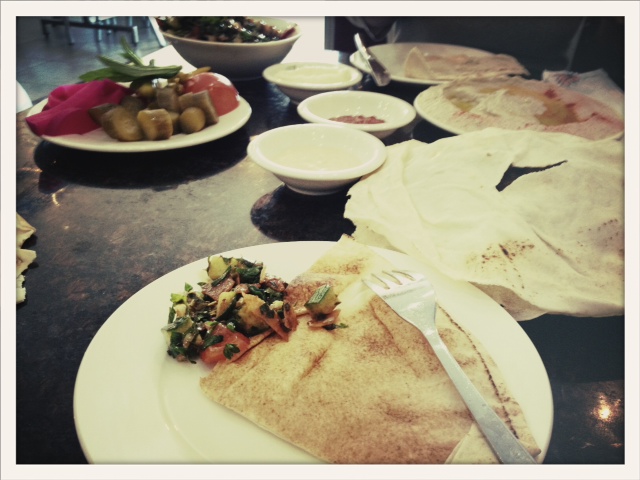
Frankly, Michelangelo could have had a go and I would still be here for the toum not the art. This rich, silky, pungent garlic sauce is not only incredible it is free, which spins the Secretary into another dimension. She orders more immediately and continues her frenzied flat bread jabbing.

We order up big. Crisp, vinegary pickles entertain the Tin Lid for a while, but he is soon more intrigued by the woman behind us who is wearing a burqa and her little girl, peeking out curiously from the cool depths of her hijab. They seem as intrigued by his flaxen locks and petrol blue eyes and the kids are soon flicking fatoush at each other, shrieking with laughter. The slightly-smoked baba ganoush is lapped up with hot bread and salty-sweet salad and charred chicken caked in garlic and spice has an earthy glory that sates us.

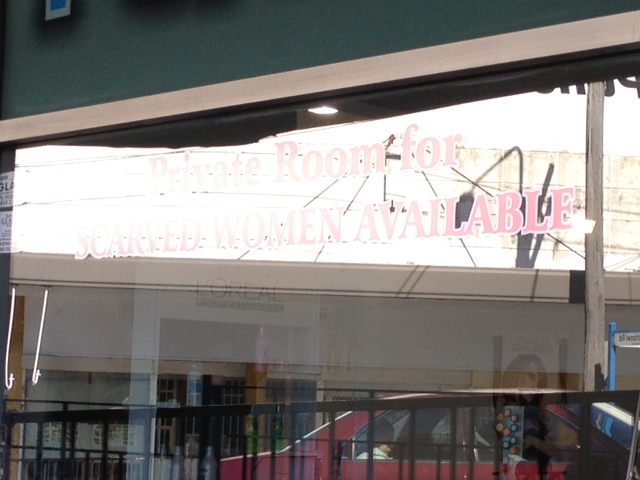
Picking coffee grounds from my teeth as we leave, in the chintzy depths of a tat shop I unearth a plaster cast Ned Kelly umbrella stand and a full-size BPA-free American Indian, while the Secretary has stopped to peruse the McDonalds halal menu. Then there is Fadi’s, a beauty salon with a curiously confused message. Splashed across the front of the glass windows and doors is an image of sublime Nordic beauty, a perfection of blonde-ness with no hint of the cultural norm that exists here.

I cannot understand why this paragon of waxen beauty would be something the community might covet. Certainly it is a striking image, a visceral beauty-slap, but it is far removed from the cloaked, cloistered faces I see here.

On the door the sign reads:

Private Room for Scarved Women Available

Beneath the scarves and pins and rules, behind closed doors and in private rooms there is a different life, an untrammeled existence in which blonde beauty might be the norm. It is a life I am sad I am not privy to.

We are warned not to drive down Telopea Street. From a distance this run-of-the-mill street has all the trimmings of suburbia, from Hills hoists flying stained singlets and scabby verges, to the car wreck plastered with neon removal notices, devoid of dignity and wheels. Mature trees provide some shade but the whole place has a sunburnt look, gardens abandoned for the cool of the air-con inside. We slink a little closer. Still suburban. Not quite ‘butter-wouldn’t-melt’, but unremarkable none the same.

But then the secretary goes quiet. Strangely quiet. She whispers words to me, plucked from chilling media reports; random killing; stabbed to death because he went to the wrong house on his way to a birthday party; synonymous with gangs, shootings and dawn raids; Moustapha Dib; “what the fuck you looking at?” “I just clicked. Fucking Asian deserved it”; Edward Lee; RIP.

We drive away without a backward glance, eyes on the similarly unremarkable road ahead of us.

This Savage City

Back in this savage city and the air is edible, a crunchy mix of asbestos, diesel and grit, drizzled with a 9-5 sauce and served with a side of 24/7 connectivity.

Rhys Pope

My attorney, with a wry grin, suggests I ditch the soft-edged romanticism of desolate expanses and pubs with no chrome and head to the arrhythmic heart of Sydney’s urban degeneration.

You know. To cheer me up.

I rope in the secretary. Notebook at the ready, a sharpened lead behind her ear, she has no intention of allowing me to dissect the urban rot from the darkened confines of the local pub. Which is bittersweet.

Tally-ho she calls, her bristling efficiency our standard bearer as we board the one-time Smack Express, our destination flickering in the distance like a neon flare.

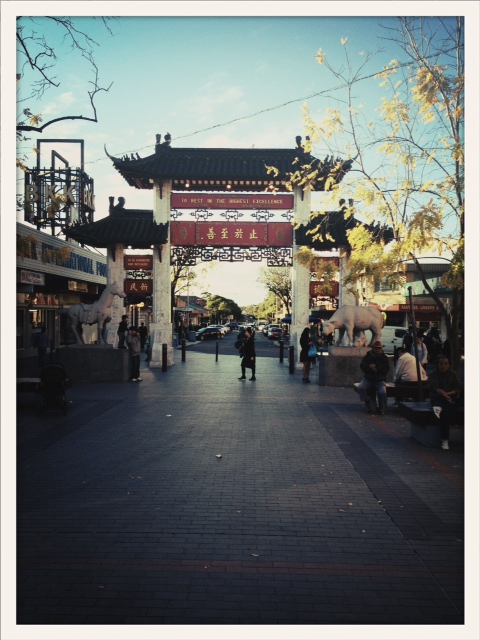
Cabramatta is known affectionately as Cabra. To those who have little affection for it, it is known as an ethnic ghetto, a no-go zone that is the poster child for the perceived failure of multiculturalism in Australia.

At the end of the Vietnam war Vietnamese boat people bound for Australia acted as the crash test dummies of a new policy of multiculturalism.

It is a moment in history that finally buries the infamous White Australia Policy and transforms a nation. The years that follow are as dramatic as they are turbulent – a people struggling to find their place in a foreign land. In this one tiny Sydney suburb, the 80s and 90s see the arrival of street gangs, a heroin epidemic and the first political assassination in Australia’s history. The Vietnamese people are vilified and demonised. Cabramatta… represents all that is wrong with Asian immigration.

                                          Once Upon a Time in Cabramatta

This social experiment created a culture of impoverishment, and became a case study for what can go wrong. At its heart was the institution of family and the crumbling of traditional familial roles – nurtured in a suburban hothouse this led to a generational and cultural chasm. The description of a 5T gang member says it all:

By the age of 11, he was arrested for carrying a sawn-off shotgun and in the next couple of years was suspected of the murder of two rival gang members.

(5T stands for the five Vietnamese words tuổi trẻ thiếu tình thương which roughly translates to childhood without love.)

But time has healed much of this pain and the streets of Cabra have always welcomed me, Today, in spite of an oleaginous hangover, the hot breath of Asia embraces me with the scent of scorched meat and sugarcane.

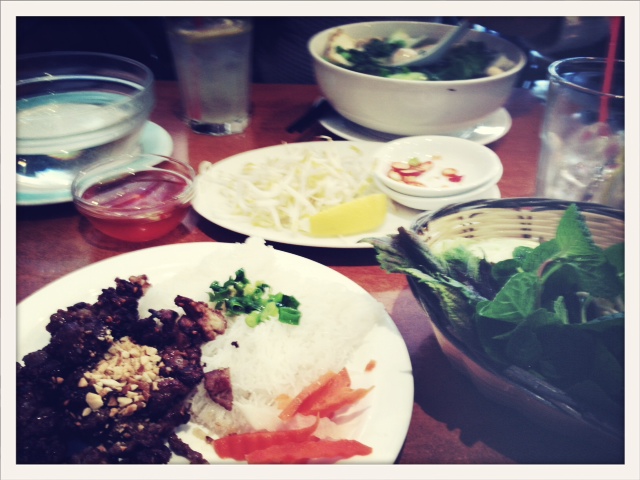
My liver grumbling rudely, I suggest a little snack, my longing for the sweet-sour-salty-crisp-smoky-tang causing me to salivate inelegantly:

We over-order and lose sight of natural caution, ending up with ‘broken rice with shredded pork chop’, a side of flash-fried goat’s intestines and cubist carrots.

But once high on the tart juice of Little Asia, we venture on.

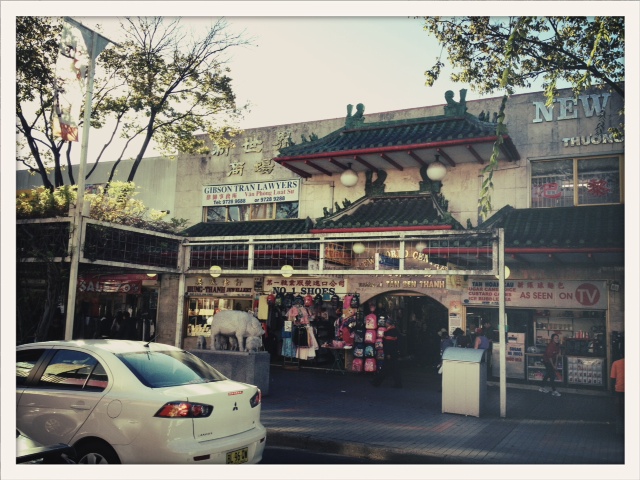
The scrabble of life is raw here. Hawkers and vendors spruik and holler, a tangle of shops sell Korean, Thai, Lao, Vietnamese, Khmer and Chinese life, from the exquisite to the prosaic. Tiny arcades crammed with glaring, beeping, whirring, flashing neon bristle in competition with each other, while every other shop is a gastronomic experience, a market selling mock duck, chicken’s feet and beancurd, or a fabric joint that sucks you into a nylon vortex.

In this pumping heart the spiral of supply and demand is tightly wound, a bargain to be had at every corner. But as we step out into weary veins that sidle into the suburbia beyond, the manky scent of dystopia wafts towards us.

Lives are started, lived and lost on these streets, and here life is cheap. There is no obvious ostentation, rather a sparsity and neglect that howls of poverty and sad resignation.  A woman at the bus stop eyes us up and down, a yelping kid climbing up bald ugg boots to reach a plastic bag full of coke and chips. Her expression says it all.

Towering over the Hughes Street playground, a notoriously septic site at one time that was devoid of children and haunted by addicts and dealers, the blank eyes of a block stare down.

A torn sign barricading a smashed window asks if this is my new rental home and I have to resist the urge to call L J himself to decline in staccato words of one syllable. There is bleak resignation here, hidden behind knock-down walls and empty windows.

The Secretary questions my myopia. Her mind like a steel trap, she asks whether the community here has a different set of ideals? What is aspiration? What has value?

I grudgingly admit she is spot on. I blame it on the hangover. Life in Asia often looks grimy and jumbled, a third-world to our first. Yet, I know that life to be one of the best – robust, exciting and filled with family and joy.

Flecked with satellite dishes the houses here hold flocks of families: aunties, uncles, cousins, grandparents, in laws and more. They are utilitarian and devoid of decoration, but they are crammed with life. Cars line front yards, swing sets and slippery dips are bright spots of colour and there is a sense of a hidden world.

There is no need for a spiky plant in a colourful pot to welcome you in, no requirement for twitching net and floral curtains. The houses are tired, sleeping on the job, backyards bald and scorched, but that cannot hide the vibrancy of the community behind the facade.

In 2000, a mob of first-school kids wrote a letter to the local Councillor about the Hughes Street playground. They said,

[The playground] is not a safe place because of the number of syringes lying around… We have been approached by addicts and have seen them in the yards of our units.  Some of us have also seen addicts with knives and we are scared.  We have come across people lying on the ground with their lips turning purple and stuff coming out of their mouths.

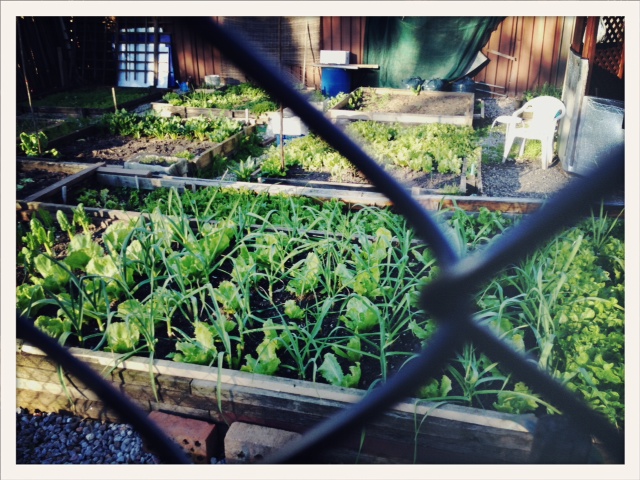
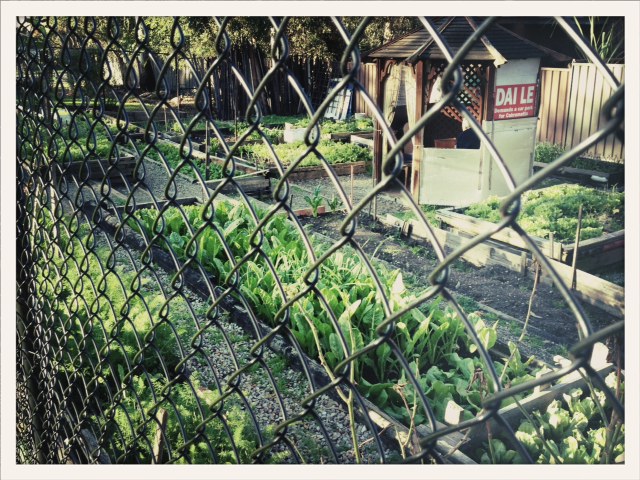
Today, the Cabramatta community gardens frill the edges of the park, verdant and deliciously alive. An elderly Italian Nonna, sheltering from the sun behind an advertising hoarding, eyes us indifferently, before peering over her leafy charges and settling back to the local rag.

The playground is now a green idyll, a meeting place that whispers of the future rather than a barren space lost to the past.

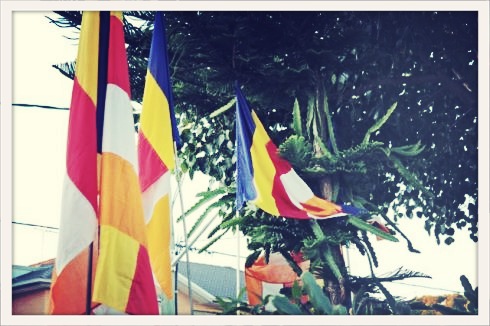
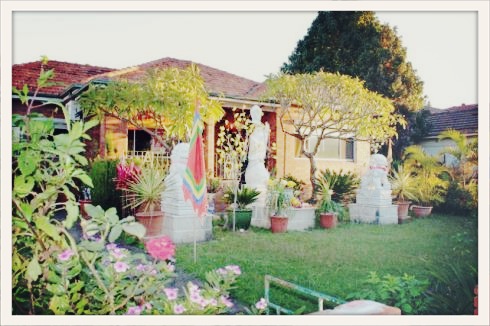
Around the next corner Buddhist flags entwined with the Southern Cross fly high, streams of colour adorning a huddle of temple-houses:

Gleaming in their devotion (and avid appreciation of concrete animals), the temples are the antithesis to the concrete blight, a lush appreciation of the natural and spiritual worlds. It’s as if they represent a communal backyard, filled with aesthetic beauty, adorned, decorated and proud.

Despite obvious poverty and hardship, Cabramatta is a rich pluralistic community that is proud of its culture and its heritage. If multiculturalism is about communication within an immigrant society and between this society and the wider population then the conversation here is getting louder by the day, a stream of insight into how it can be.

A protestor’s dream

Strapped to the Sports Desk, my fingers jangling on keys, I become aware of the latent possibility that I am averse to sport. A nice game of Russian roulette is certain to pass the time, and I consider myself a surfing legend of the sofa variety, while the only attraction to a sweaty-thighed rampage through deep mud chasing a ball is the half-time oranges and full-time man bath.

Yet I find myself here, an Australian protestors’ version of the Mint 400, living the desert dream, knee-deep in dust, the roar of the race ragged in my ears, the whump whump of the sound systems a metronome to this unreal existence. And dammit I will win this race…

Alberrie Creek Station,  Arabunna Country

This is the Great Australian Protest Race, a race to the a bitter end, the inevitable headlong tilt, critical mass, the power of both the individual and the mob to affect change.

This is Arabunna country, home to the drive for Indigenous cultural recognition, justice and land rights for Aboriginal people, numerous campaigns against uranium mining at Olympic Dam and the exploitation of water from the Great Artesian Basin, as well as official recognition of native title over Lake Eyre, awarded in May this year after a 14 year wait. This is Uncle Kev’s home: an amazing man, Uncle Kev is an Aboriginal elder who has campaigned widely for cultural recognition, justice and land rights for Aboriginal people. He has a softness, a peace that belies his incorrigible strength, and his unswerving devotion to the protection of country, culture and spirit.

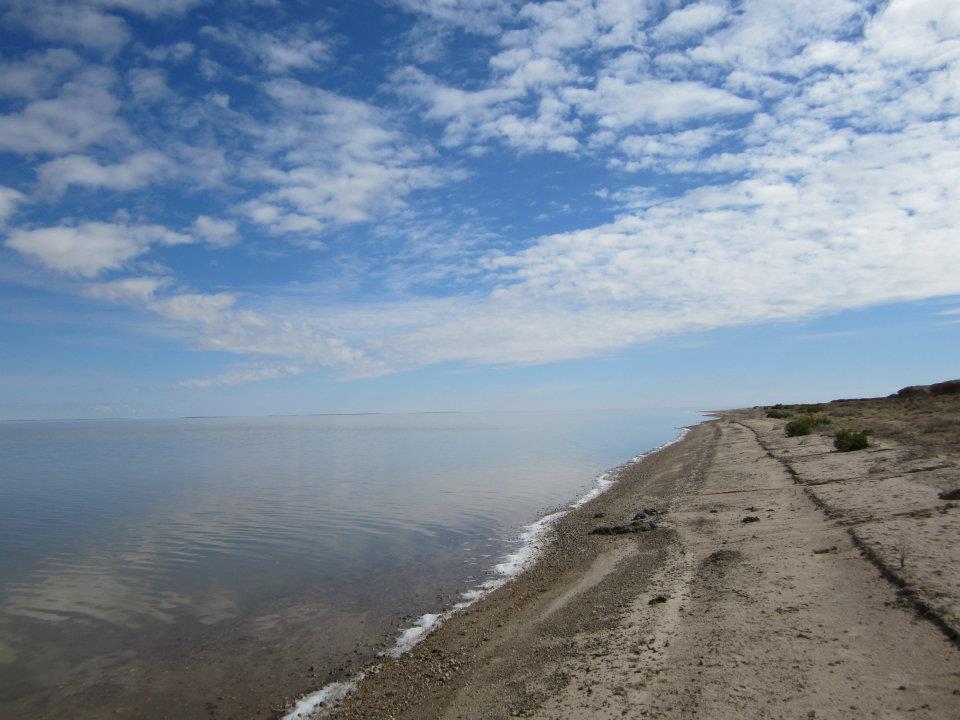
Salty shore of Lake Eyre

This is the dusty heart of Australia, remote, mercurial and wildly beautiful. There is a rich seam of authenticity, a visceral realism, and out here the genetic code that unlocks our survival mechanism is jammed ON.

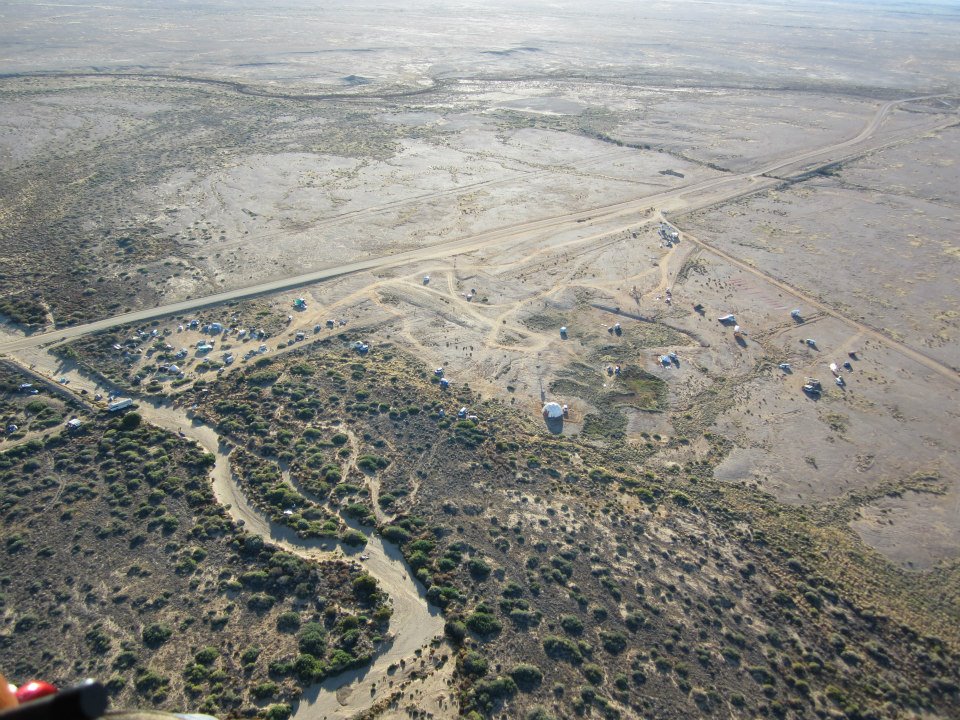
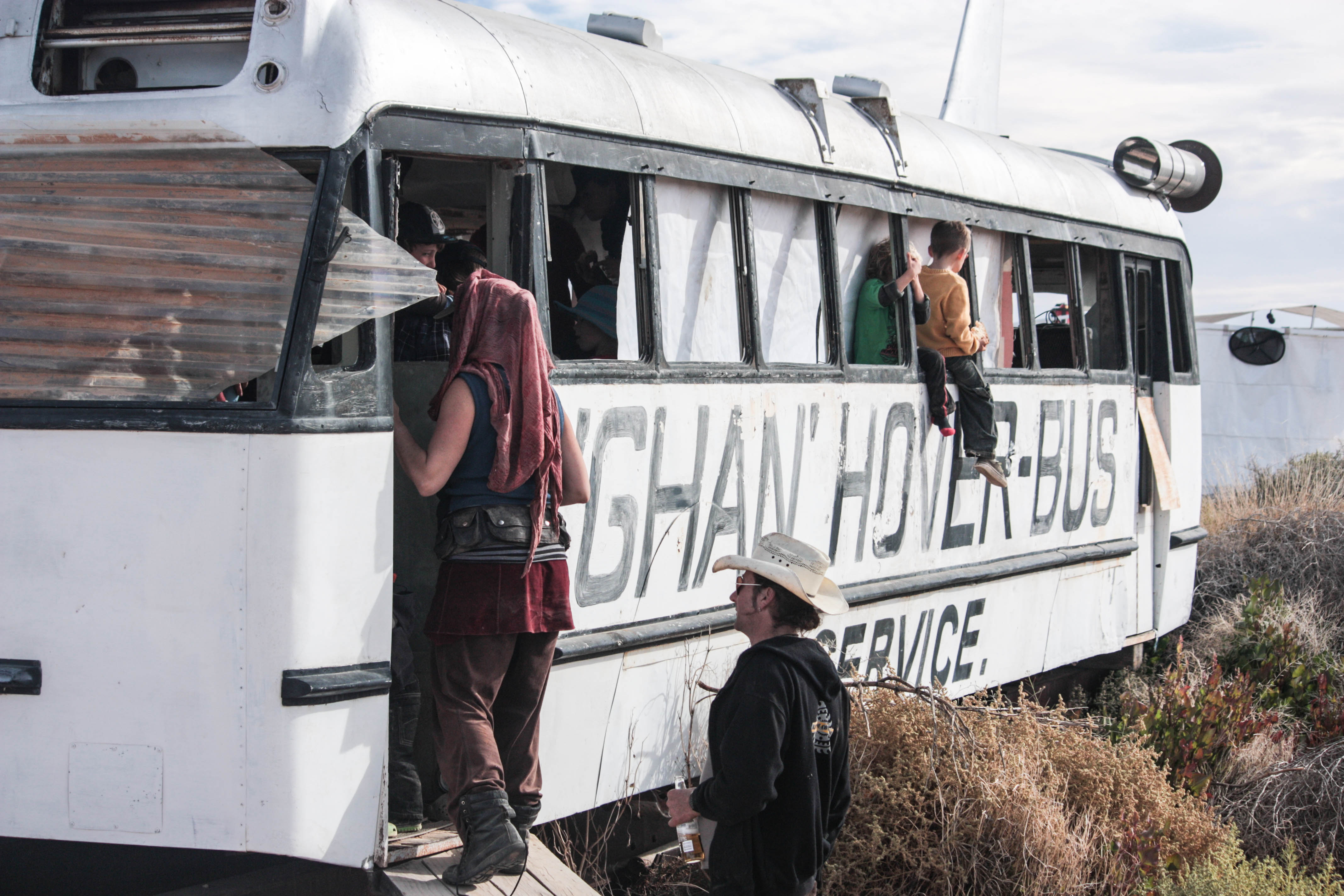
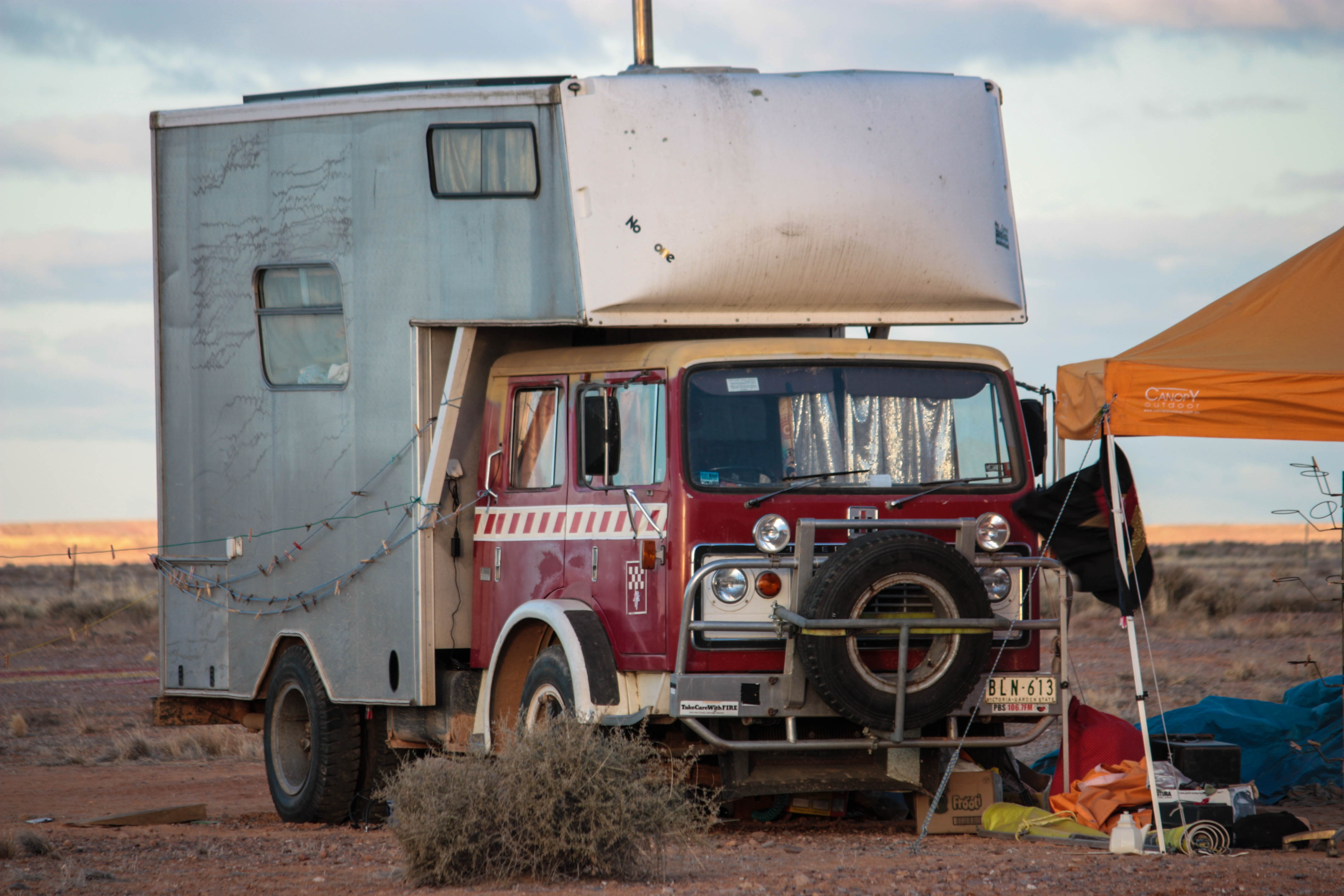
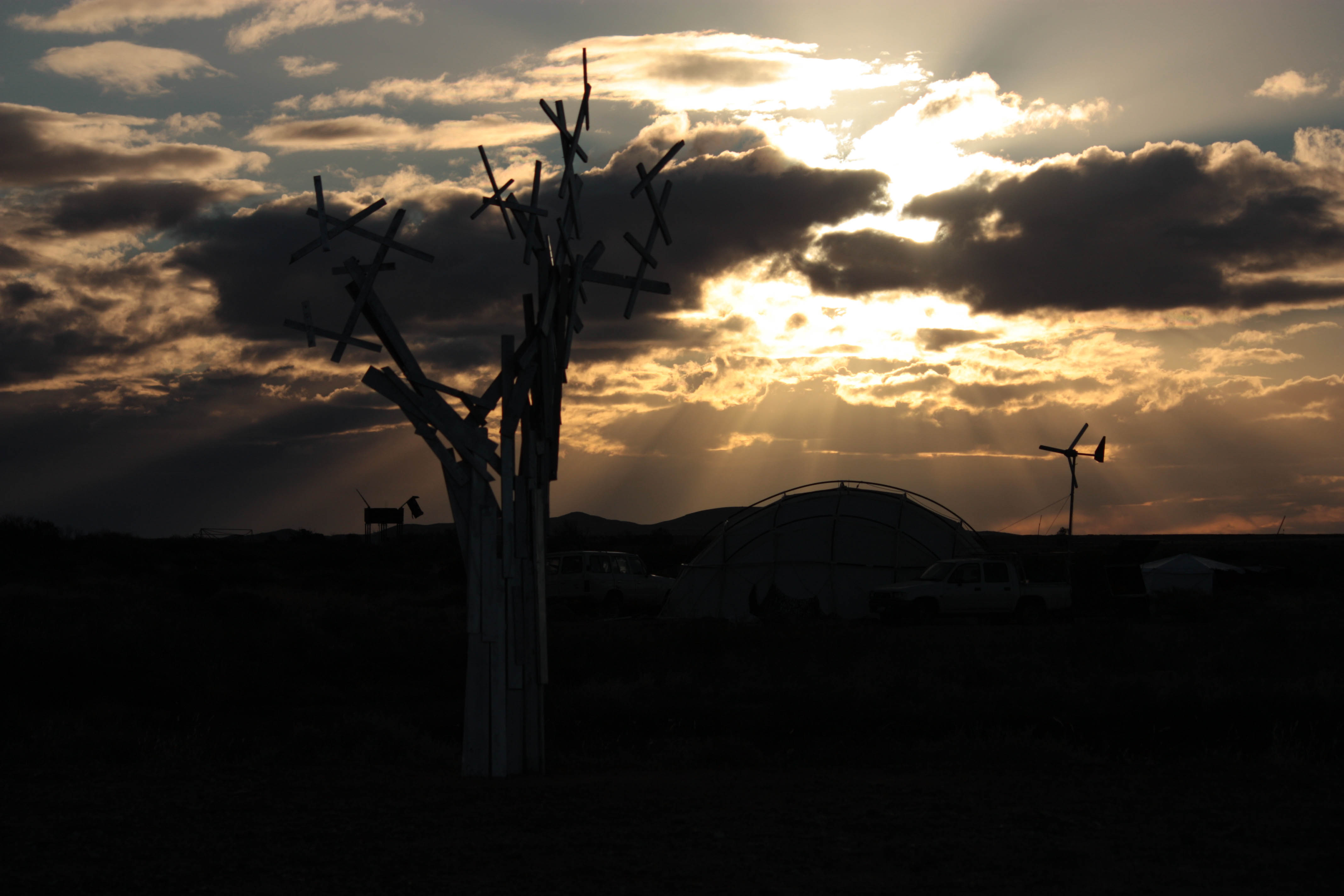
Mutonia, the Madder-than-Max sculpture park at Alberrie Creek Station.

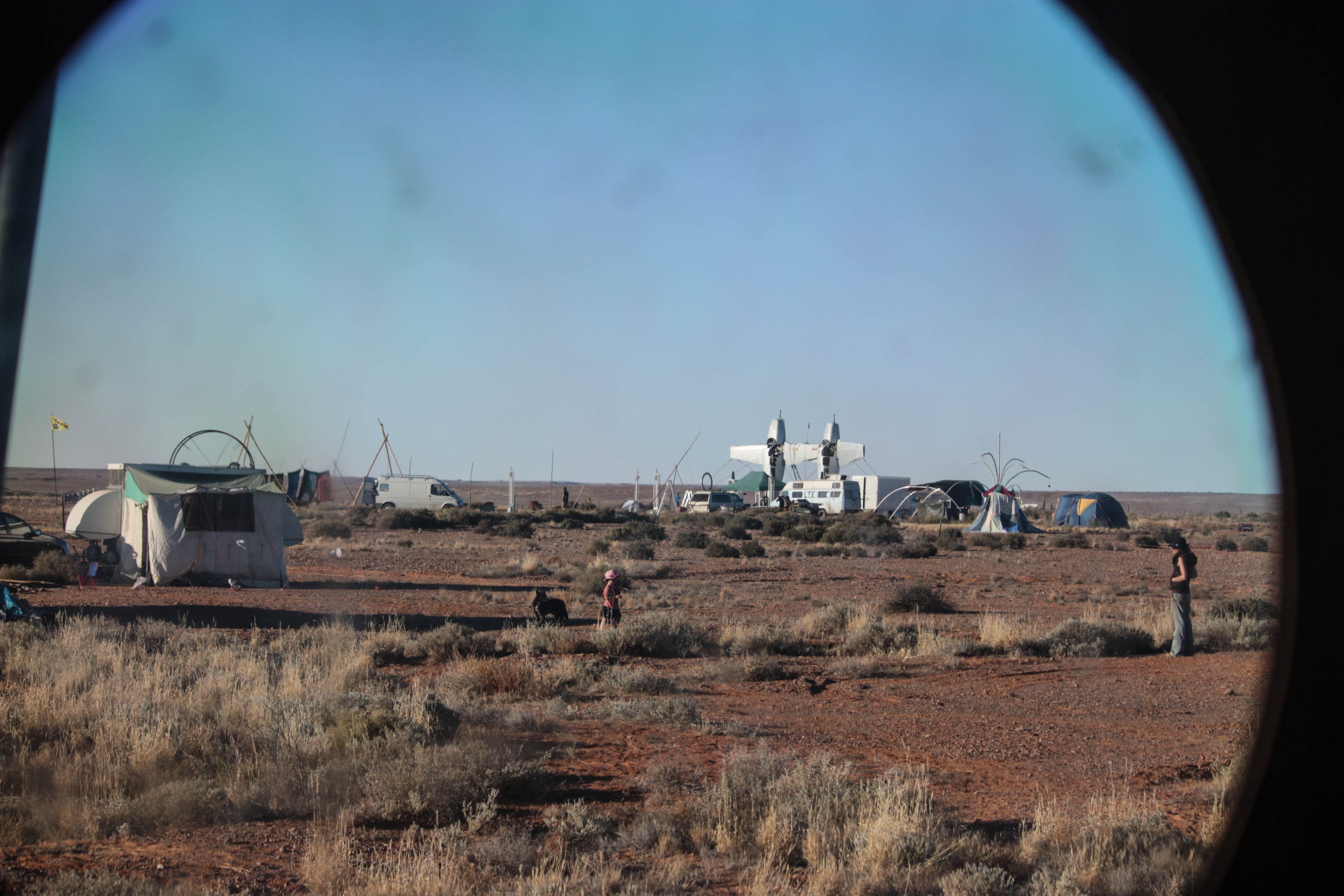
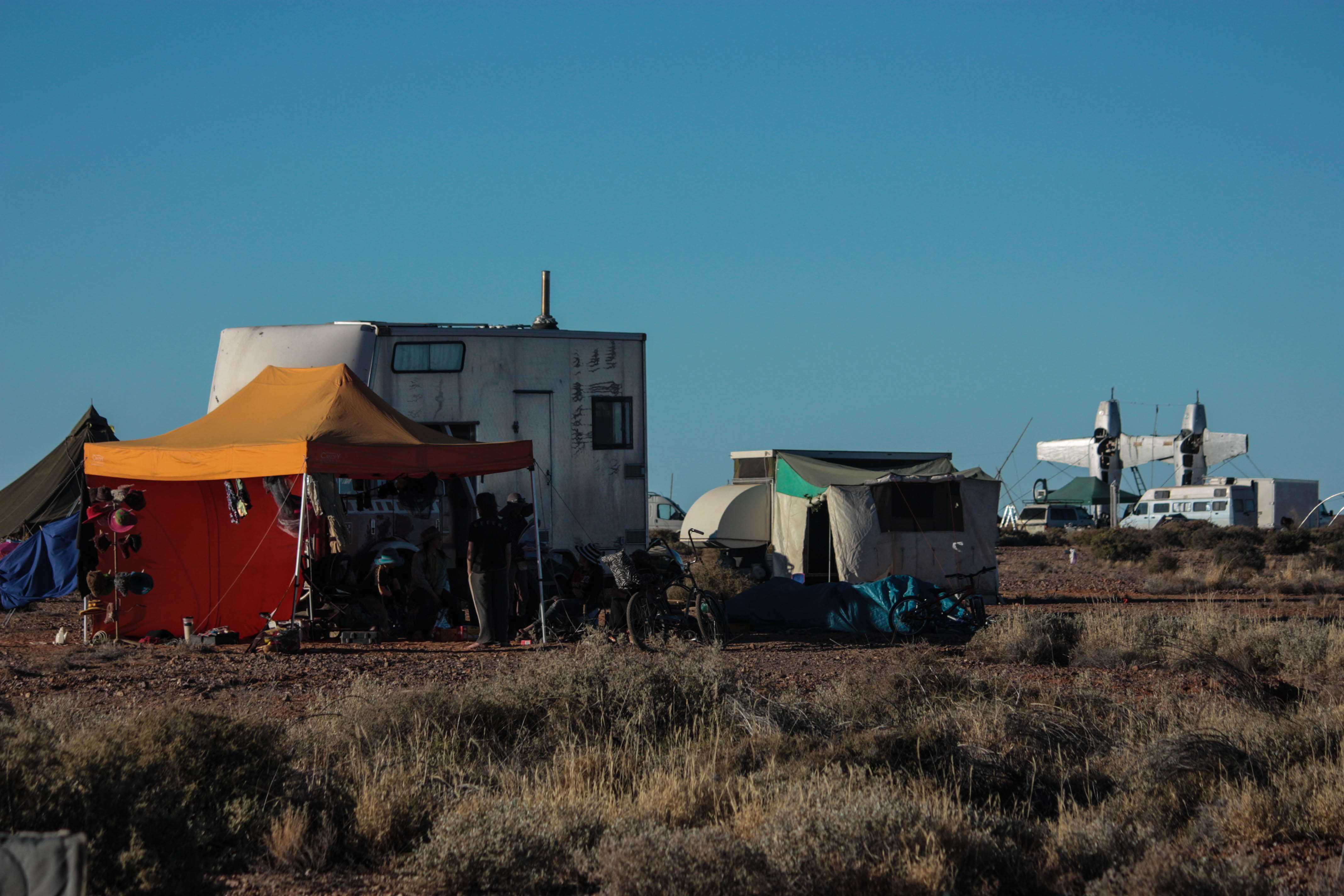
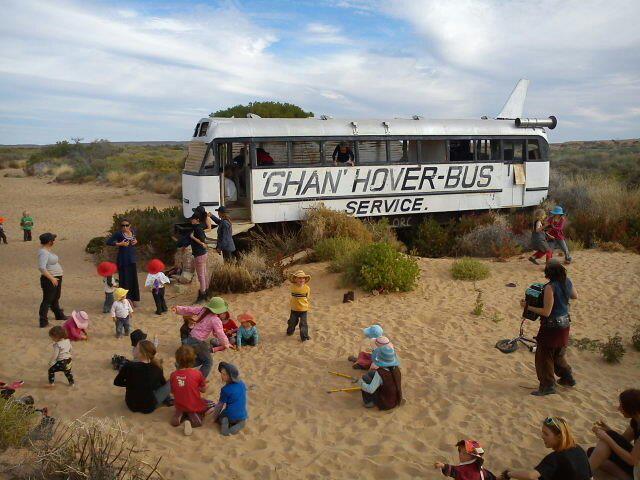
The mob has gathered at Alberrie Creek Station to dance. Protestors, environmentalists, tangled ferals, travellers, families, loners, lords and the local mob have come to stamp their feet in the dust, to connect with this land and each other.

It is a postscript to the Lizards Revenge,  a music and arts festival held at the gates of the Olympic Dam uranium mine at Roxby Downs, in response to BHP Billiton’s proposed expansion of the mine.

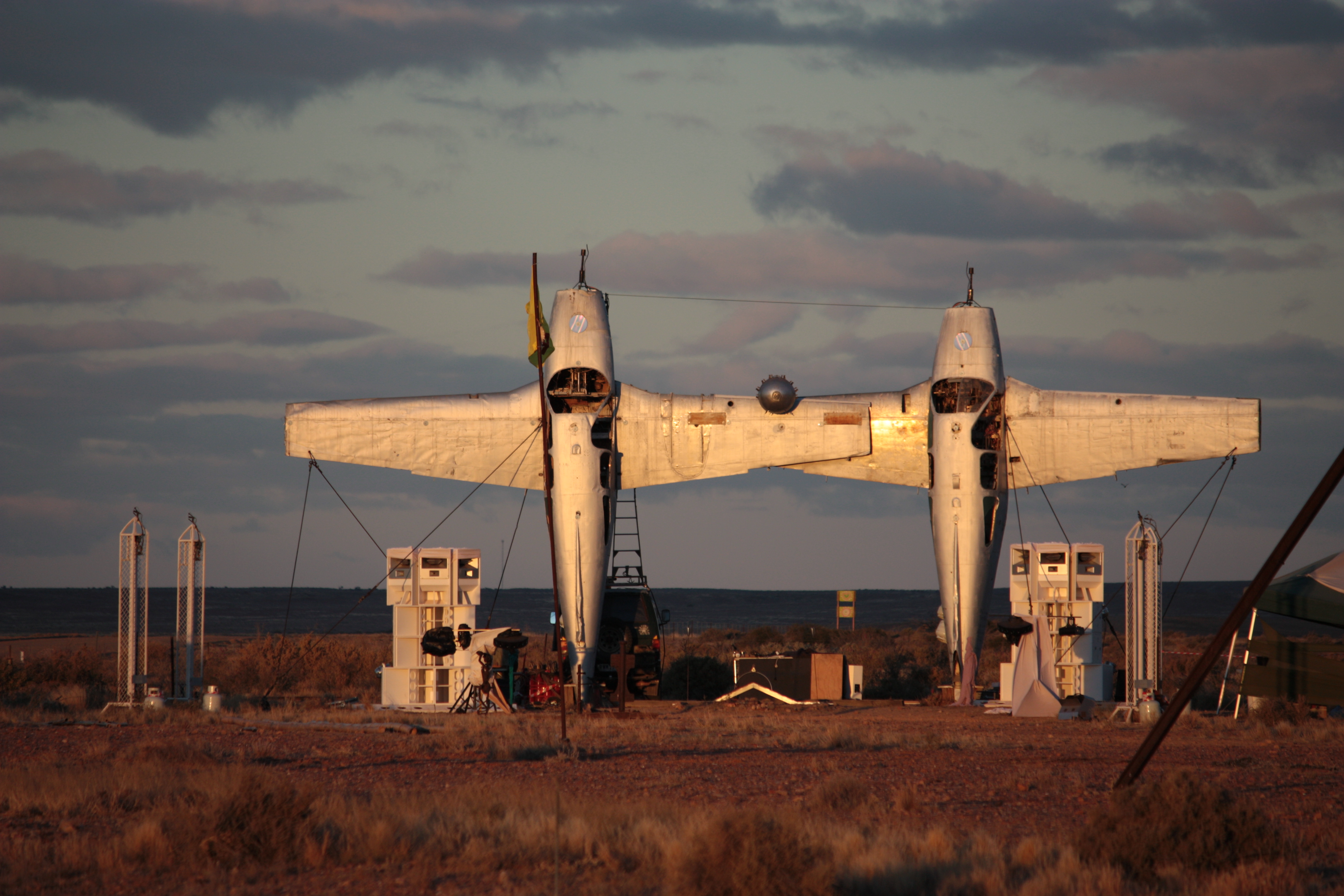
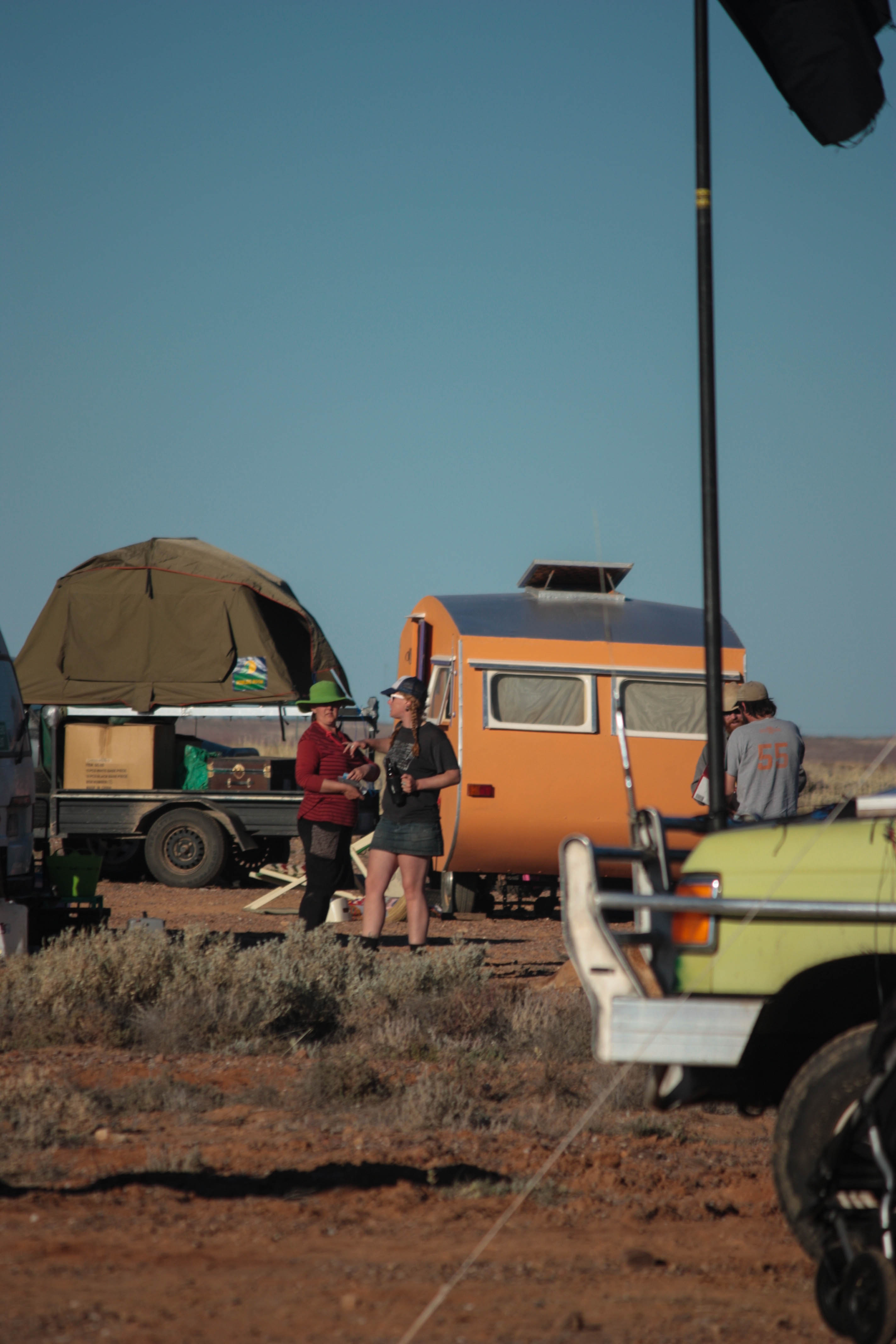
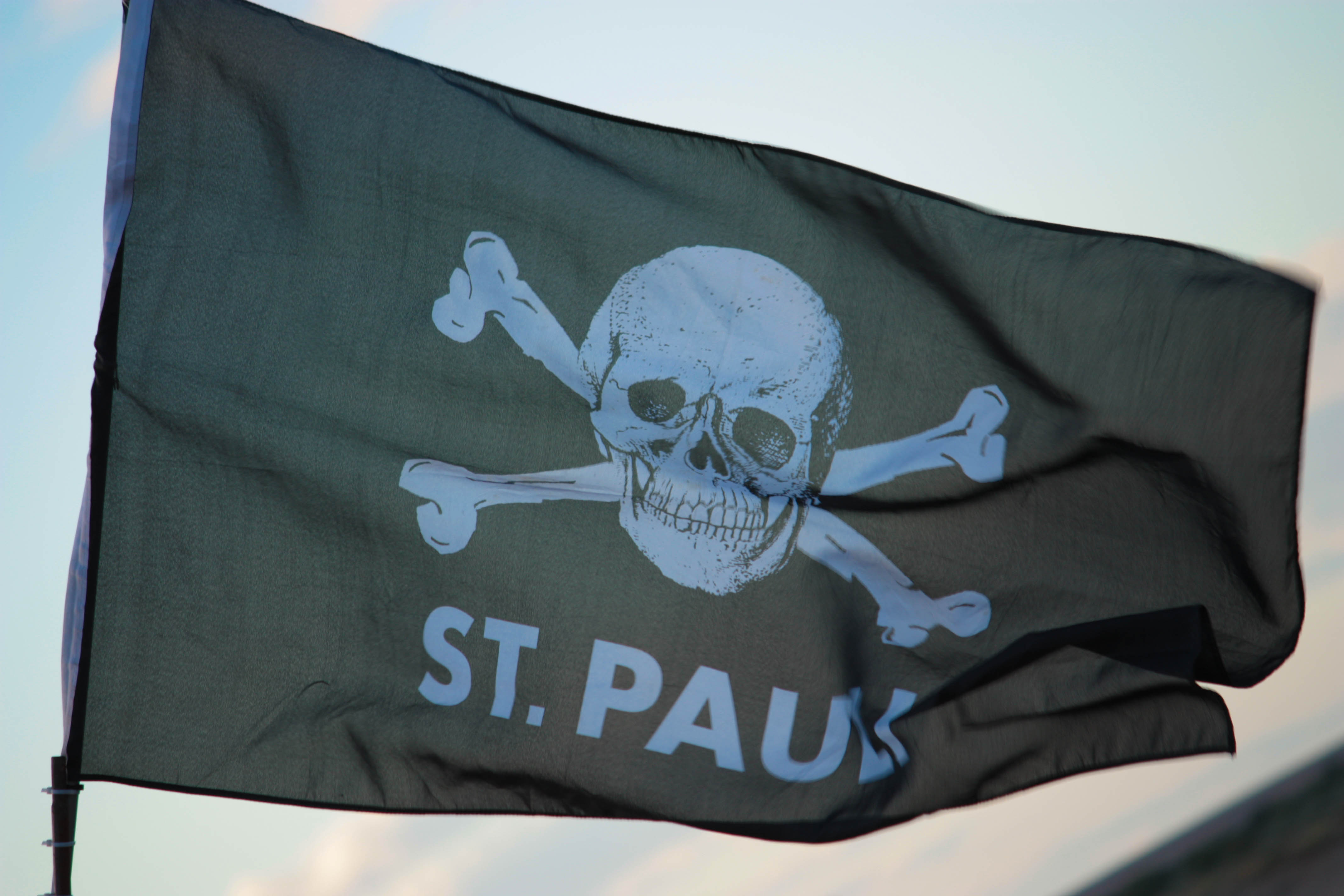
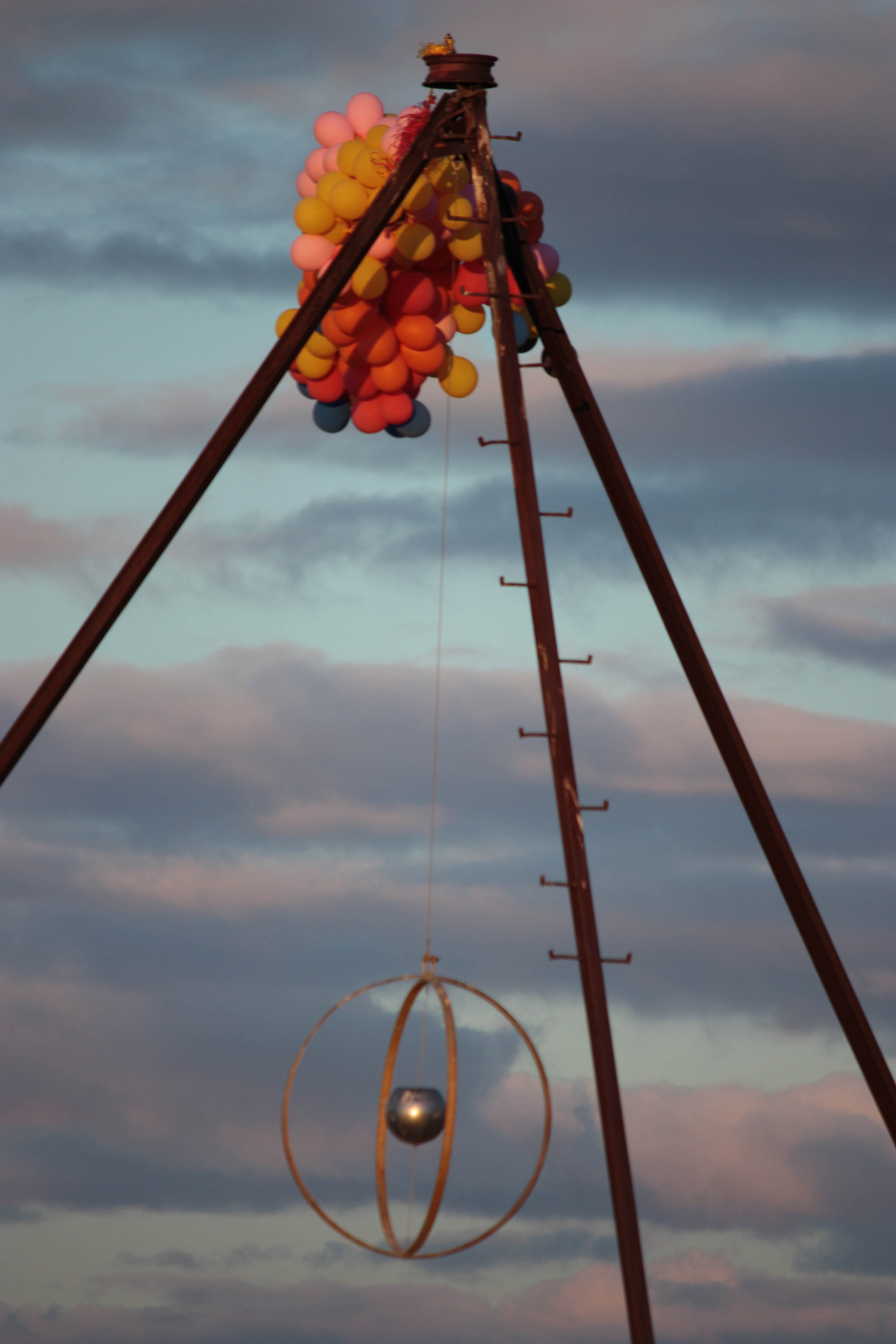
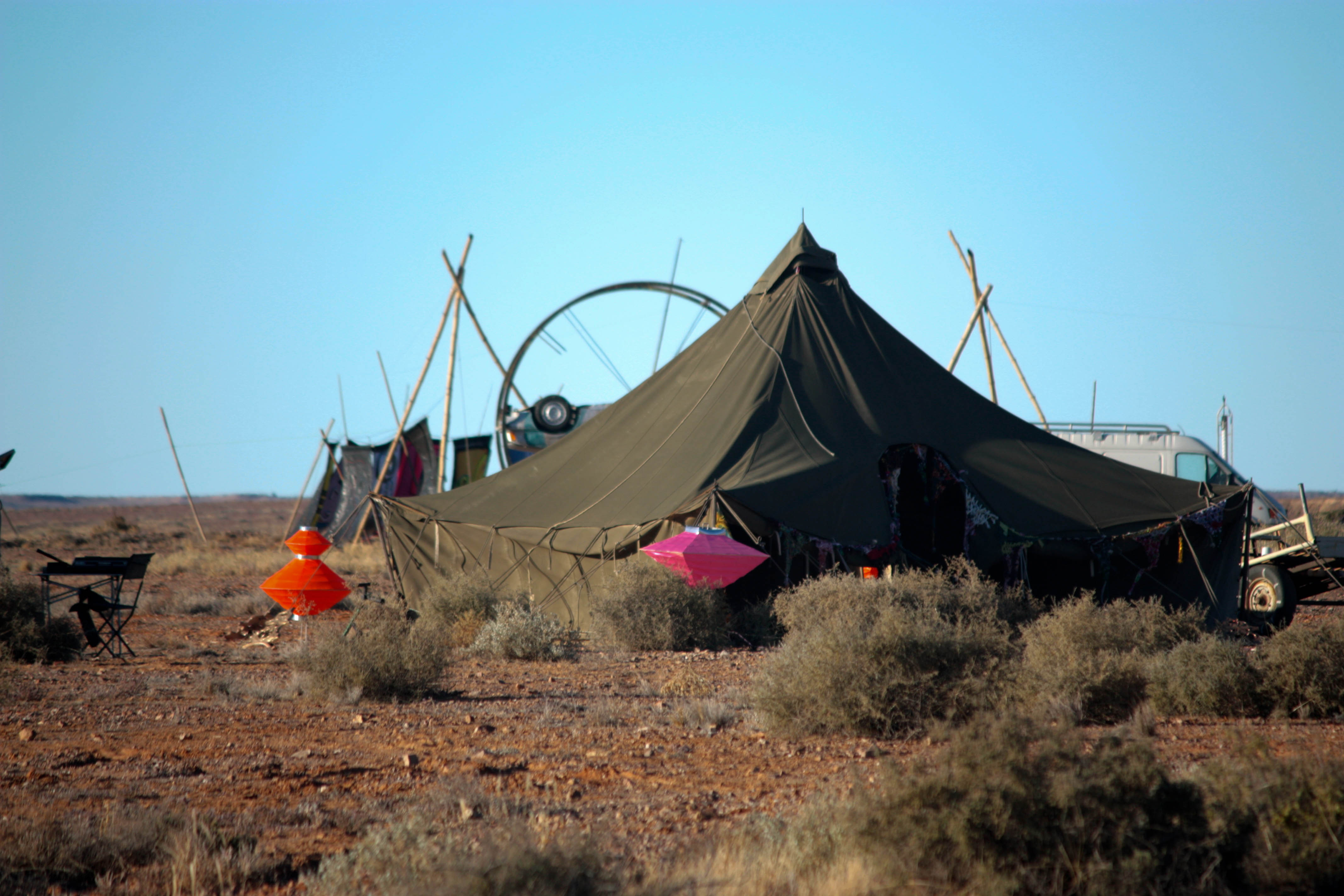
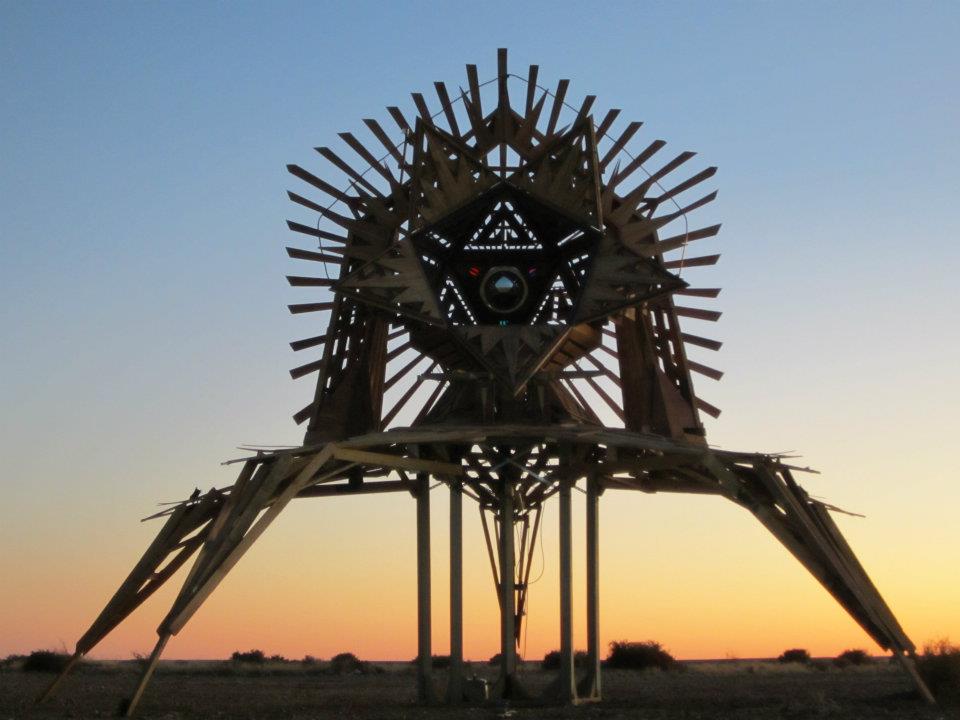
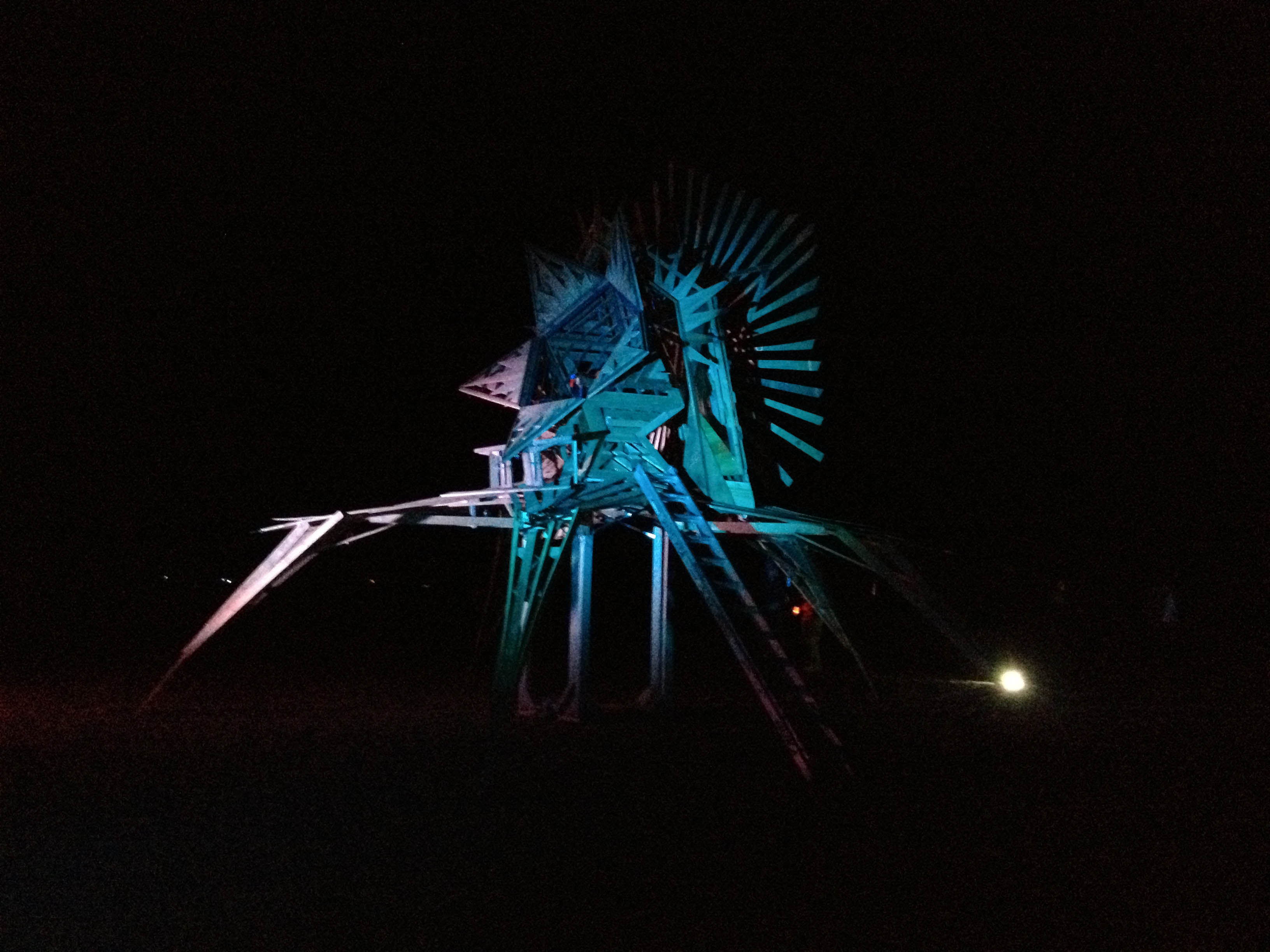
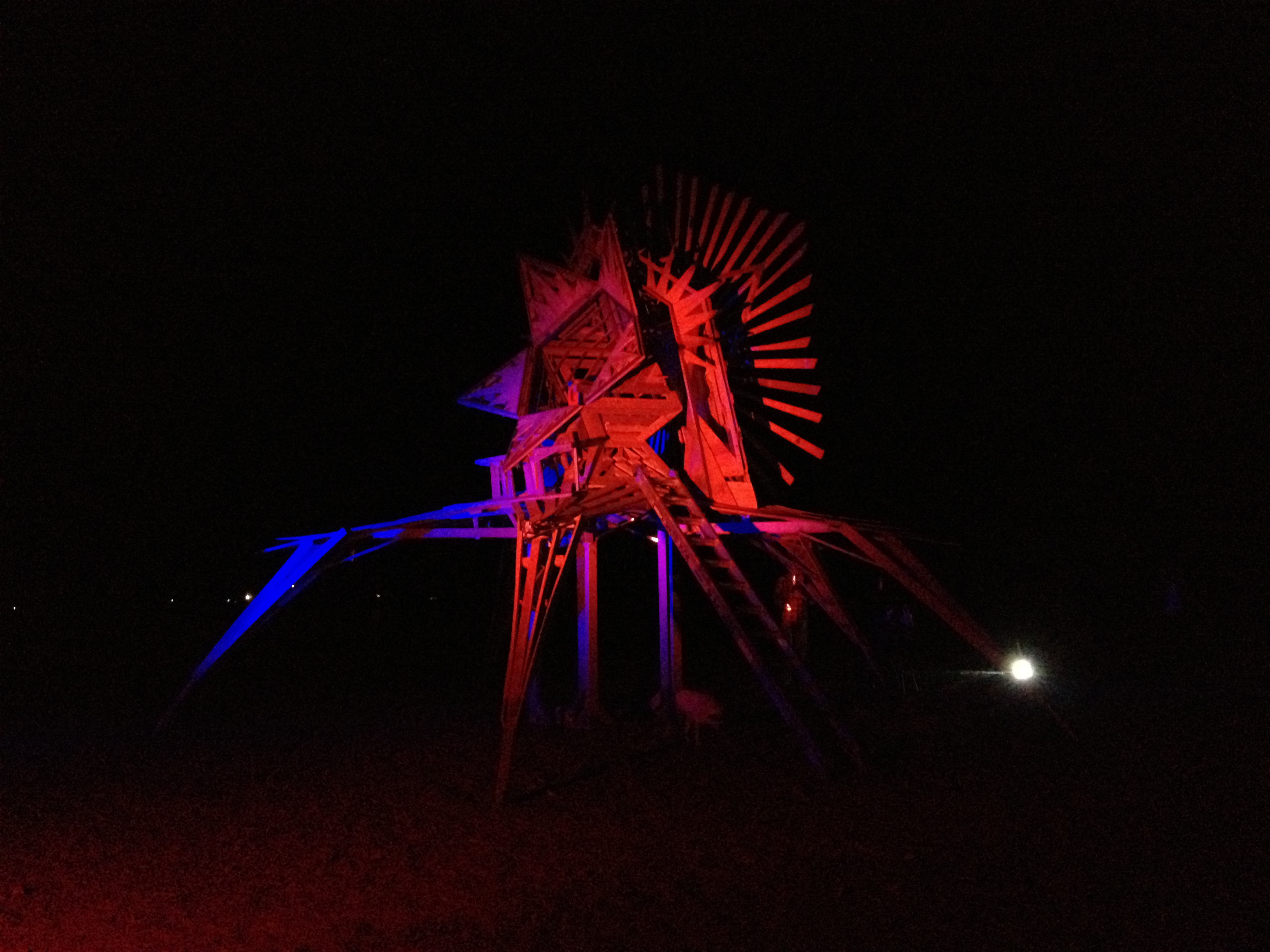
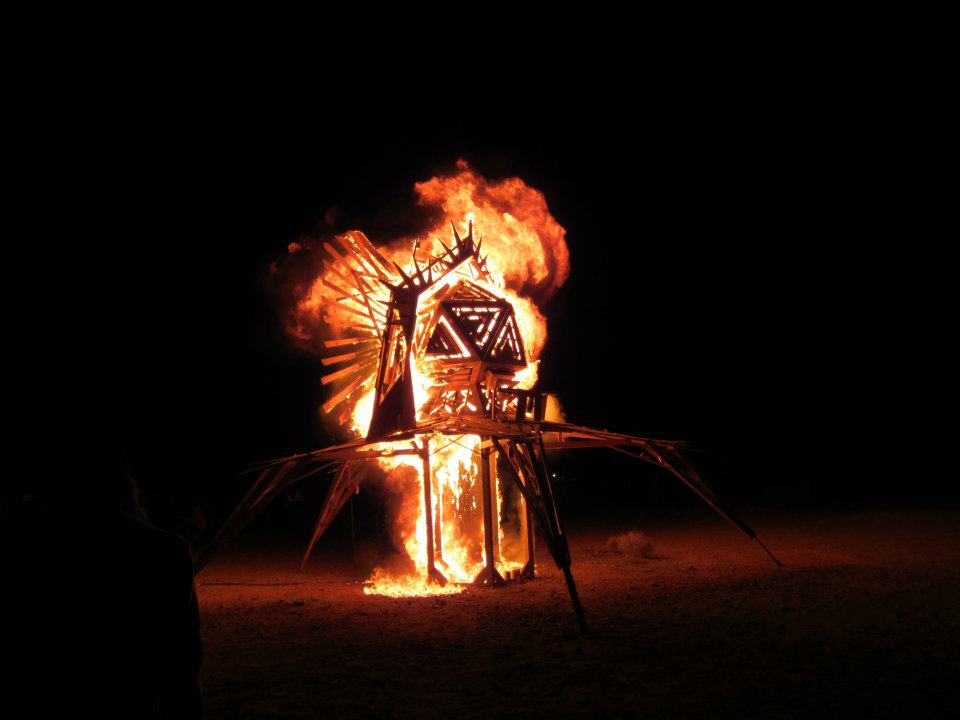
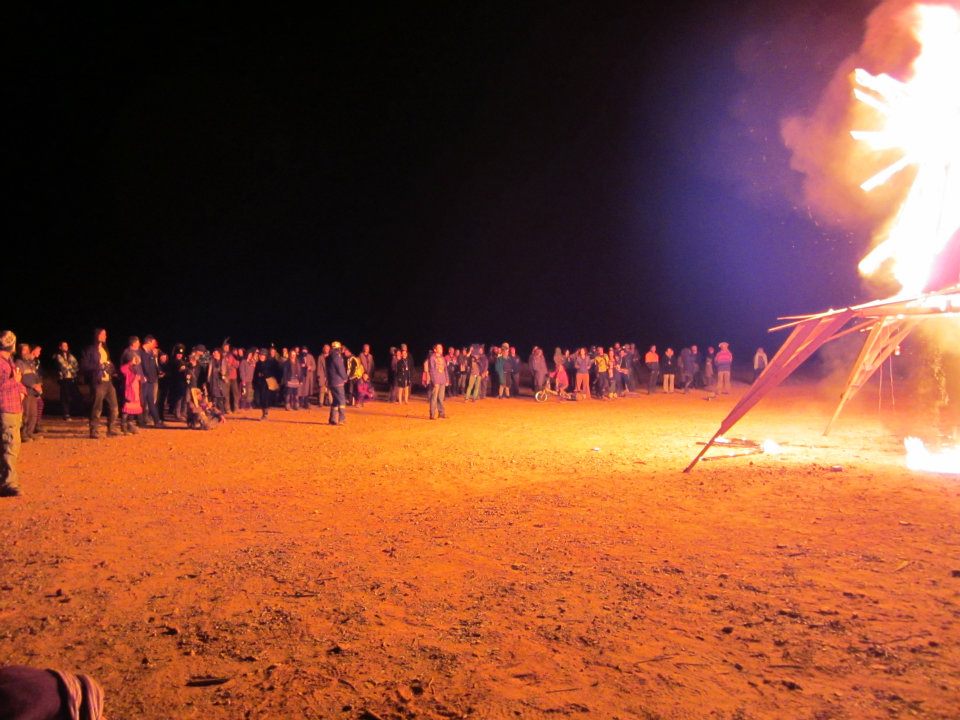
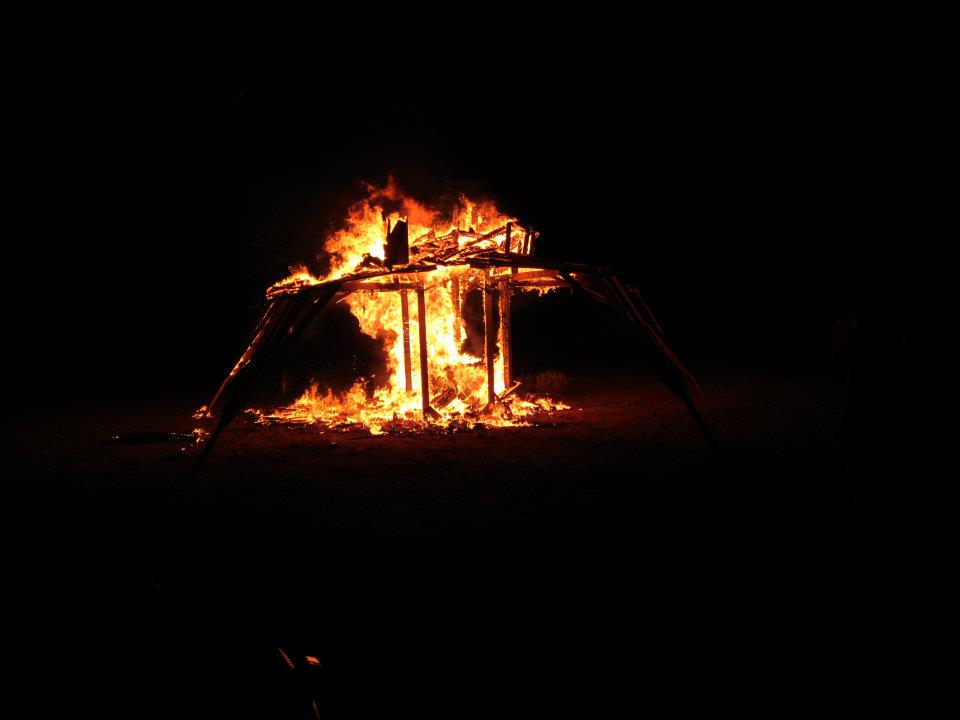
This is our playground, a place where thumping handmade sound systems and flaming timber spaceships are considered commonplace. In a surreal competition for “most unusual” a giant fur egg competes with the man with a celery stick ‘rudder’ up his bum and a clutch of balloons set to propel him into the sky, while a 70s muscle-ute sprays fire from the jet burner mounted on its tray. Cake baked in a solar oven, a washing tub with bent-bike propulsion, an armada of Jolly Rogers snatched taut in the wind and stiff gins at sundown mark our deliciously strange space.

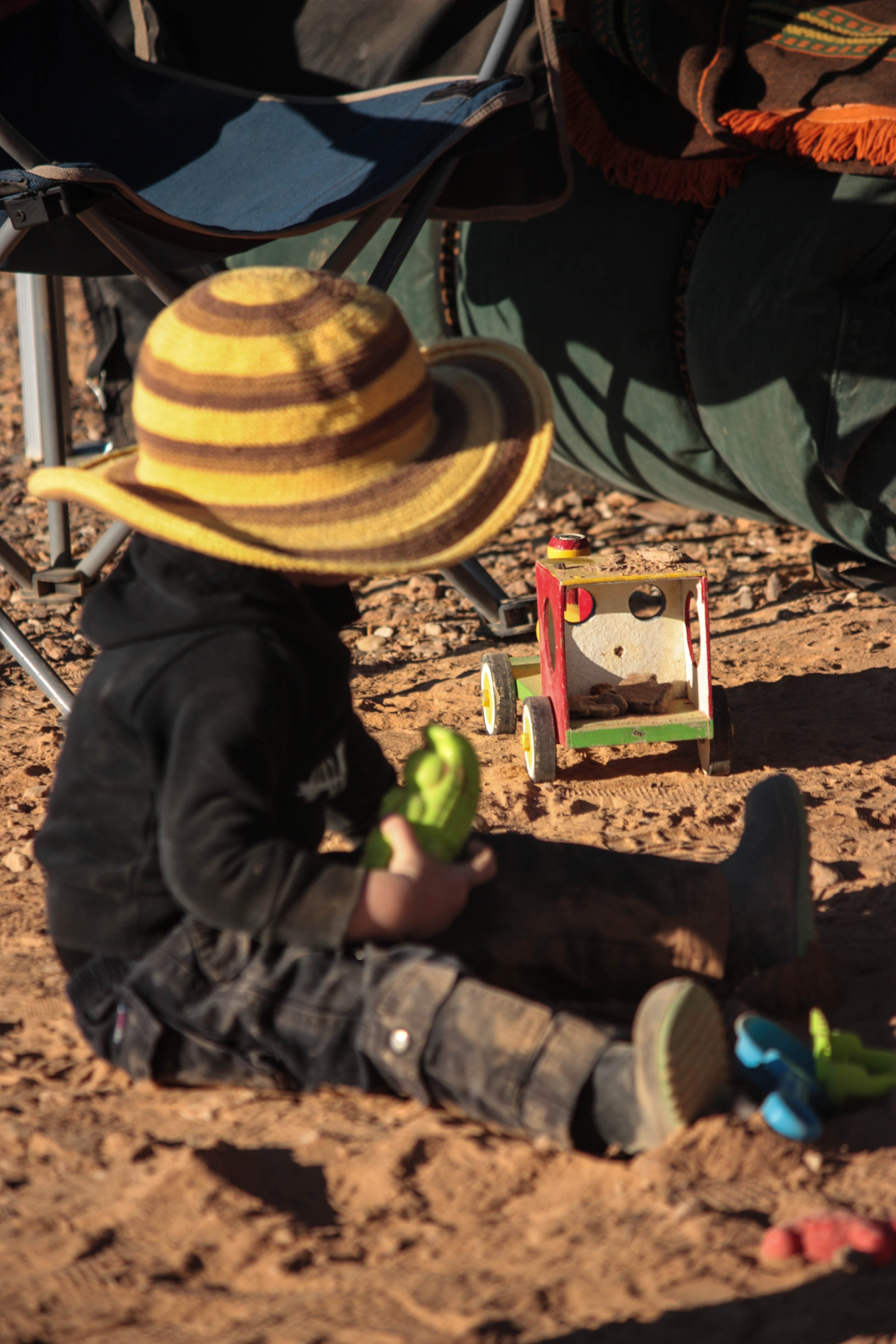
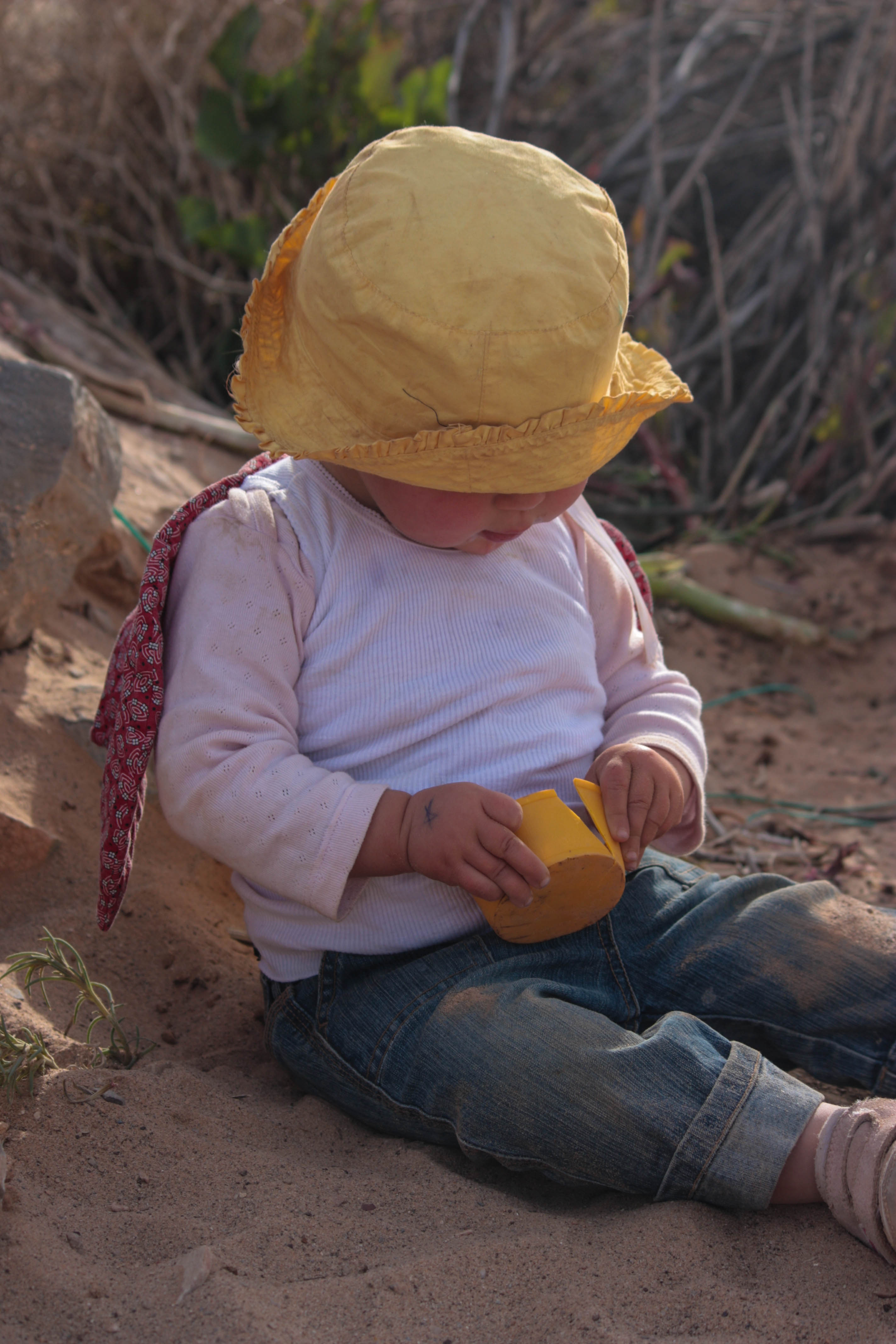
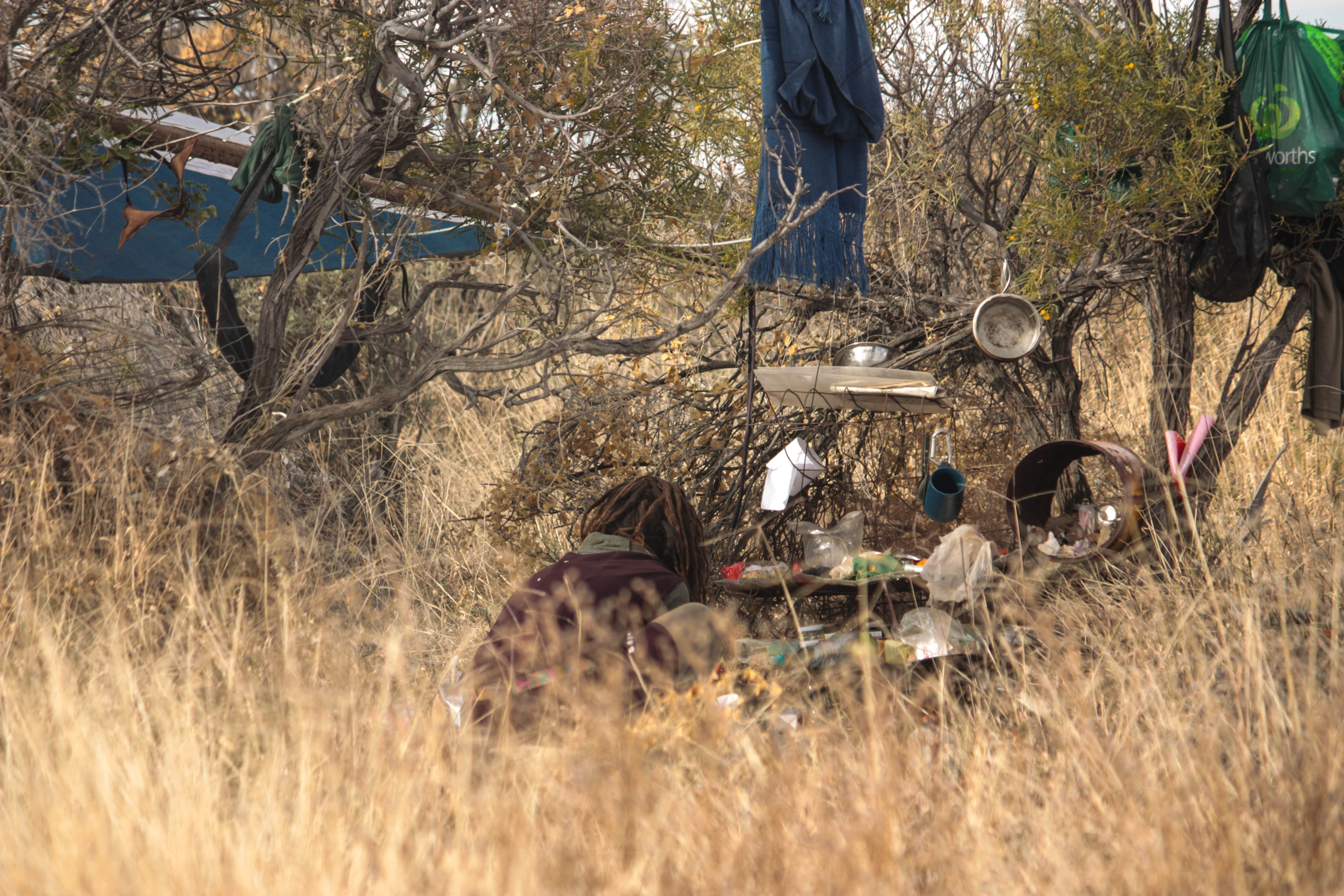
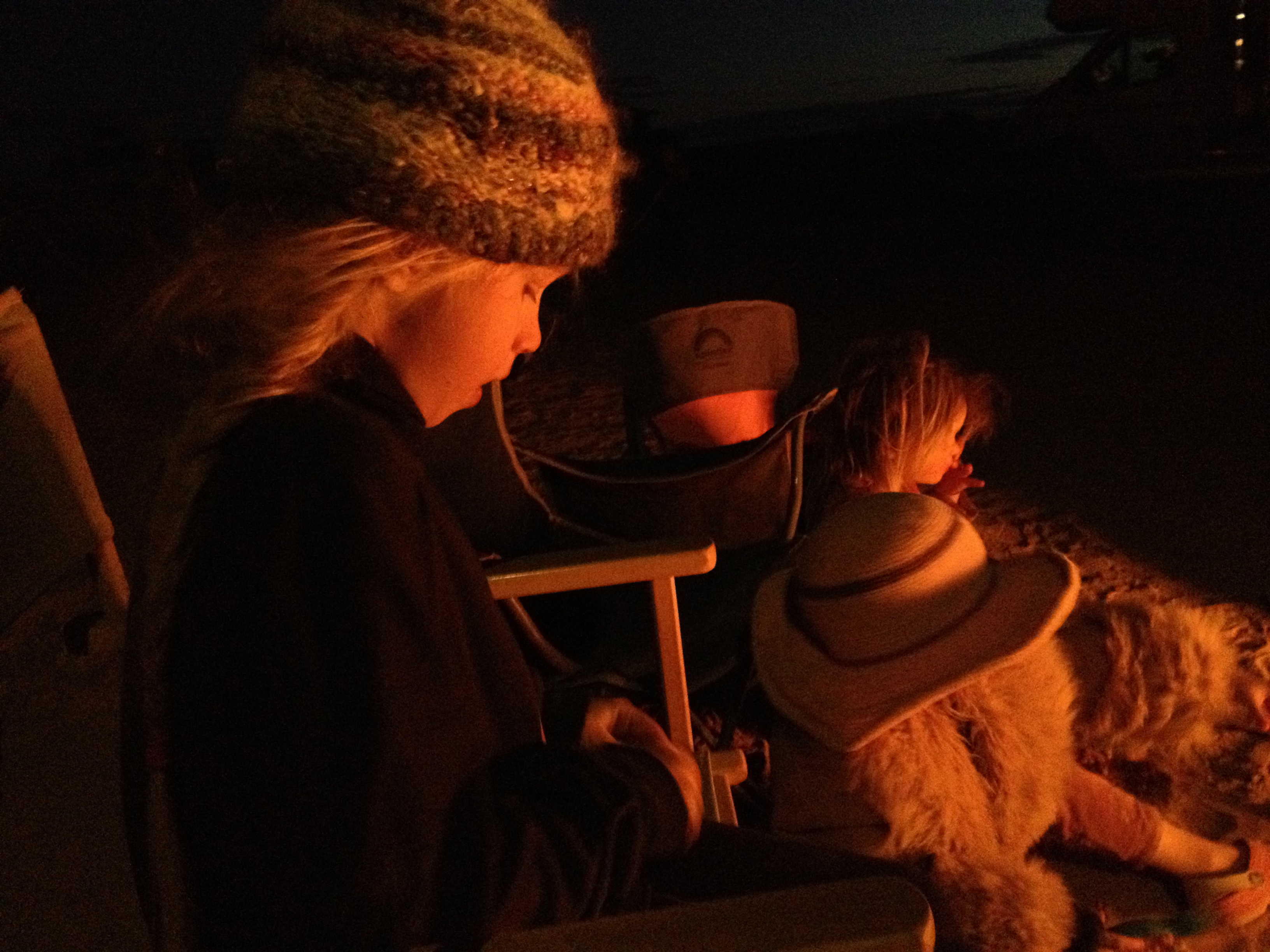
Camp ovens smart and burble on fires that never go out, Tin Lids find ever ingenious playthings in a playpen of dirt and thistle, and adults lounge, half an eye on their offspring, the other on the construction that clambers up around them. The sandy creek is transformed into a kid’s birthday party, complete with balloons, fresh damper and Uncle Kev’s whispered knowledge as he teaches the kids how to mimic tracks in the sand with their hands.

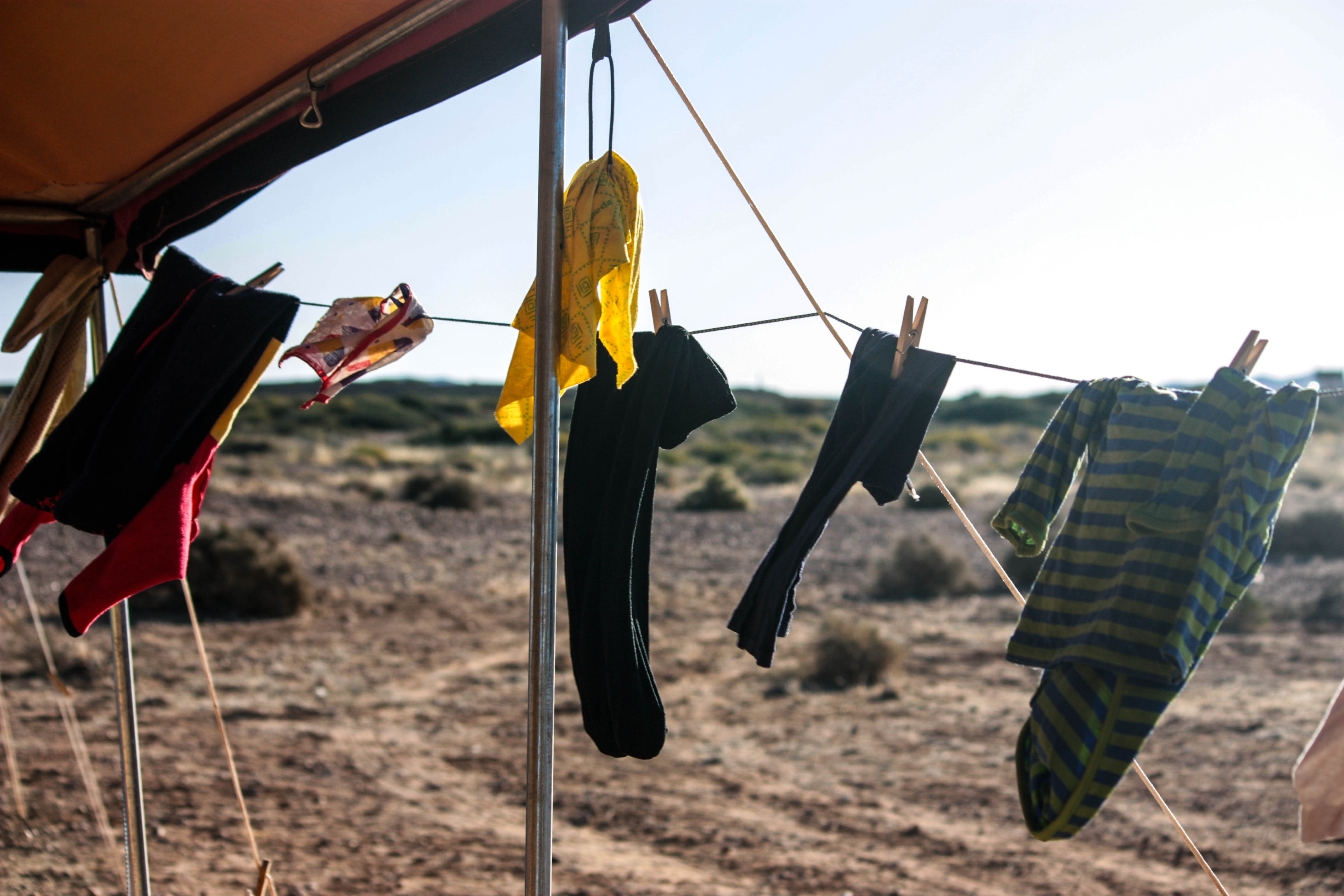
It is our home away from home, where allegiances are formed, arguments fought, bread is baked and kids are lulled to sleep beneath inky skies studded with stars. Canvas cracks and writhes at its enforced tenure, willy-willys scour and rip at everything in their path and the clink clink of tent poles being hammered deeper into the dry dirt dissects every conversation. Caked in red dirt, sweat and wonder the tribe quickly becomes one with the land, the shanty town surges alongside the track and “adventure tourists” slow to 70 clicks to gawp and stare from shiny air-conditioned 4WDs.

The seductive the savage and the strange stroll hand in hand through the desert, dragging chipped heels and fairy wings, clinking tin cups full of moonshine and laughing till dawn. Scorched roo meat greases the air, a dingo and her pups watch warily from the Lake and a gaggle of hippies convince a tanker driver that the sacred fire they are lighting next to the servo is OK because it has sage in it.

And the main event? Perfectly normal, just a routine space mission for a timber spaceship and the illustrious Warwick Afterburner Smith III, sent skyward in the great burnout, a pagan celebration of life in all its guises.

Nothing to see here folks…

POSTSCRIPT: Shortly after the celebrations at Alberrie Creek, BHP Billiton announced  plans to consult with the Government on adopting an alternative, less capital-intensive design for the open pit expansion that would involve the use of technologies to substantially improve the economics of the project.

In layman’s terms it means the project is on hold. Indefinitely. And while I am not foolish enough to believe this is the result of anything other than fiscal conservatism, the spotlight of social pressure shone a bright and ugly light onto the company, highlighting the harsh profile of environmental degradation and political and financial dissoluteness.

And I don’t doubt that this sacred place, with its protestors’ shawl of devotion, had a hand to play in what happened.

I’ve rediscovered my inner winger, intent on bringing down the opposition and scoring against the odds. Bring on the next round…